




Silver Plated Meat Platter
These silver plated meat platter pieces are substantial dining service items designed to present joint roasts, and you want one for the sheer gravitas it brings to a table.
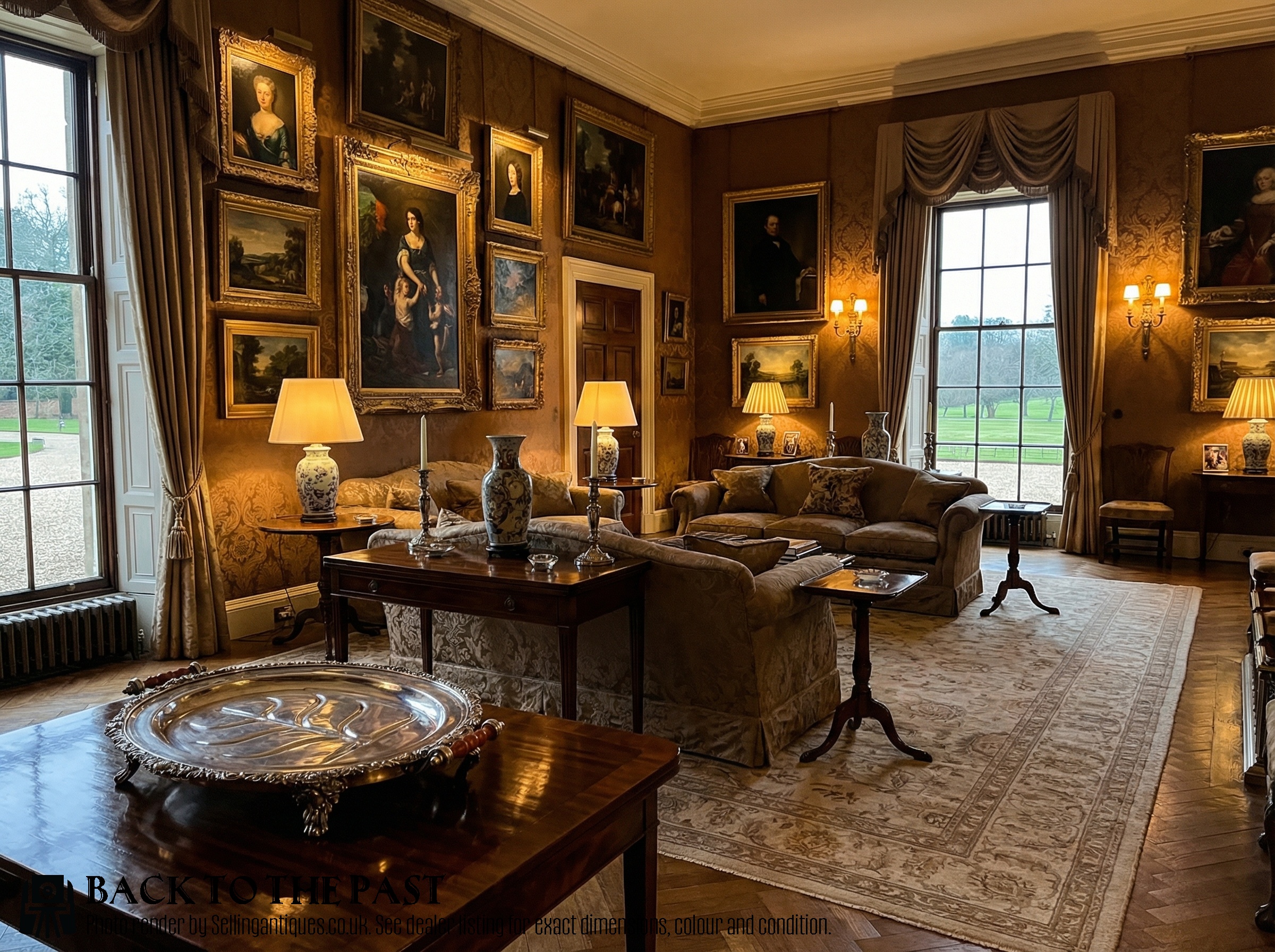
Silver Plated Meat Platter
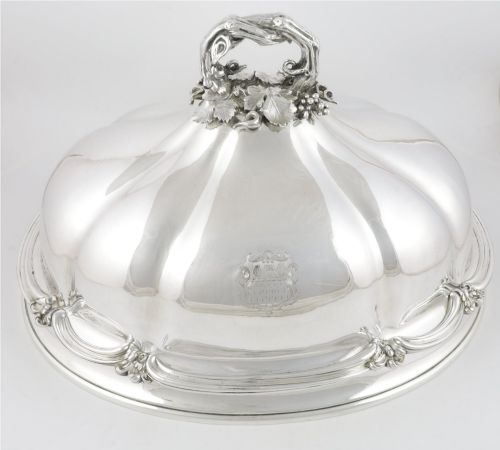
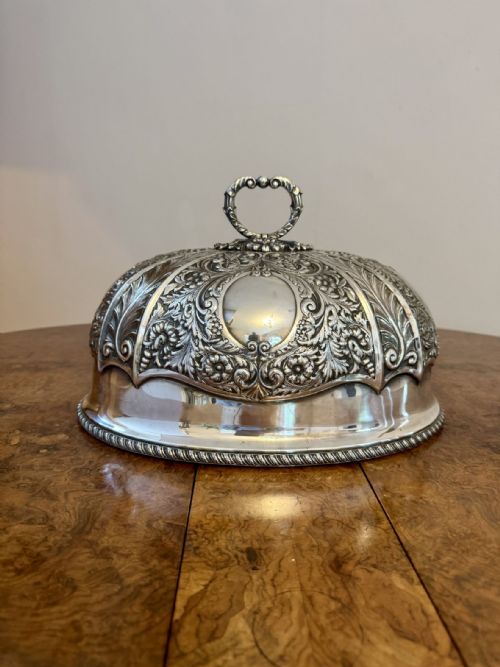
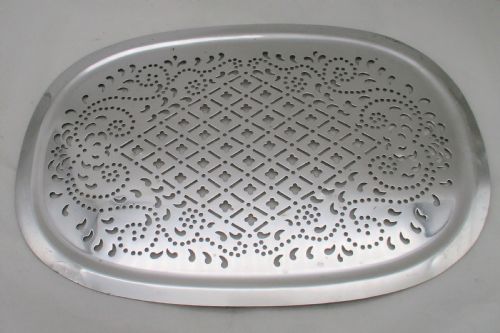
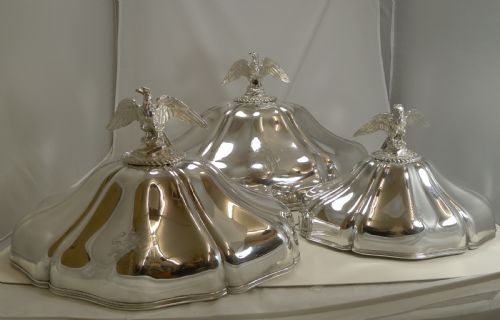
The form often includes specialised pieces such as mazarines and draining trays alongside oval platters and tall meat covers. Makers shaped these items for functional warmth and presentation on the dining table.
Origin and period vary across the selection, featuring Regency styles, French restoration work, and pieces from 1800 through to the Edwardian era. These items reflect the shifting domestic dining rituals of the nineteenth century.
How they were made
Makers utilised copper as a foundational metal, applying silver plate or fusing thin sheets of silver directly onto the base metal in the method known as Old Sheffield Plate. Electroplate on nickel silver, or EPNS, appears alongside these earlier fused techniques on later items.
Smiths hammered, shaped, and chased the metal to form deep wells, draining mazarines, and towering domes, frequently incorporating applied handles, crests, or engraved borders.
Some towering domes still wear the proud crests of long-forgotten Dukes, having once presided over mutton rather than modern mantelpieces.
What varies in quality
Weight and gauge of metal set the finest items apart from standard production, as heavier copper cores resist bending and hold heat more effectively in warming dishes. Superior pieces display crisp, deep chasing and well-defined applied mounts rather than faint, pressed decoration.
The integrity of the plated surface dictates value, where uniform coverage without excessive base metal bleed-through marks superior workshop execution. Named makers and crested provenance add distinction to individual pieces.
Roberts Cadman·Henry Wilkinson·Boulton·Durand Paris
The Silver Plated Meat Platter Glossary
- Old Sheffield Plate
- A fused bilayer metal technique where a thin sheet of silver is thermally bonded to a thicker copper core before shaping. This method produces a warm, characteristic glow and often shows hints of copper wear along high ridges.
- Meat Dome
- A large, bell-shaped cover designed to fit over a platter and keep roasted joints warm at the table. They frequently feature cast handles and armorial engravings.
- EPNS
- Electroplated Nickel Silver, a manufacturing process introduced in the nineteenth century that superseded older fusion methods. It provides a durable, uniform silver surface over a white metal alloy base.
- Warming Dish
- A specialised serving vessel featuring a compartment to hold hot water beneath the platter surface. This design maintained serving temperatures during lengthy formal meals.
Silver Plated Meat Platter: Frequently Asked Questions
What is a meat dome used for?
A meat dome covers a roasted joint on a platter to retain heat as it travels from the kitchen to the dining table. It also protects the meat and presentation until carving begins.
At the table, the cover is lifted away by its handle to reveal the roast to assembled guests. The tradition highlights the theatrical nature of nineteenth-century dining.
How do I clean old silver plate?
Cleaning requires a gentle silver polish and a soft cloth to avoid stripping the thin layer of precious metal from the copper base. Harsh abrasives will permanently damage antique plating.
Regular, light maintenance preserves the patina built up over generations. Storing pieces in dry environments prevents accelerated tarnishing.
What is Old Sheffield Plate?
Old Sheffield Plate is an early method of fusing silver to a copper core by heating the metals under pressure. This technique predates modern electroplating.
Pieces made this way often reveal faint lines of reddish copper where the silver layer has thinned through use. Collectors value this material for its historic method of creation.
How do I use a mazarine?
A mazarine sits inside a matching tray or platter to elevate meat above its natural juices. The slots or holes allow liquid to drain away cleanly.
This keeps the roast resting above the run-off during service. Such pieces formed part of extensive nineteenth-century dining services.
How do I date a meat platter?
Dating relies on manufacturing techniques, style periods, and any stamped maker marks or hallmarks found on the metal. Fused Old Sheffield Plate generally points to Georgian or early nineteenth-century production.
Later Victorian items often utilise electroplating on nickel silver bases. Weight, edge decoration, and engraving styles further narrow down the decade.