
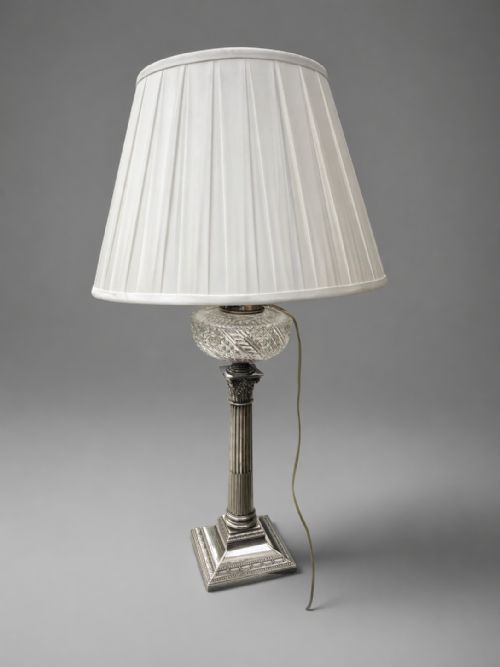


Silver Plated Lamp Base
These silver plated lamp base examples bring period illumination to a room, spanning Victorian grandeur and Edwardian refinement.
Silver Plated Lamp Base
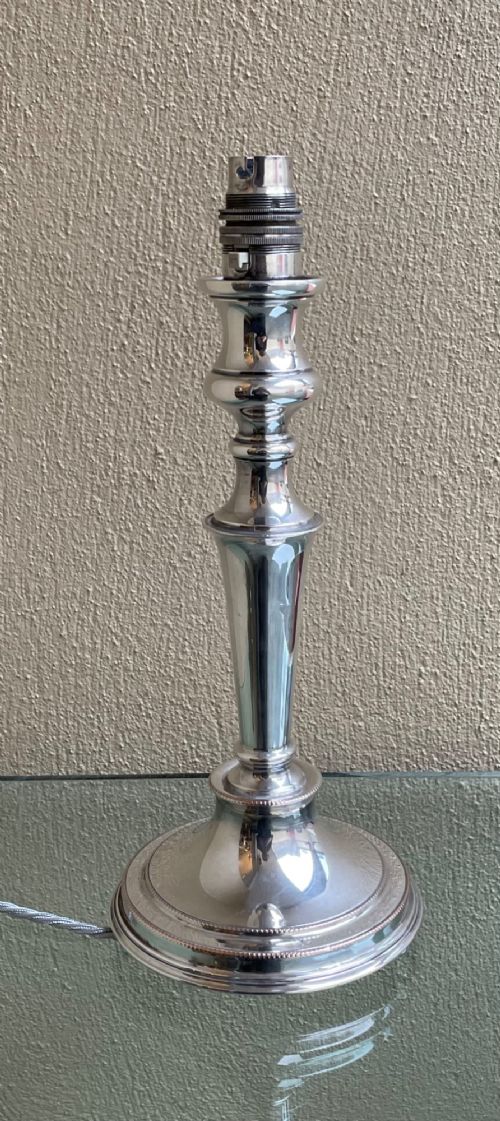
A silver plated lamp base serves as a decorative source of artificial illumination, adapting historical forms for modern interiors. When exploring silver plated lamp base choices, you encounter sturdy metal structures created to hold electrical fittings or oil burners.
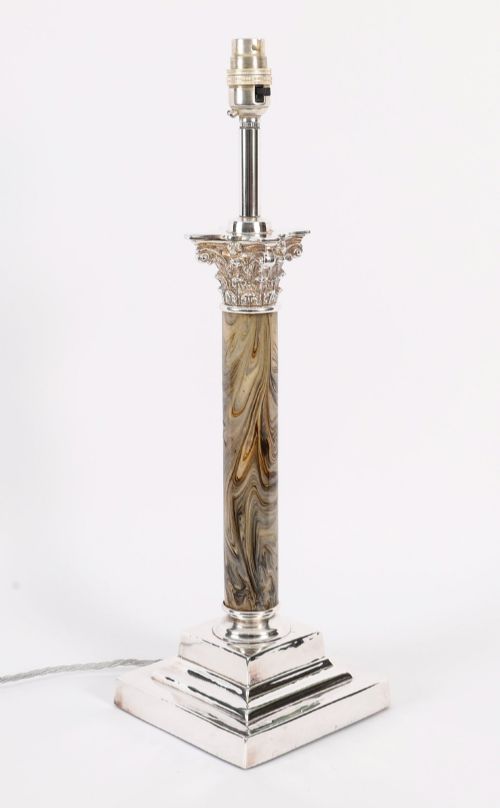
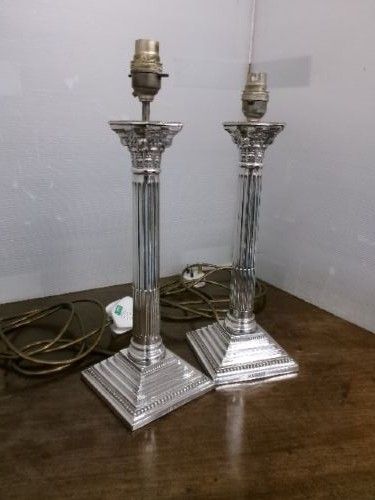
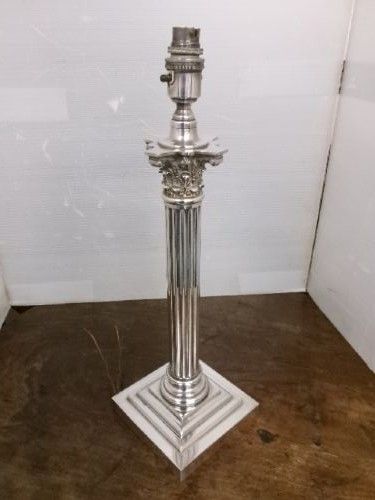
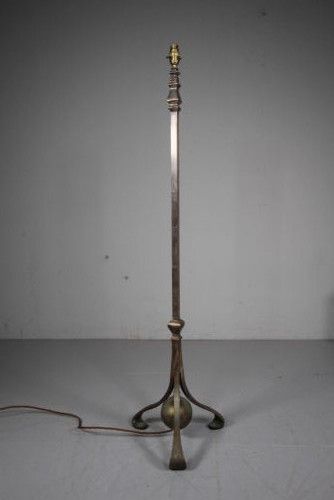
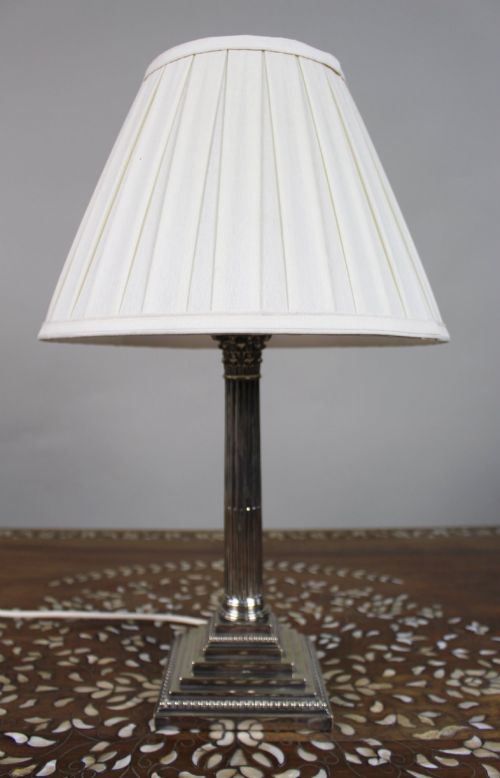
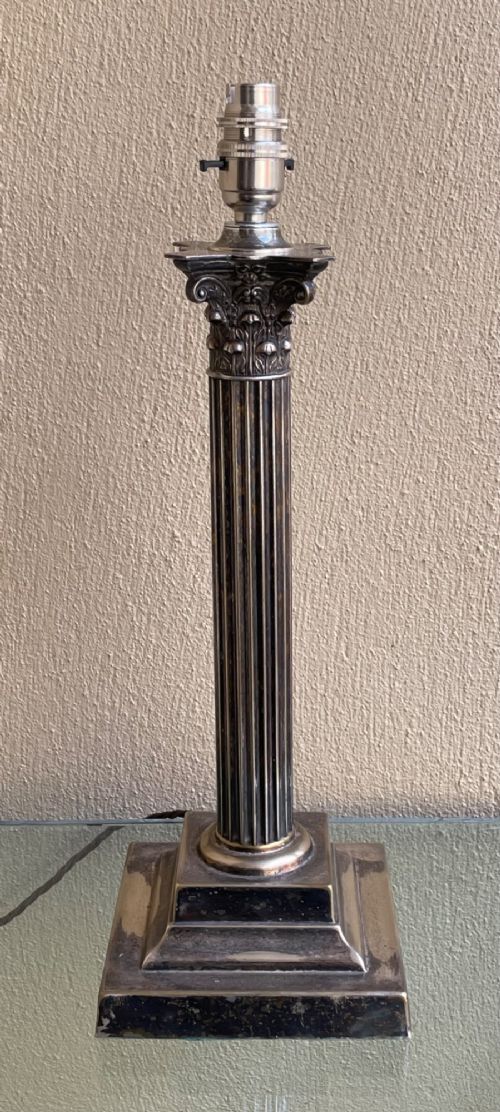
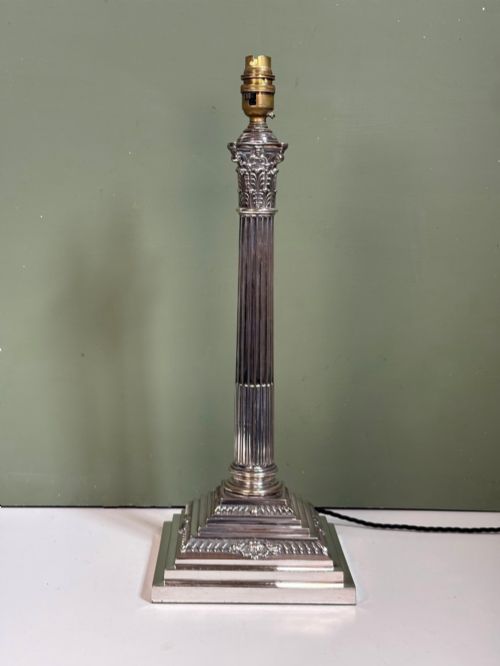
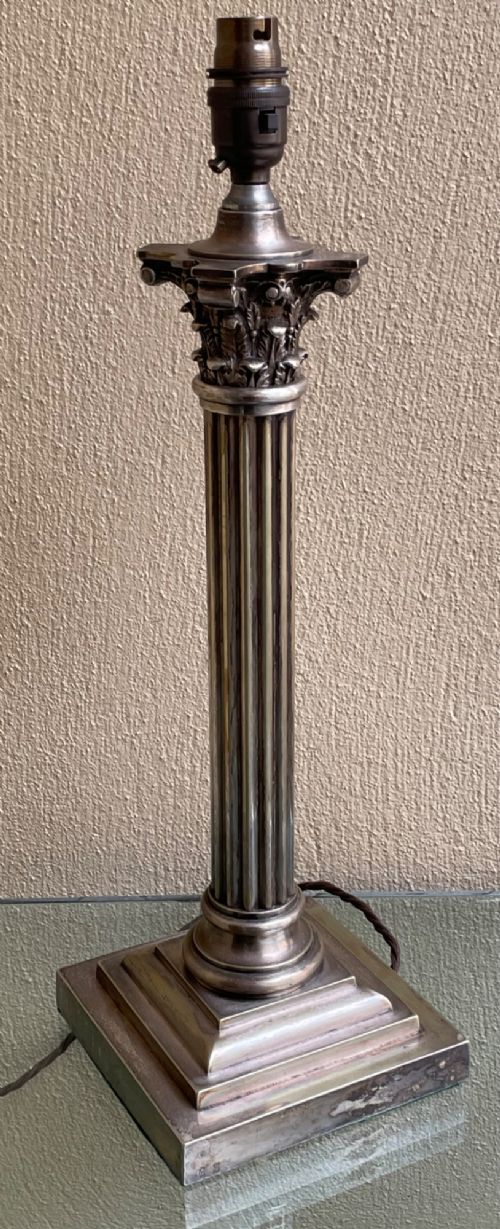
The selection ranges from tall floor models to compact table versions, with Corinthian columns appearing frequently among the pieces. These architectural designs reflect nineteenth-century and early twentieth-century revivals of classical antiquity.
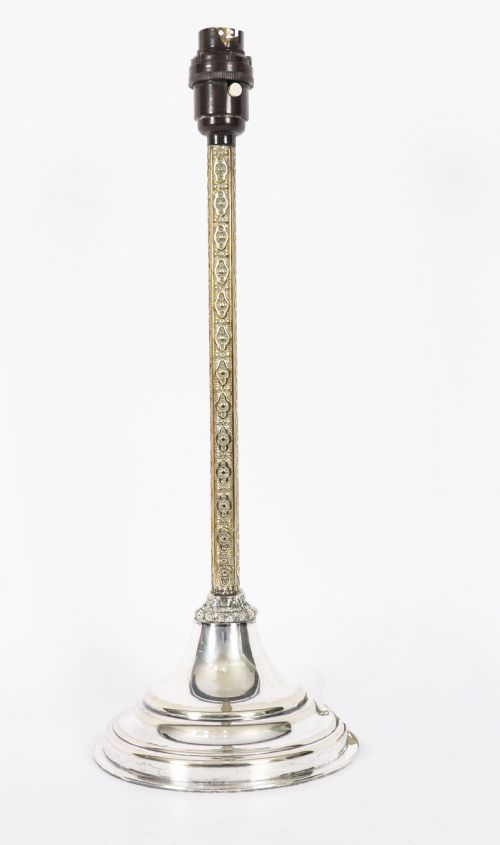
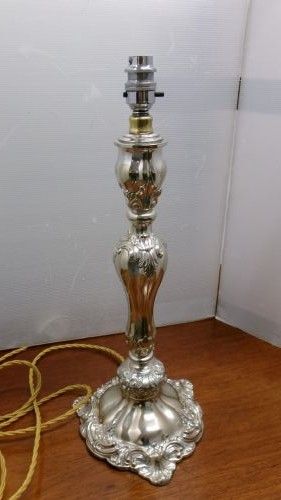
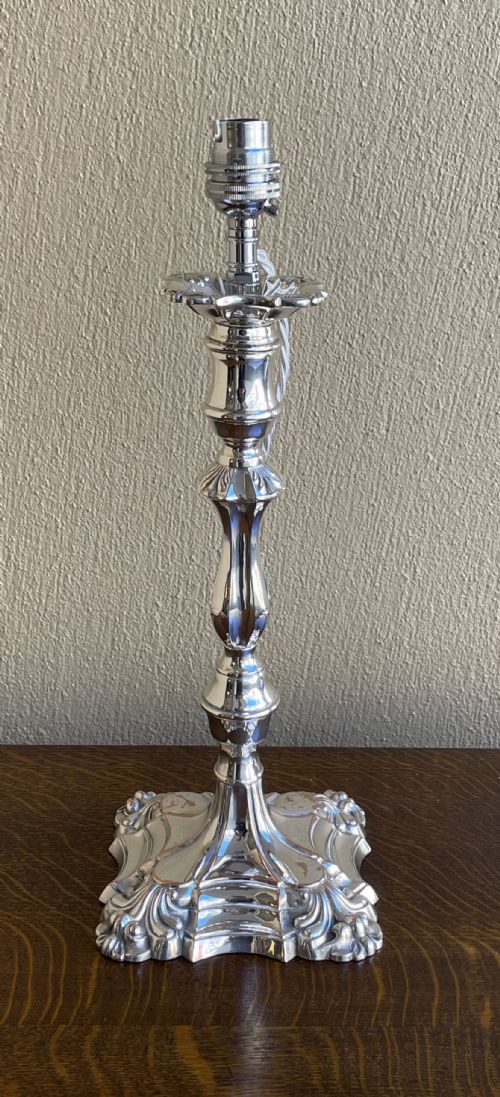
Victorian and Edwardian workshops produced these sturdy metal forms alongside French ecclesiastical examples and adjustable standards. Many incorporate weighted round or square foundations to support the height of the column above.
How they were made
Silversmiths applied thin layers of silver over base metals such as brass or used electroplating techniques known as EPNS. This process provided the visual appeal of solid silver without the prohibitive cost of full precious metal construction.
Columns and capitals on architectural shafts were often cast in separate sections before being joined together securely. Makers combined these plated components with glass reservoirs, cut glass bodies, or onyx panels to introduce textural contrast.
Detailing relied on stamping and parcel gilding to highlight acanthus leaves, bead reels, and stepped plinths. Bases frequently incorporated internal weighting materials to ensure stability when supporting fabric shades.
Several columns stand ready to support a room's illumination, some even resting on miniature lion's paw feet from the eighteen-eighties.
What varies in quality
The crispness of classical detailing separates standard production from superior examples, particularly on the volutes and acanthus leaves of Corinthian capitals. Finer pieces retain sharp, well-defined casting edges rather than softened contours.
The thickness and integrity of the silver plating dictate longevity, with high-end workshops applying heavier metal coats that resist base metal telegraphing. Quality also shows in the structural solidity of the column joints and the stability of the weighted base.
Mappin & Webb·Goldsmiths and Silversmiths Company·Harrison Brothers & Howson·Palmer & Co·Hawksworth Eyre & Co
The Silver Plated Lamp Base Glossary
- Corinthian column
- An architectural order featuring an ornate capital decorated with carved acanthus leaves and scrolls. This classical style dominated formal nineteenth-century lighting design.
- EPNS
- Electroplated Nickel Silver, a common manufacturing method where a thin layer of silver is deposited onto a nickel brass foundation. It became the industry standard for durable domestic metalware.
- Parcel gilt
- A decorative treatment where specific portions of an object receive a thin application of gold while the remainder shows silver. This technique highlights particular architectural motifs.
- Pricket candlestick
- A pointed metal spike designed to hold a candle securely in place. Converted examples appear as ecclesiastical or traditional table lamps.
- Peg oil lamp
- A small oil-burning font fitted with a lower peg designed to drop directly into a compatible candlestick or base. These units were frequently converted to electricity.
Silver Plated Lamp Base: Frequently Asked Questions
How are these lamps wired?
Many antique examples are fitted with modern electrical cords and internal wiring to meet current safety standards. Rewired items allow you to use standard modern bulbs safely while retaining the historical exterior.
Some pieces arrive with safety test certificates from professional workshops. You should consult a qualified electrician if a newly acquired lamp requires updating for domestic use.
What is a Corinthian column lamp?
This design takes its inspiration from ancient Greek and Roman architecture, featuring a fluted shaft and an elaborate capital decorated with acanthus leaves. It represents the most common formal style found in Victorian metal lighting.
Such pieces were designed to project dignity and classical taste in formal reception rooms and libraries. Their restrained proportions make them adaptable to various interior schemes.
How do I clean silver plate?
Maintenance requires a soft cloth and a gentle silver polish formulated to protect thin plated surfaces from abrasive wear. Regular dusting helps prevent tarnish accumulation in the recessed crevices of classical capitals.
Avoid harsh chemical dips that can strip the historic plating down to the underlying brass or base metal. Preserving the natural patina enhances the visual depth of the object.
Where were these lamps used?
Original locations included grand Victorian drawing rooms, Edwardian studies, and formal dining spaces where task lighting was required on sideboards or desks. Floor models stood beside reading chairs in libraries.
Ecclesiastical examples served in church settings before finding their way into domestic interiors as decorative statement pieces. Their heavy construction suited rooms with heavy traffic.