


Silver Plated Glass Holder
A silver plated glass holder frames fragile vessels in gleaming metal, offering both utility and a distinct period aesthetic for the table or desk.
Silver Plated Glass Holder
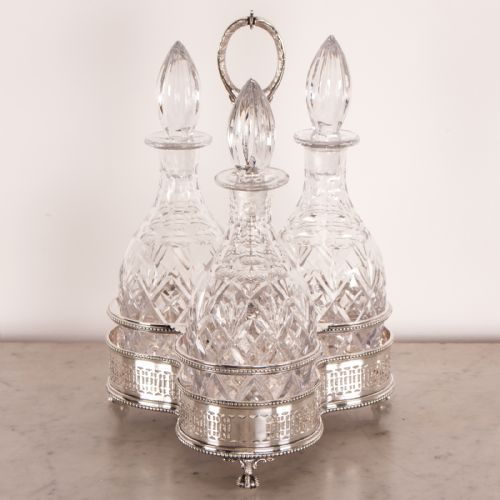
When you search for a silver plated glass holder, you encounter a diverse array of domestic tablewares and desk accessories designed to securely display glass vessels. These pieces range from substantial multi-bottle cruet sets and decanter stands to delicate preserve dishes, inkwells, and spill vases.
The selections available span periods from the mid-nineteenth century through the Edwardian era and into the Art Deco period. Victorian examples often display ornate decoration or novelty forms, whilst Edwardian and later pieces frequently lean towards refined utility and symmetrical elegance.
Origins are predominantly English, reflecting the manufacturing output of prolific metalworking regions and prominent silversmiths. Forms vary widely according to their original domestic function, uniting metal frames with clear, cut, or coloured glass inserts.
How they were made
Construction relies upon a durable base metal, typically copper or a white metal alloy, treated with a deposition of silver to create a lustrous exterior finish. This silver plate provides the visual appeal of solid silver while lending structural rigidity to the complex stands, frames, and handles.
The glass components are manufactured through glassblowing, moulding, or intricate hand-cutting. Cut crystal and pressed glass vessels are shaped to fit snugly within their respective metal mounts, often featuring star-cut bases or faceted bodies that catch the light.
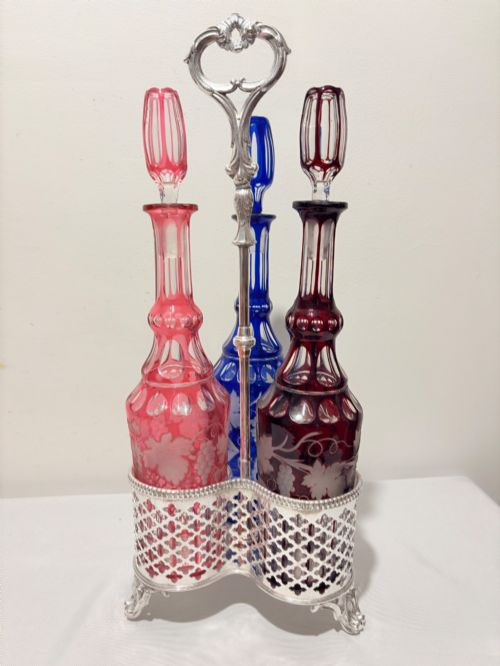
Specialist techniques such as piercing, engraving, and casting shape the metal holders into intricate floral motifs, geometric frameworks, or figural novelties. Coloured glass elements, including ruby, cranberry, and uranium glass, incorporate specific metallic oxides into the molten batch before being shaped to fit the silver plated frames.
Form variations include multi-bottle cruet sets, travelling bars, table inkstands, and novelty fire carriage smoking compendiums.
What varies in quality
Quality rests significantly upon the crispness of the casting and the depth of the silver plating. Finer examples display sharp relief in chased or pierced ornamentation, whereas lesser pieces show softer details and thinning plate that reveals the base metal beneath.
The relationship between the glass insert and the metal holder dictates overall standard. Superior items feature original, undamaged glass vessels that sit precisely within the custom frame without excessive movement or misfit.
Maker attribution and decorative ambition further separate standard utility wares from exceptional pieces. Marked items from established workshops or those incorporating novelty designs and specialist coloured glass represent the higher end of craftsmanship.
Walker & Hall·Elkington·WMF·Wade Wingfield Wilkins·Mappin Brothers
The Silver Plated Glass Holder Glossary
- Cruet set
- A matched collection of glass bottles or cruets held within a silver plated frame, traditionally used for condiments at the dining table.
- Tantalus
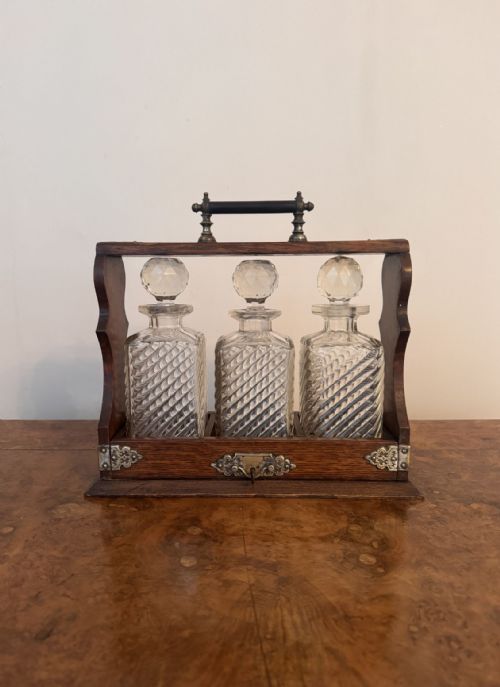
- A locking beverage frame that secures decanters within a silver plated framework, originally designed to prevent unauthorized access to the contents.
- Cranberry glass
- A rich pinkish-red glass created by adding gold to the molten batch, frequently encountered in Victorian preserve dishes and bowls.
- Spill vase
- A tall, slender receptacle designed to hold tapers used for lighting candles or fires, often paired with a heavy metal base.
- Uranium glass
- Transparent yellow or green glass that glows brightly under ultraviolet light due to the inclusion of trace uranium oxide.
Silver Plated Glass Holder: Frequently Asked Questions
What are silver plated glass holders used for?
These items served various practical functions in the nineteenth and early twentieth centuries, primarily organising tableware and desk equipment.
They held items like inkwells, condiments, decanters, and preserve bowls securely in place while presenting an attractive appearance on dining tables and writing desks.
How do I clean a silver plated glass holder?
Cleaning requires gentle care to preserve the thin layer of silver plating over the base metal. Use a specialised silver polish applied lightly with a soft cloth, avoiding abrasive pads that can wear away the finish.
Glass liners and bottles should be removed and washed separately in warm, soapy water before being dried thoroughly.
How can I tell a Victorian holder from an Edwardian one?
Victorian pieces tend to feature heavier, more ornate ornamentation, including elaborate floral chasing, figural novelty designs, and rich ruby or cranberry glass inserts.
Edwardian and later examples generally favour lighter constructions, cleaner lines, and simpler pierced or geometric metalwork reflecting changing domestic tastes.
Are the glass inserts usually original?
Many surviving examples retain their original cut glass or coloured glass vessels, which are specifically shaped to fit the contours of the metal frames.
Because glass is fragile, replacement liners are sometimes found, so checking the fit and matching the glass colour and period style helps determine originality.