

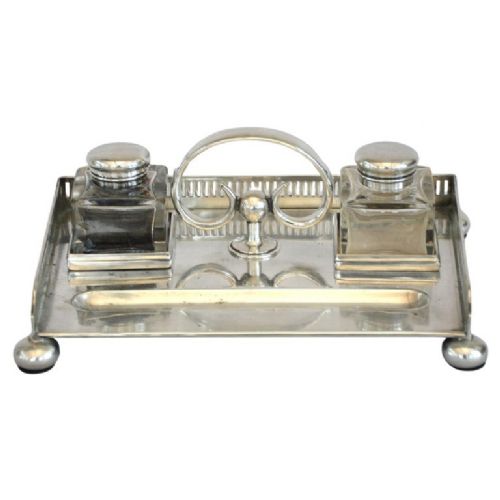
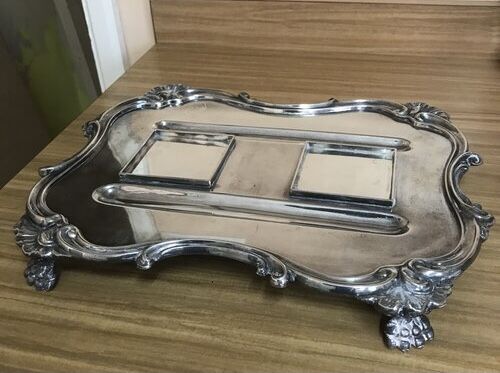


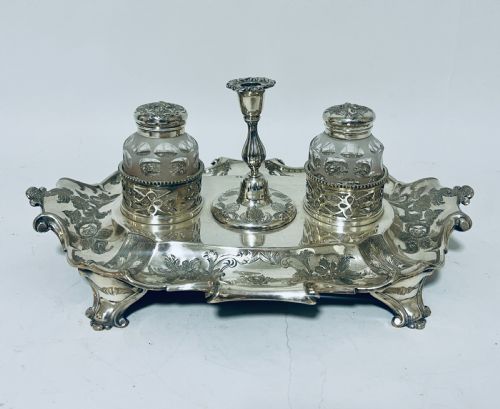


Silver Plated Double Inkwell
A silver plated double inkwell commands the desk with substance, bringing twin glass wells and heavy metal mounts to the everyday act of writing.
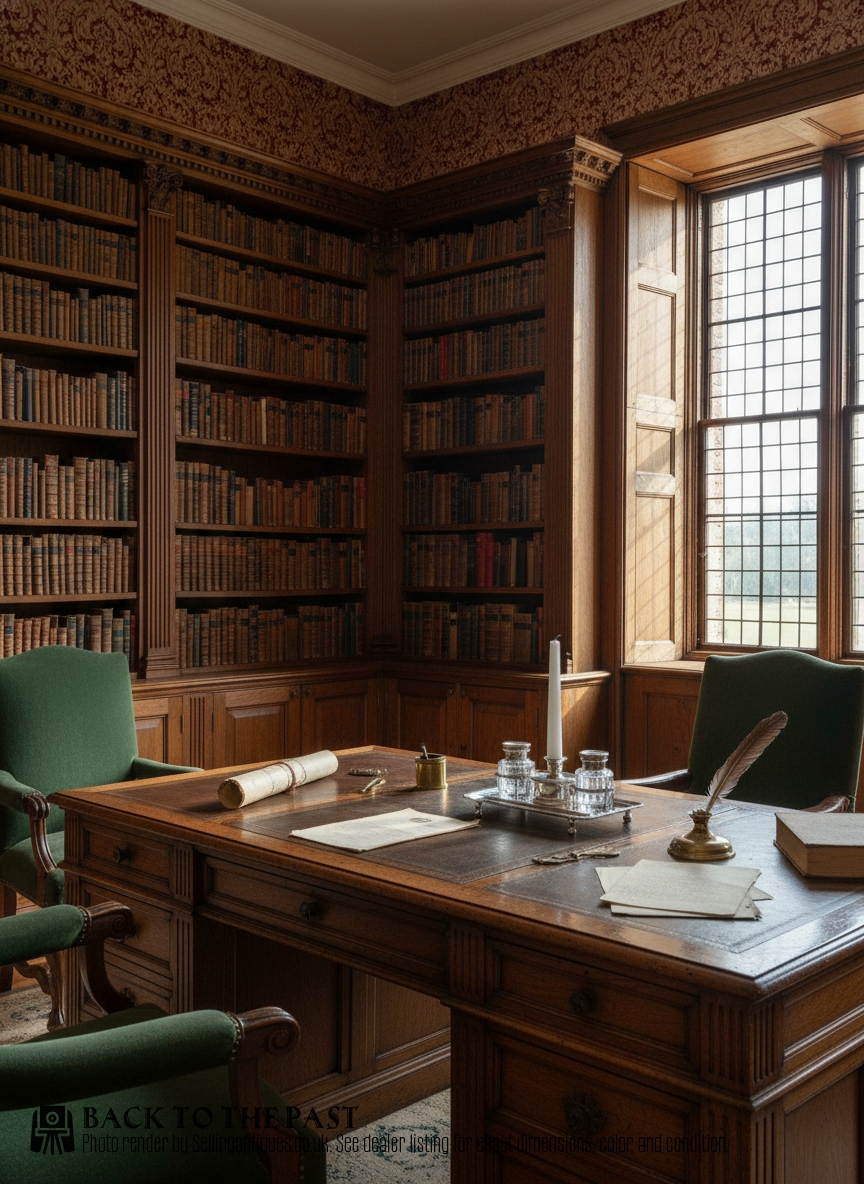
Silver Plated Double Inkwell
When you search for a silver plated double inkwell, you are looking at substantial desk accessories designed to hold two ink reservoirs alongside pen rests and trays. These pieces date across the Georgian, Victorian, and Edwardian eras, reflecting changing tastes in desk organisation from grand establishments to simpler studies.
The most common examples on this page are Victorian and Edwardian desk stands that pair heavy silver plate with cut glass inkwells. You will also find older Sheffield plate pieces and occasional combinations involving oak, horn, or base metal alongside the silver plating.
Forms range from compact stands with integrated pen trays to larger desk tidies bearing maker marks from renowned Sheffield and London workshops. Each piece served as a permanent fixture on a writing table, holding the ink needed for correspondence before the rise of the fountain pen.
How they were made
Makers built these stands using silver plate or Sheffield plate over a base metal foundation, often combining the metal framework with heavy cut glass for the inkwells themselves. Sheffield plate involves fusing a thin sheet of silver to a copper core, while later Victorian silver plating utilises electrolytic methods.
Secondary materials like oak, wood, and horn appear in select pieces to form the body or base of the desk stand, adding textural contrast to the gleaming metal mounts. Metal casting and hand chasing created the decorative borders, scrollwork, and handles seen on Rococo Revival, Gothic, and Regency inspired designs.
Silver Plated Double Inkwell Retail Price Guide 2026
Typical asking prices for silver plated double inkwell among the pieces listed under this phrase on Sellingantiques today, from the lower quarter to the upper quarter. They describe what is for sale here now, not the wider market.
Listings feature periods spanning from Georgian and Victorian eras through to Edwardian designs, utilising silver plate, Sheffield plate, cut glass, oak, and horn.
What varies in quality
Quality in a silver plated double inkwell rests on the weight of the metal and the integrity of the plating over the underlying base. Thicker silver application resists wearing down to the base metal, particularly on high-touch areas like pen rests and inkwell lids.
The clarity and depth of the cut glass inserts also set finer examples apart from simpler production, alongside the presence of matching, original glass lids. Master silversmiths and established workshops produced stands with crisper cast ornament, tighter joints, and more balanced proportions across the entire desk tidy.
Walker And Hall·Harrods·Daniel Holy·Martin Hall
The Silver Plated Double Inkwell Glossary
- Silver Plate
- A thin layer of silver bonded or electroplated onto a base metal or copper core. This technique allowed makers to achieve the appearance of solid silver at a lower cost.
- Sheffield Plate
- An early form of plate created by fusing a sheet of silver to a copper ingot before rolling them into sheets together. The edges often reveal the underlying copper upon close inspection.
- Inkstand
- A complete desk accessory comprising one or more inkwells, a pen rest, and a tray for nibs and stamps. These served as the central writing station on a desk.
- Cut Glass
- Glass decorated by cutting facets or patterns into the surface using a wheel. In inkwells, deep cutting adds weight and causes the ink inside to refract light.
- Standish
- An alternative historic term for an inkstand or desk set, often denoting a more elaborate footed tray with multiple compartments for writing implements.
Silver Plated Double Inkwell: Frequently Asked Questions
How do I clean a silver plated double inkwell?
Use a soft cloth and a gentle cream specifically formulated for silver plate, avoiding harsh dips that strip the plating away from the base metal. Take care around glass inserts and fitted wooden or horn elements to keep moisture out of the joints.
Regular, light dusting prevents the accumulation of grime in chased crevices and around the hinges of the inkwell lids. Over-polishing will eventually wear through the plate, so gentle maintenance is best for antique pieces.
Are the glass inkwells usually original to the stand?
Many surviving stands retain their original heavy cut glass inkwells, often featuring matching collars and fitted lids that sit flush within the metal apertures. Replacements do occur due to accidental breakage over the decades of use.
Examining the fit, glass colour, and wear patterns on the base of the inserts helps determine if the glass belongs to the original manufacture of the desk stand.
What is the difference between an inkstand and a desk tidy?
An inkstand focuses primarily on the inkwells and integrated pen rests, functioning as the dedicated writing centre on a formal table. A desk tidy often incorporates additional compartments for envelopes, stamps, and sealing wax alongside the ink reservoirs.
Both forms served administrative tasks in offices and homes, though desk tidies generally offer a broader footprint with more varied storage sections.
How can I tell a Georgian piece from a Victorian one?
Georgian and early nineteenth-century pieces often employ Sheffield plate construction with heavier copper foundations and restrained, classical Regency or George III ornamentation. Victorian examples frequently utilise newer electroplating methods and embrace more exuberant styles like Rococo Revival or Gothic.
Checking maker marks, the nature of the plate edges, and stylistic motifs provides clear clues to the period of manufacture.