




Silver Plated Dining Platter
A silver plated dining platter brings weight and presence to the table, offering generous proportions for formal service.
Silver Plated Dining Platter
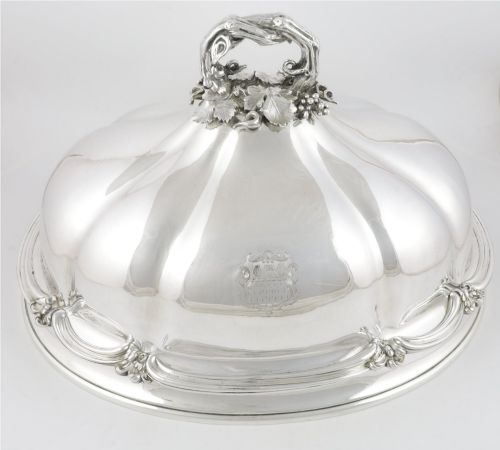
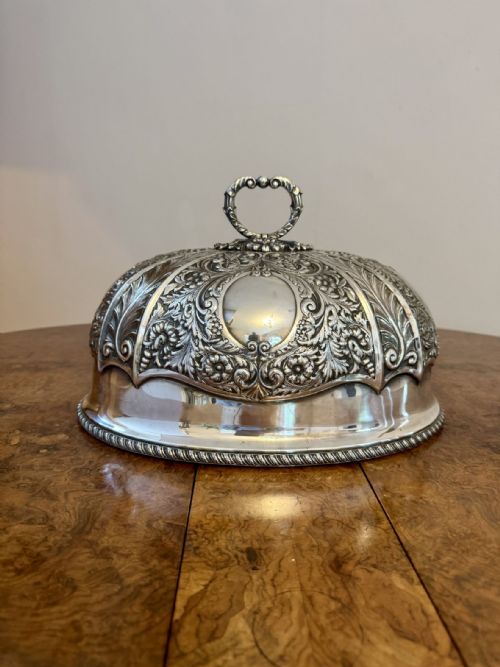
When you search for a silver plated dining platter, you encounter a range of heavy serveware designed for grand meals, including meat domes, chargers, and asparagus dishes. These pieces originate from various eras such as the Georgian, Victorian, and Edwardian periods, as well as the seventeenth and nineteenth centuries.
The versions you are most likely to meet on this page include substantial serving dishes and heavy chargers in silver plate, EPNS, and Old Sheffield Plate. Makers from London and Paris produced these forms to withstand the rigours of large dining rooms.
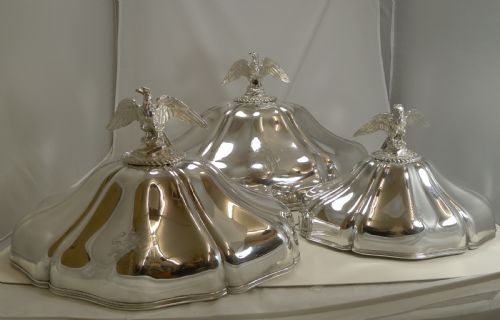
The selection ranges from plain rim chargers to graduated sets of meat covers featuring decorative elements like eagles. Each object reflects the serving customs of its respective decade, bridging utility and display.
Materials and construction
Makers constructed these serving pieces using base metal, copper, and pewter as the foundation before applying silver plating or utilising the fused sheet technique known as Old Sheffield Plate. This method bonded a thin layer of silver to a copper core, creating durable dining wares.
Craftsmen shaped meat domes, covers, and chargers through heavy hammering and rolling, often reinforcing rims and handles to endure frequent use at the dining table. The integration of metals provided both the required visual brilliance and the necessary structural strength.
Some nineteenth-century meat domes feature diminutive cast eagles perched atop the handle, ready to preside over Sunday roast.
Distinctions in quality
The calibre of a piece is evident in the thickness of the plating and the substance of the underlying metal, which dictate how well the surface survives centuries of polishing. Heavier gauge metal prevents warping under heat and gives the dish a reassuring heft in the hand.
Design execution and maker attribution also separate standard items from superior works, particularly in graduated sets where proportions must align precisely. Finer examples display crisp casting on handles and borders rather than generalised smoothing.
Roberts Cadman·Thomas Templeman·Mappin and Webb·Durand
The Silver Plated Dining Platter Glossary
- Old Sheffield Plate
- An early form of plating produced by fusing a sheet of silver to a copper ingot before rolling them into sheets together. This technique often reveals a thin line of copper along cut edges.
- EPNS
- Electro Plated Nickel Silver, a common base material introduced in the nineteenth century that replaced older fusion methods. It provided a stable and uniform base for silver deposition.
- Meat Dome
- A large domed cover designed to keep roasted joints warm on the dining table. These covers fit neatly over matching platters or dishes.
- Charger Plate
- A large decorative base plate placed underneath other dinnerware during formal courses. They serve to anchor the table setting and protect the cloth.
- Asparagus Dish
- A specialised serving vessel often fitted with an internal rack or drainer. These pieces accommodated long stalks and accompanying sauces for seasonal dining.
Silver Plated Dining Platter: Frequently Asked Questions
What is a meat dome used for?
A meat dome covers large joints of meat on a serving platter to retain heat as food travels from the kitchen to the dining table. It also protects the roast from cooling drafts in large dining halls.
Historically, servants lifted the dome at the table just before carving. Today, these pieces function equally well as striking decorative centrepieces.
How do I clean silver plate?
Clean silver plated items gently using a mild, non-abrasive silver polish and a soft cloth to avoid wearing through the thin plating layer. Rinse thoroughly in lukewarm water and dry immediately with a lint-free cloth.
Avoid harsh chemical dips, particularly on Old Sheffield Plate, where aggressive cleaning can expose the underlying copper base metal.
What is the difference between Old Sheffield Plate and EPNS?
Old Sheffield Plate involves mechanically fusing silver and copper sheets together through heat and pressure before fabrication. This eighteenth-century method creates a distinctive layered edge.
EPNS relies on an electrical current to bond a coating of silver onto a nickel silver alloy. This later process produced smoother, more uniform finishes without copper edges.
Can I use these platters for food?
Many antique silver plated platters and chargers remain structurally sound for serving dry or cold foods at modern dinner parties. However, tarnished surfaces require thorough cleaning before any culinary contact.
For pieces with worn plating exposing base metals, use them primarily for display or with a protective liner to preserve the historic surface.