



Silver Plated Desk Set
A silver plated desk set organises correspondence with metal trays, inkwells, and pen holders shaped by Victorian, Edwardian, and Georgian tastes.
Silver Plated Desk Set
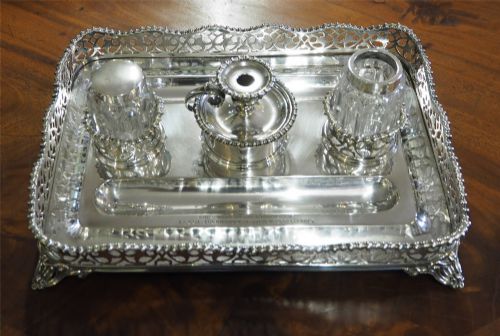
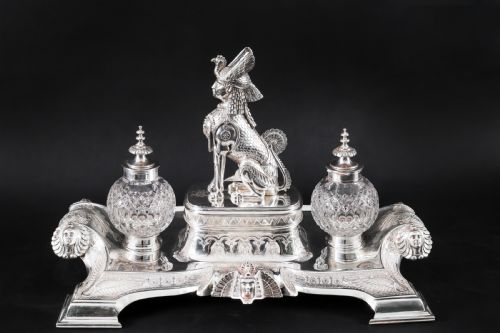
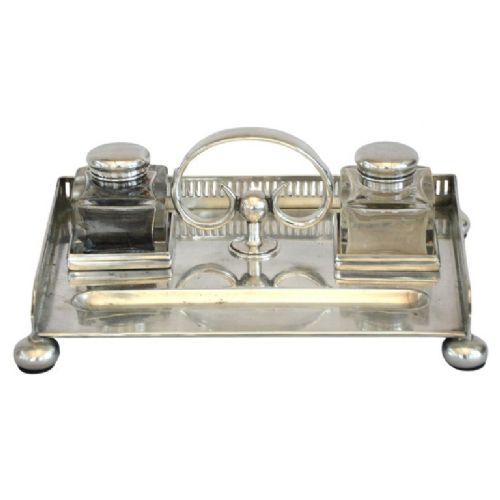
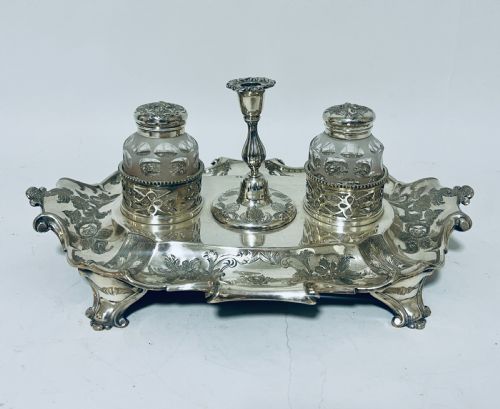
A silver plated desk set serves as a tabletop station for writing equipment, housing inkwells, pen rests, and sometimes matchboxes or sanders upon a shared metal, glass, or wooden base. These objects range from simple stands with a single glass reservoir to elaborate architectural inkstands and novelty smoking compendiums.
The versions met most frequently on this page belong to the Victorian period, alongside Edwardian double inkstands and earlier Sheffield plate examples. Makers utilised silver plate over base metal, combining cut glass inkwells and occasionally horn or oak to create practical desk accessories.
How they were made
Sheffield plate and later electroplated silver form the metallic foundations of these desk sets, layered over copper or base metal substrates. Metalworking techniques involved casting, stamping, and engraving to produce decorative borders and stands.
Cut glass or moulded glass inserts provide the inkwells and dishes, often fitted with hinged metal lids. Wood such as oak and natural materials like horn appear in specific bases and mounts.
Materials in these listings include silver plate, Sheffield plate, cut glass, metal, oak, wood, horn, and solid silver.
What varies in quality
Quality rests in the weight of the metal base, the crispness of chased or cast ornamentation, and the integrity of the silver plate over the underlying metal. Substantial stands by known makers display thicker plating and heavier construction.
The condition and match of the fitted glass inkwells influence overall integrity, as original cut glass reservoirs with undamaged collars distinguish superior pieces from later replacements.
Wilkinson and Co·Walker And Hall·Daniel Holy of Sheffield·Martin Hall·Christofle·Hukin and Heath
The Silver Plated Desk Set Glossary
- Inkstand
- A portable tray or stand holding one or more inkwells, pen trays, and sometimes a sander or wafer box. These were essential fixtures on nineteenth-century writing desks.
- Standish
- An alternative term for a desk inkstand, often denoting a more formal or elaborate standing tray with fitted compartments. They frequently incorporate silver plate and cut glass.
- Sheffield plate
- An early form of silver plating created by fusing a sheet of silver to a copper ingot before rolling them together into sheets. This technique predates modern electroplating.
- Smoking compendium
- A desk accessory combining inkwells or writing implements with receptacles for matches, cigars, or tobacco. They sometimes took fanciful novelty shapes.
- Electroplate
- A method of depositing a layer of silver onto a base metal using electrical current, which largely superseded Sheffield plate during the nineteenth century.
Silver Plated Desk Set: Frequently Asked Questions
How do I clean a silver plated desk set?
Use a soft cloth and a gentle silver cleaner formulated for plated items, taking care to avoid harsh abrasives that might wear through the thin silver layer to the base metal beneath. Remove glass inkwells before cleaning so moisture does not damage fitted collars or wooden bases.
Keep polishing cloths away from porous materials like oak or horn which require their own specialised maintenance. Regular dusting with a dry lint-free cloth prevents tarnish accumulation.
Are the inkwells usually original to the stand?
Glass inkwells suffered frequent breakage and replacement over decades of use, meaning many surviving sets include matched or later glass inserts rather than original factory components. Inspect the fit of the glass within the metal collars to see if it sits naturally.
Look for matching wear patterns on the base of the glass and the interior of the metal holder. Subtle variations in glass tint or cut pattern can indicate a replacement.
What is the difference between an inkstand and a desk set?
An inkstand specifically centres on inkwells and pen rests mounted on a fixed tray, whereas a desk set can encompass a broader collection of writing accessories including magnifying glasses and blotters. Both terms often overlap in nineteenth-century cataloguing.
Desk sets frequently include matching stationery boxes or letter racks alongside the central ink reservoir. Standish is simply an older word for the same ink-holding desk furniture.
How can I tell a Victorian desk set from a Georgian one?
Georgian and early nineteenth-century pieces often employ Sheffield plate construction with fused silver over copper, showing characteristic copper telegraphing where the underlying metal peeks through high points. They favour cleaner neoclassical or Regency lines.
Victorian pieces frequently utilise later electroplating methods and embrace ornate styles such as Gothic Revival, Egyptian Revival, or heavy floral embossing. Maker marks and registration numbers stamped into the metal also help narrow down the production era.