





Victorian Desk Top Organizer
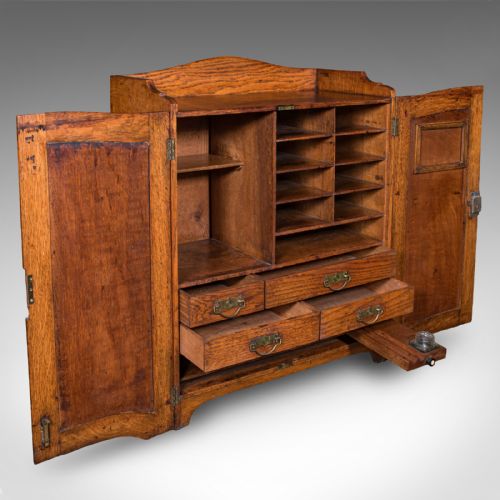
A victorian desk top organizer keeps correspondence tidy on the table, offering compartments for paper and ink.
Victorian Desk Top Organizer
A victorian desk top organizer is designed for sorting letters, papers, and writing implements directly on a work surface. The selections gathered here span the nineteenth century and into nineteen-twenty, taking forms such as stationery cabinets, desk stands, and correspondence boxes.
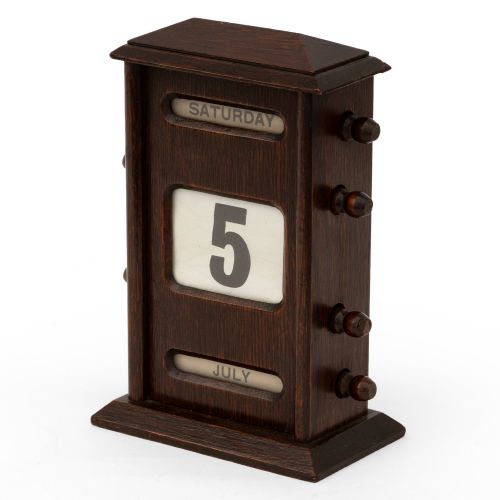
Buyers encounter substantial oak cabinets alongside rosewood and mahogany writing boxes. Pieces frequently incorporate internal shelving and date calendars to manage daily correspondence.
Materials and Construction
Cabinet makers utilised dense hardwoods including oak, mahogany, walnut, and rosewood. Surfaces often display figured grain patterns shaped into sturdy tabletops and vertical compartments.
Metal mounts in brass and ormolu reinforce corners and doors, while silver and horn embellish specific stands and writing boxes. Paper components and painted highlights complete internal fittings.
Victorian Desk Top Organizer Retail Price Guide 2026
Typical asking prices for victorian desk top organizer among the pieces listed under this phrase on Sellingantiques today, from the lower quarter to the upper quarter. They describe what is for sale here now, not the wider market.
The listings feature pieces spanning the nineteenth century up to nineteen-twenty, constructed in oak, mahogany, rosewood, and walnut.
Factors of Quality
Excellence rests in the selection of timber veneers and the precision of fitted internal drawers. Superior examples display careful joinery and well-integrated mechanical elements like adjustable calendars.
Decorative hardware distinguishes finer items, particularly where ormolu mounts, carved details, and maker labels are present. The harmony between structural woodwork and applied metalwork determines the character of each piece.
The Victorian Desk Top Organizer Glossary
- Cartonnier
- A desktop cabinet with multiple horizontal compartments or drawers for sorting documents and papers.
- Stationery cabinet
- An upright box designed specifically to hold writing paper, envelopes, and small desk accessories.
- Standish
- A desk stand incorporating inkwells, pen trays, and sometimes sanders or taper sticks.
- Ormolu
- Gilded bronze or brass mounts applied as decorative highlights to furniture and desktop objects.
- Gothic Revival
- An architectural and decorative style drawing inspiration from medieval forms, featuring pointed arches and heavy tracery.
Victorian Desk Top Organizer: Frequently Asked Questions
What is a desk top organizer?
A desk top organizer is a compact container or cabinet built to hold stationery, letters, and writing tools.
These pieces sat on library tables and writing desks to keep working papers neatly arranged.
How were stationery cabinets used?
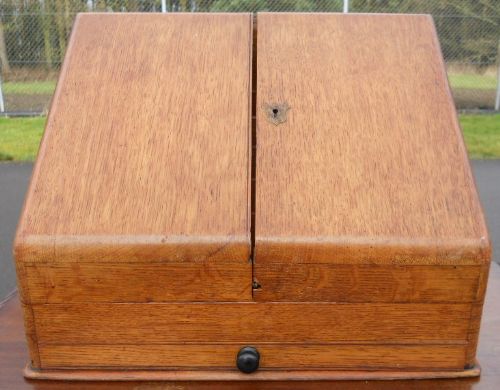
Users stored blank paper, envelopes, and important correspondence behind locking doors or slanted lids.
Many incorporate calendars or inkwells to serve as comprehensive writing stations.
What woods are common?
Cabinet makers relied heavily on durable timbers such as oak, mahogany, walnut, and rosewood.
These woods were often polished to highlight natural grain patterns and figures.
How do I identify the period?
Dating relies on architectural styles, construction methods, and materials like brass or ormolu mounts.
Mid-to-late nineteenth-century pieces often reflect Victorian or Gothic Revival tastes.
Are inkwells included?
Some desk stands and writing boxes feature fitted glass inkwells with silver or metal collars.
Cabinets generally focus on paper storage rather than liquid ink.