




Silver Inkwell Tray Set
A silver inkwell tray set brings order to a desk, holding glass vessels and pens in sterling silver, plate, cut glass, or stone.
Silver Inkwell Tray Set
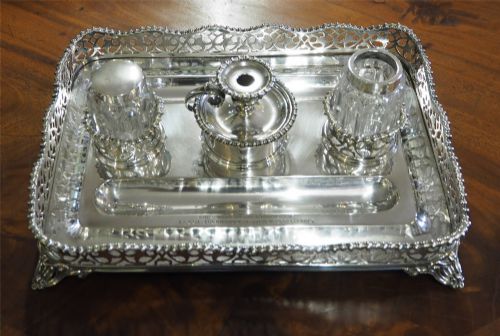
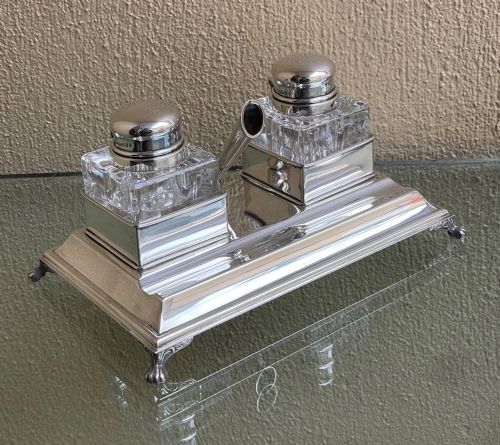
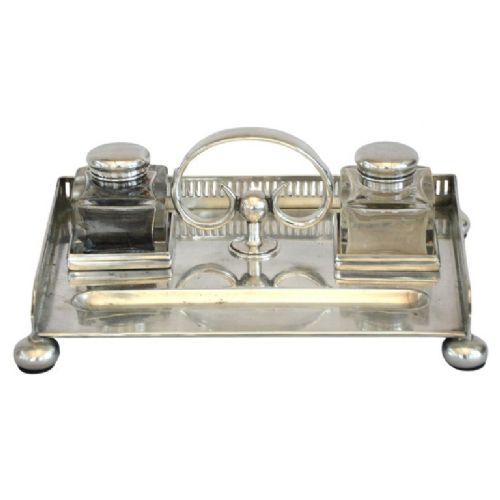
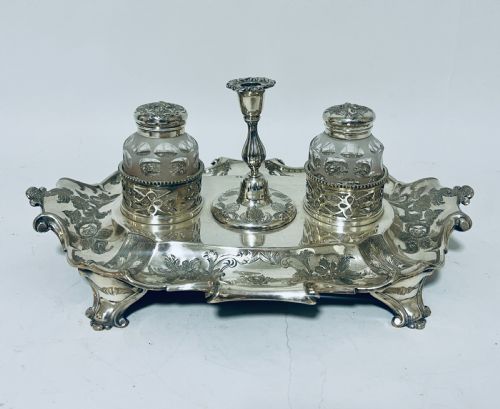
A silver inkwell tray set encompasses desk accessories, inkstands, and pen stands designed to hold writing materials together in one place. The versions most commonly met here span the Georgian, Victorian, and Edwardian periods, appearing in solid sterling silver, silver plate, and Sheffield plate.
Many examples incorporate cut glass bottles alongside silver mounts, while others use materials like onyx, lapis lazuli, coromandel, and satinwood. Forms range from simple double inkstands with chambersticks to large Regency-design inkstands and waterfall stands.
How they were made
Silversmiths formed these desk sets using sterling silver, silver plate, and Sheffield plate, often mounting them on wooden bases of oak, coromandel, or satinwood. Metal components required casting, hammering, and detailed silversmithing to shape the trays, feet, and pen rests.
Glassmakers produced cut glass bottles and inkwells to fit the silver collars and lids, while stone such as onyx and lapis lazuli was shaped and inlaid for decorative trays. Makers applied hallmarks to silver pieces to record the assay office, year, and standard of metal.
Listings span several eras from Georgian and Regency through Victorian, Edwardian, and the mid twentieth century.
What varies in quality
Quality shows in the weight of the metal, the crispness of the cast mounts, and the integration of diverse materials like cut glass or stone inlay. Heavier solid silver and substantial Sheffield plate stand apart from lighter plated items through sturdiness and depth of detail.
The sophistication of the design, such as the inclusion of chambersticks, hinged lids, and matched glass bottles, separates standard desk accessories from substantial presentation pieces. Maker attribution also plays a part, with established workshops demonstrating finer execution in chasing and mounting.
Elkington·Walker And Hall·Robert Garrard·Rupert Favell·W M F·Daniel Holy·Zimmermann
The Silver Inkwell Tray Set Glossary
- Inkstand
- A fitted tray or stand holding one or more inkwells, pen holders, and sometimes a sander or bell. These pieces formed the central writing equipment on a desk.
- Sheffield Plate
- A composite material made by fusing a sheet of silver to a copper core before rolling and shaping. This technique preceded modern electroplating.
- Chamberstick
- A small portable candlestick with a pan to catch wax, frequently incorporated into larger Victorian desk stands. It provided light for sealing letters.
- Cut Glass
- Glass decorated by cutting facets or patterns into the surface using a wheel. It appeared on inkwells to catch the light on the desk.
- Hallmark
- A stamp or series of marks applied to precious metals indicating the maker, purity, assay office, and year of testing. These marks help date the piece.
Silver Inkwell Tray Set: Frequently Asked Questions
What is a silver inkstand?
A silver inkstand is a desk tray fitted with inkwells, pen rests, and sometimes a chamberstick or sander. It served as the primary writing station on a desk.
These pieces held the liquid ink and tools needed for correspondence before the invention of the fountain pen.
How do I clean a silver desk set?
Cleaning requires a soft cloth and a gentle silver polish applied sparingly to avoid removing plating or damaging fitted stone and glass. Removable glass bottles lift out for washing.
Care must be taken around wooden bases like oak or coromandel to keep moisture away from the grain.
What is the difference between silver plate and sterling?
Sterling silver consists of solid silver alloyed for durability, marked with standard hallmarks showing its purity. Silver plate has a thin layer of silver applied over a base metal like copper or nickel.
Sheffield plate is an earlier form of plating where silver is fused directly to copper.
How do I tell Victorian from Edwardian pieces?
Victorian pieces date from the reign of Queen Victoria and often feature heavier, ornate styling such as Gothic Revival motifs or deep repoussé work. Edwardian pieces from the early twentieth century lean towards lighter designs and distinct stylistic influences.
Hallmarks stamped on the metal provide the exact year of manufacture for silver components.
Were these sets used for daily writing?
These sets were functional writing instruments kept on library tables, writing desks, and bureau platters in homes and offices. They held the ink required for daily letter writing and record keeping.
Larger double inkstands often served in formal offices or public rooms.