
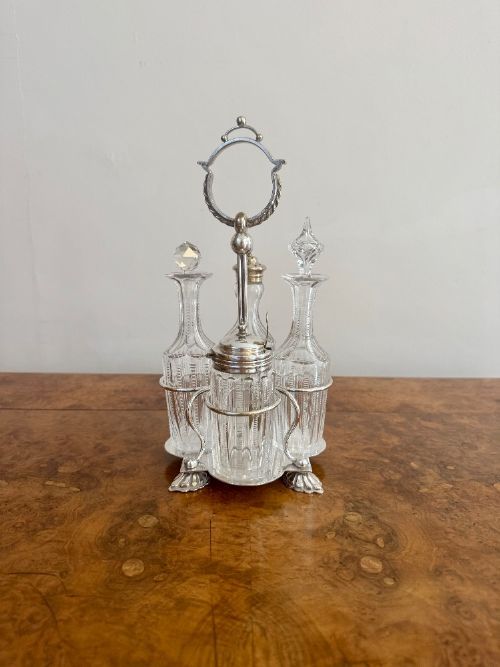
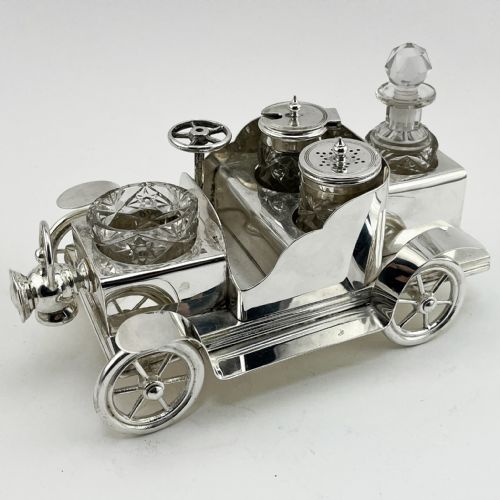


Silver Plated Decanter Set
These silver plated decanter set pieces bring period hospitality into modern rooms through heavy cut glass and ornate metal frames.
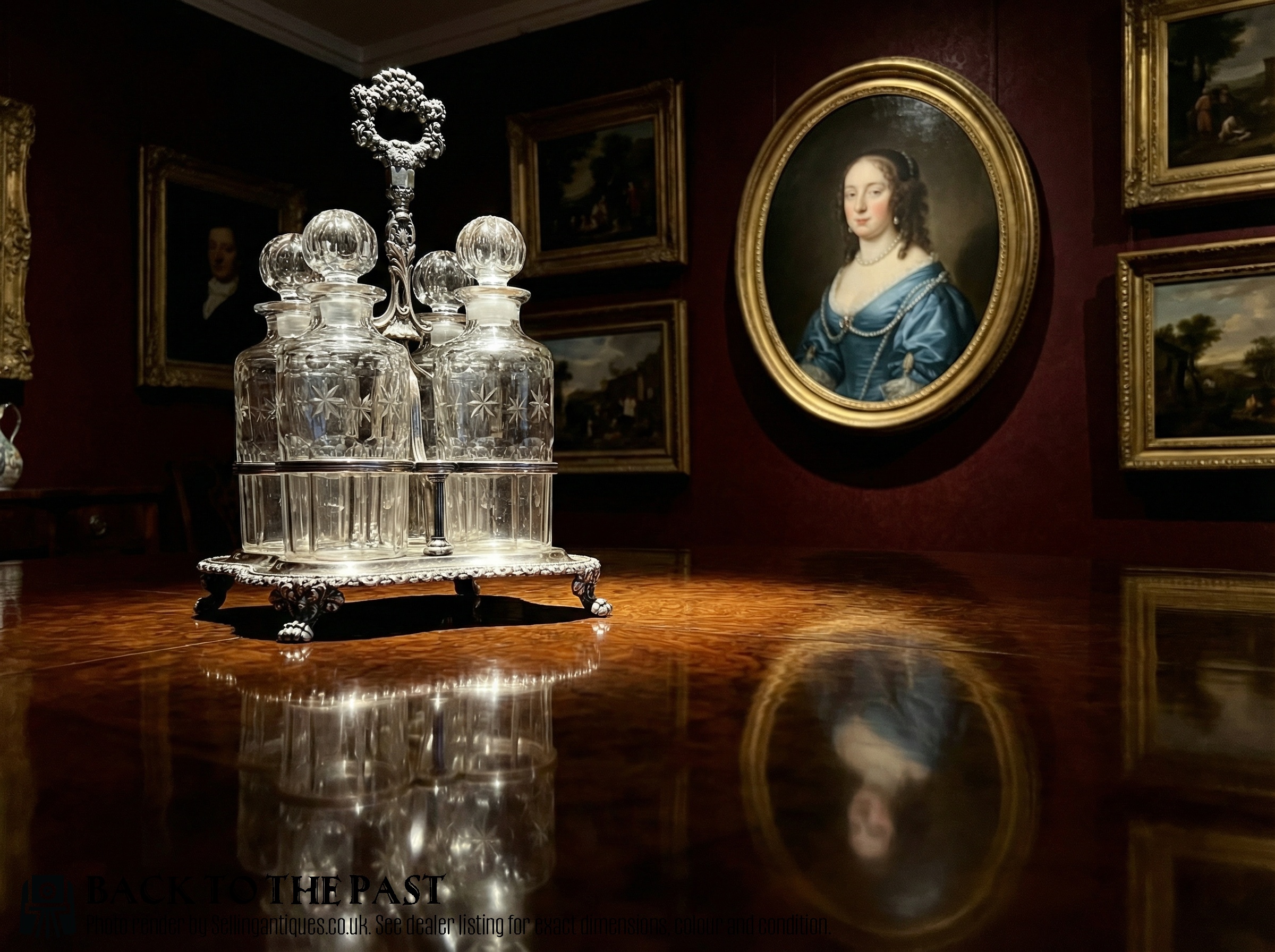
Silver Plated Decanter Set
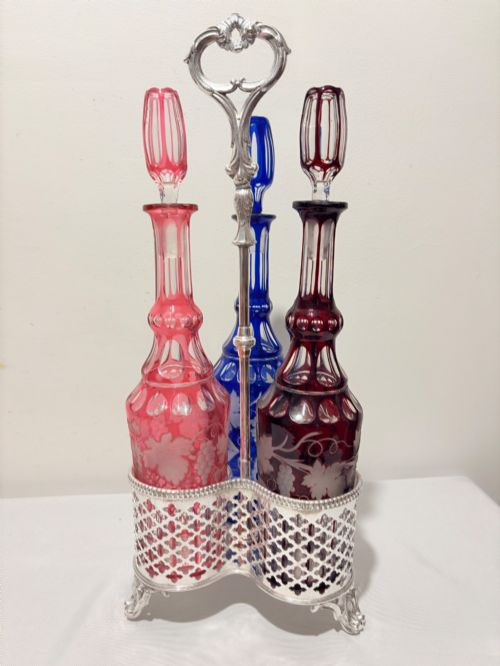
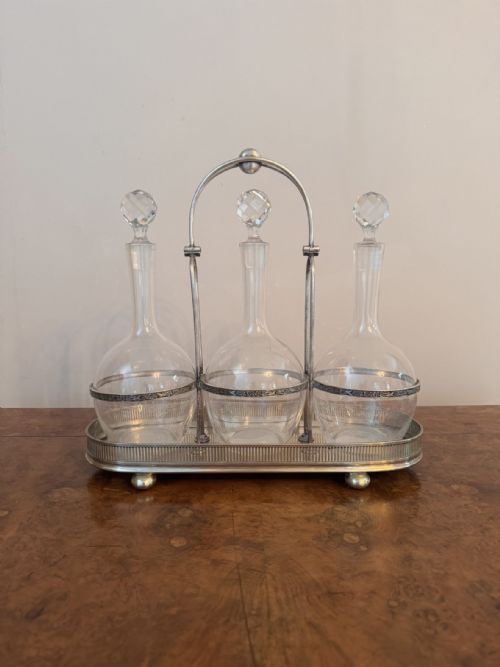
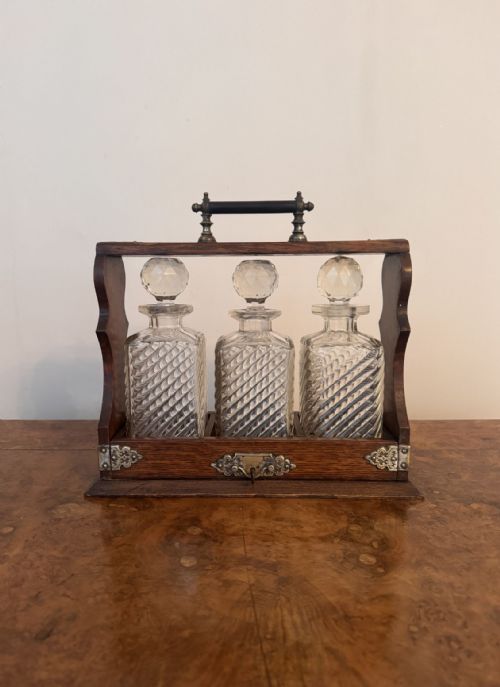
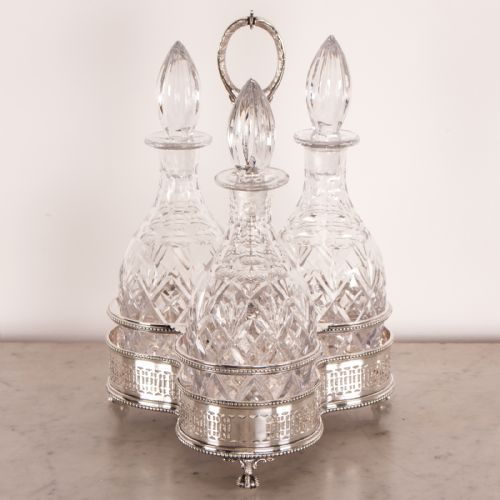
A silver plated decanter set combines glass vessels with fitted metal stands, frames, or trays designed for serving spirits and wine. The items gathered under this phrase range from multi-bottle tantalus frames and locking security stands to open cruet frames and wine coasters.
Victorian and Edwardian examples dominate the selection, built during periods when domestic entertaining required dedicated barware. Pieces span from simple three-bottle table frames to elaborate travelling bars and rotating spirit barrels housed in oak, mahogany, or coromandel.
Most configurations hold two or three glass bottles alongside silver plated mounts, often accompanied by original stoppers, labels, or small tots. The vessels themselves utilise cut glass, crystal, or coloured Bristol glass in blue, green, and amber tones.
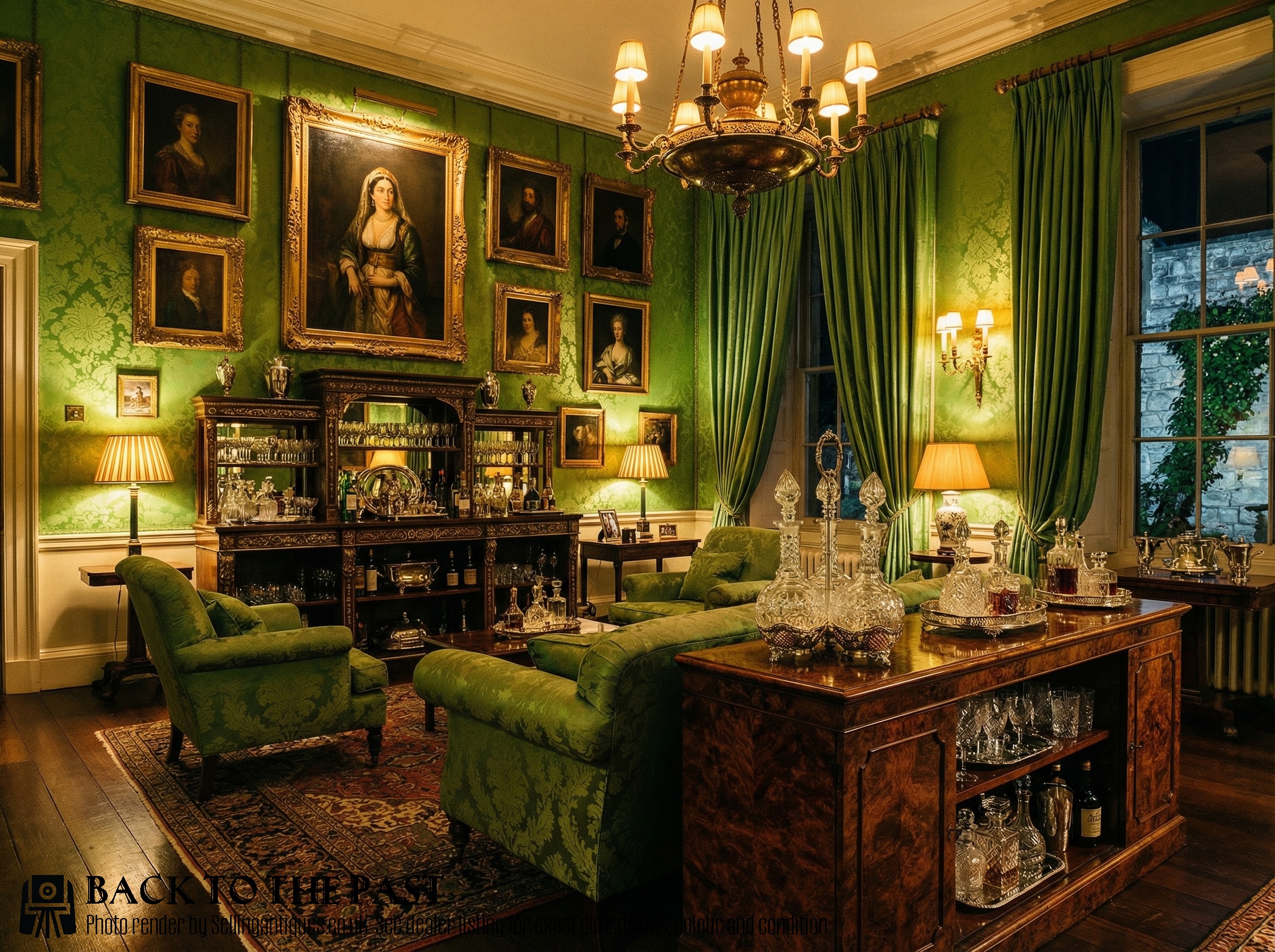
Silver plate and glass construction
Makers formed the structural frames from base metals coated with a layer of silver, sometimes employing Old Sheffield Plate techniques where silver sheet was fused to copper. Wood elements such as oak, mahogany, and hardwood provided sturdy box bases and locking mechanisms for tantalus frames.
The glass bottles and decanters were shaped by hand blowing or pressed into heavy moulds before undergoing deep wheel-cutting to create geometric or thistle patterns. Metal fittings, handles, and lock plates were cast separately, chased, and soldered or screwed to the wooden or glass bodies.
Victorian travellers packed entire collapsible bars into leather cases, proving that nineteenth-century transit required proper gin.
Distinctions in craftsmanship
Quality rests in the weight and clarity of the glass vessels and the thickness of the silver plating over the base metal. Finer sets retain matching original stoppers for every bottle and feature crisp, deeply cast mounts without thinning or wear on high points.
Maker attribution elevates a piece, with recognised firms like Elkington, Mappin and Webb, or Walker and Hall demonstrating superior hinge work, secure locks with functioning keys, and well-fitted wooden cabinetry.
Walker and Hall·Elkington·Mappin and Webb·Hukin and Heath·The Goldsmith Co·Wade Wingfield Wilkins·Philip Ashberry·Mappin Brothers·Henry Wilkinson and Co
The Silver Plated Decanter Set Glossary
- Tantalus
- A locking drink cabinet or frame that holds decanters securely by their stoppers to prevent unauthorized access. The mechanism requires a key to release the top bar before any bottle can be removed.
- Old Sheffield Plate
- An early form of silver plating created by fusing a thin sheet of silver to a thicker copper core before shaping. This technique often reveals faint traces of copper along exposed edges and high friction points.
- Cruet set
- A matched frame holding multiple condiment bottles or cruets, often adapted in period collections to house small spirit bottles and labels. These stands typically feature a central carrying ring and pierced metal galleries.
- Cut crystal
- High-purity glass containing lead oxide, cut with wheel-ground facets that refract light intensely. It provides the heavy, resonant body found in nineteenth-century decanters.
- Wine coaster
- A low, circular tray with a timber base and a silver plated gallery, designed to slide across dining tables after meals. They protect polished wood surfaces from moisture rings.
Silver Plated Decanter Set: Frequently Asked Questions
How do I open a tantalus?
Most tantalus mechanisms require a small key inserted into the lock at the top or side of the wooden base. Turning the key releases the metal locking arm, allowing it to swing upward and free the glass stoppers.
If the piece lacks a key, a locksmith can often impression a replacement, though many antique locks remain delicate and require gentle handling.
Are the stoppers original?
Original stoppers were ground to fit a specific decanter neck during production, meaning they share subtle hand-cut numbers or matching facet alignments. You can check authenticity by looking for identical glass tint, matching wear patterns around the base, and a snug, custom fit.
Replacement stoppers often sit slightly high or display a different clarity of crystal compared to the body of the bottle.
How should I clean silver plate?
Silver plate requires gentle maintenance using a non-abrasive silver polish and a soft cloth to avoid wearing through the thin metal layer to the base alloy. Avoid liquid dips entirely, as they strip patination and can damage exposed wooden bases or corrode inner mechanisms.
Glass decanters clean best with warm water and specialised bottle brushes, avoiding harsh detergents that might cloud nineteenth-century crystal.
Can I use these for daily serving?
These sets function well for serving spirits and wine during dinners, provided the glass is checked for internal cleanliness and sound structural integrity. Modern spirits will not harm antique crystal if washed promptly after use.
Locking tantalus sets also remain practical for securing bottles away from children while adding period character to a sideboard or home bar.