



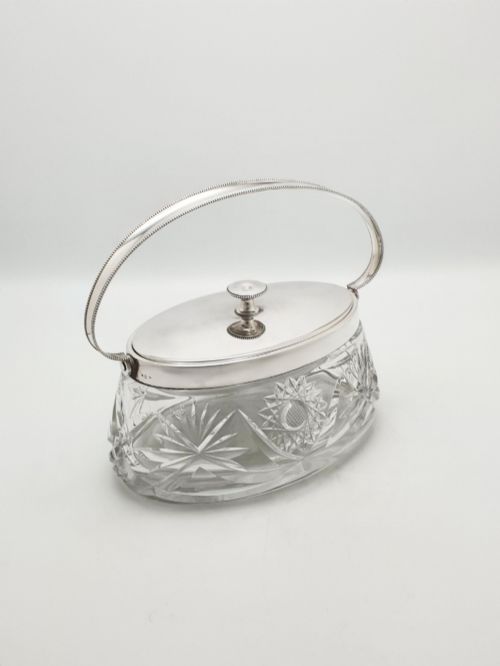


Silver Plated Cookie Barrel
A silver plated cookie barrel is a handsome table container for dry treats, combining metal mounts with glass or ceramic bodies.
Silver Plated Cookie Barrel
When you search for a silver plated cookie barrel, you encounter lidded table vessels designed to keep biscuits fresh while displayed on the dining table or sideboard. Most examples date from the Victorian and Edwardian eras, spanning the latter half of the nineteenth century through the early twentieth century.
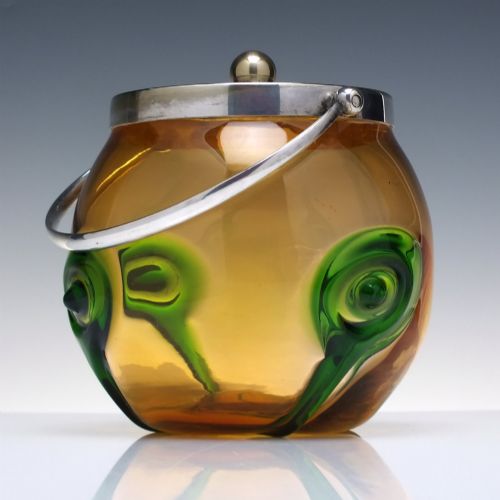
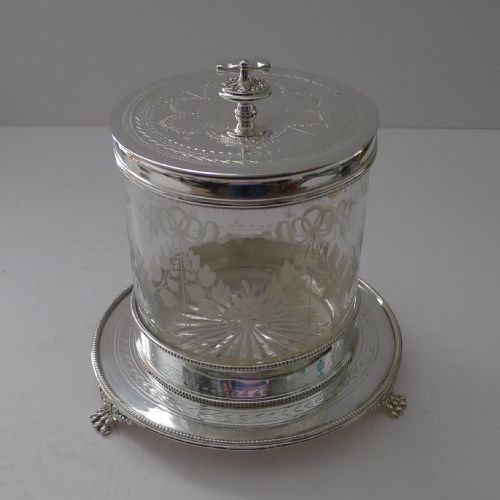
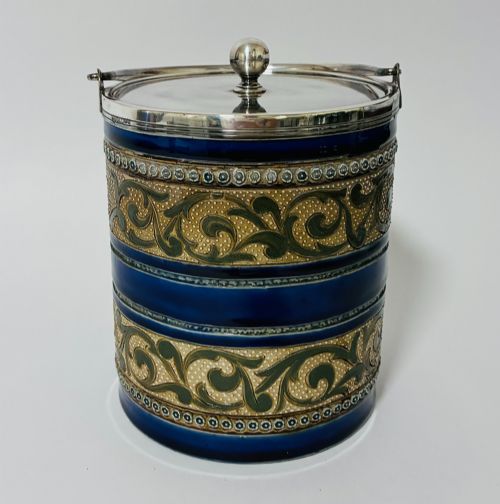
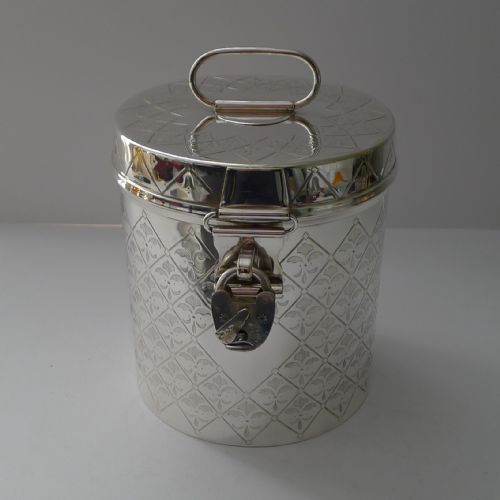
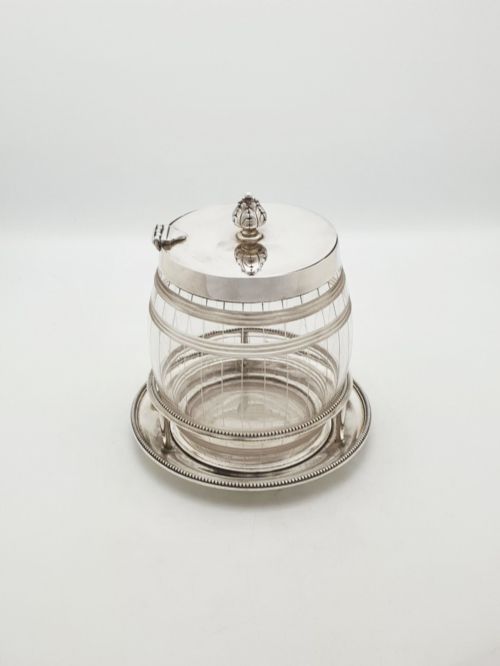
The standard form sits on a matching silver plated mount, often featuring a swing handle, a hinged or resting lid, and a decorative finial. Ceramic bodies like stoneware, earthenware, Jasperware, and flow blue sit alongside cut glass, cranberry glass, and oak alternatives.
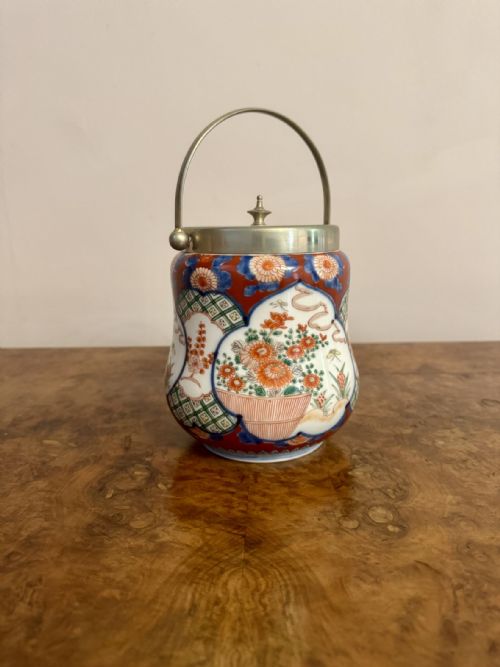
Makers utilised various stylistic influences, ranging from straightforward neoclassical designs to Japanese imari patterns, Arts and Crafts movements, and Jugendstil aesthetics. Novelty shapes, such as barrels mimicking heavy weights, also appear among standard cylindrical drums.
How they were made
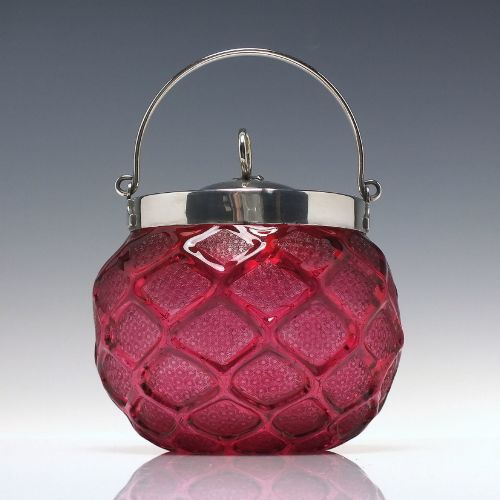
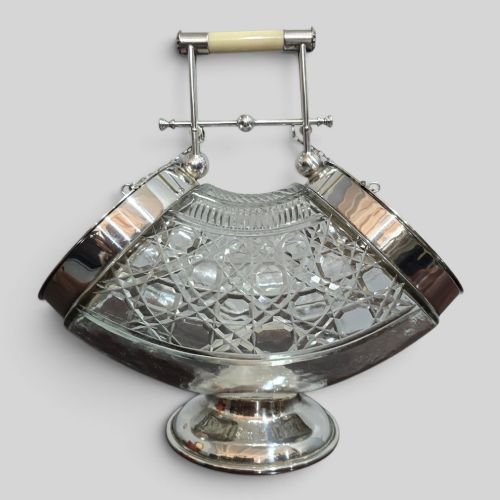
Silversmiths applied silver plating over base metals to create durable mounts, rims, handles, and lids that held bodies of moulded or cut glass, glazed earthenware, and carved oak. Glass components show deep hobnail cutting, faceting, or rich cranberry colouring achieved through mineral additions during blowing.
Ceramic bodies include Doulton Lambeth stoneware, Wedgwood Jasperware with applied classical reliefs, and flow blue earthenwares finished with glossy glazes. Metal mounts frequently display pierced decoration, engraved foliage, or cast figural finials secured to the main body.
Silver Plated Cookie Barrel Retail Price Guide 2026
Typical asking prices for silver plated cookie barrel among the pieces listed under this phrase on Sellingantiques today, from the lower quarter to the upper quarter. They describe what is for sale here now, not the wider market.
Several makers produced novelty biscuit boxes shaped precisely as heavy iron weights, complete with painted pound measurements to trick guests.
What varies in quality
The weight and thickness of the silver plate dictate the baseline quality of the metal mounts, alongside the crispness of any engraved or cast ornamentation on the lid and handle. Heavier gauge metalwork and robust hinges separate substantial domestic pieces from lighter wares.
On glass and ceramic versions, the depth and precision of the cutting or the crispness of applied Jasperware reliefs define the standard of manufacture. The integration between the ceramic or glass liner and the fitted silver plated rim determines how securely the lid seats.
Mappin and Webb·Elkington and Co·WMF·Robert and Belk·Walker and Hall·John Grinsell and Sons·Wedgwood·Doulton Lambeth·Carlton Ware·Crown Devon
The Silver Plated Cookie Barrel Glossary
- Jasperware
- A type of fine stoneware developed by Josiah Wedgwood, characterised by a matte surface and contrasting applied white relief figures.
- Cranberry glass
- Transparent red glassware coloured with gold chloride during production, popular for Victorian tableware inserts.
- Hobnail cut
- A raised, faceted pattern cut into glass surfaces that creates a diamond-like texture across the body.
- Finial
- The decorative knob or handle fixed to the top of the lid, sometimes cast in the form of heraldic motifs or figures.
Silver Plated Cookie Barrel: Frequently Asked Questions
What is a silver plated cookie barrel used for?
These lidded jars served originally as biscuit boxes to keep dry baked goods fresh and crisp inside the dining room or drawing room. Today they function as decorative containers or practical storage on sideboards.
Their sturdy metal mounts and fitted lids protect contents from moisture while offering an ornamental centrepiece for tea tables.
How do I date an antique biscuit barrel?
Dating relies on stylistic clues, manufacturer marks stamped into the silver plate or ceramic base, and the choice of materials. Victorian examples often show heavier ornamentation and rich cranberry glass, while Edwardian pieces lean towards lighter cutting or simpler oak construction.
Maker stamps and registry marks help narrow down the exact decade of manufacture for standard drum and novelty shapes.
Are glass inserts removable for cleaning?
Many cut glass and ceramic bodies lift directly out of their silver plated frames and stands to permit thorough washing. Fixed liners require careful wiping to prevent moisture accumulation around the metal mounts.
Checking how the glass or ceramic body sits within the rim reveals whether the inner vessel was designed to lift clear.
What styles are common in these barrels?
Designs reflect the decorative tastes of the nineteenth and early twentieth centuries, including strict neoclassical revivalism, Victorian arts and crafts, and Jugendstil curves. Some pieces incorporate Japanese imari ceramic patterns or novelty forms shaped like weights.
Handles and mounts frequently display aesthetic movement engraving or pierced scrollwork characteristic of English workshops.