


Silver Plated Chamberstick
A silver plated chamberstick brings the soft, low glow of the nineteenth-century bedroom to a modern bedside table.
Silver Plated Chamberstick
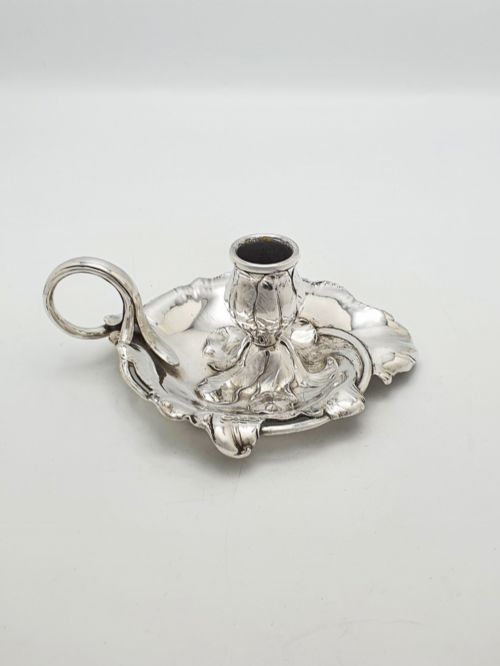
A silver plated chamberstick is a low, saucer-shaped candleholder fitted with a loop handle and a socket for holding a tallow or wax candle. These pieces were designed to be carried through dark corridors and bedchambers before the arrival of gaslight and electricity.
Most examples found here date from the nineteenth century, ranging from the Georgian period through the Victorian era up to around nineteen hundred. You will encounter single items, matched pairs, and occasional larger sets equipped with matched snuffers.
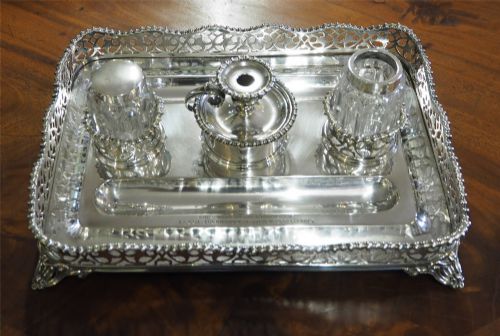
While the core form remains a shallow dish with a central nozzle, variations include leaf-shaped designs, figural thistles, and pieces fitted with storm lanterns or incorporated into desk sets.
How they were made
Early pieces rely on Old Sheffield Plate, a method of fusing a thin sheet of silver to a thicker copper base before shaping and soldering the components. This technique leaves a telltale copper seam or edge where the base metal shows through wear.
Later nineteenth-century examples often utilise electroplating on a base metal, known as EPNS, which coated white metal alloys evenly in silver using an electrical current. Manufacturers also worked in copper and incorporated cut glass elements on select desk accessories.
Some nineteenth-century examples are monogrammed for an earl or countess, proving that even aristocrats occasionally needed to find the loo in the dark.
What varies in quality
Quality rests in the crispness of the casting, particularly around applied borders, crests, and naturalistic motifs like leaves or thistles. Finer pieces retain deep relief and sharp detail that poorer pressings lack.
The integrity of the plating layer defines the durability and overall finish, with heavier silver deposits resisting the passage of time far better than thin commercial coatings. Complete sets retaining original accessories like snuffers command distinct attention.
Elkington and Company·Hukin and Heath·Walker and Hall
The Silver Plated Chamberstick Glossary
- Chamberstick
- A short candlestick set into a wide pan with a loop handle, used for lighting bedrooms and hallways.
- Old Sheffield Plate
- An early method of fusing silver and copper sheets together before working the metal into shape. It shows a warm copper line at the edges.
- EPNS
- Electroplated nickel silver, a common base metal method introduced in the nineteenth century for coating objects uniformly with silver.
- Snuffer
- A small pair of scissor-like tongs with an attached box, designed to trim burning candle wicks.
- Rococo Revival
- A decorative nineteenth-century style featuring exuberant scrolls, asymmetrical plant forms, and shell motifs.
Silver Plated Chamberstick: Frequently Asked Questions
How were chambersticks actually used?
A chamberstick was carried by its loop handle to light the way up dark stairs and through unlit rooms before bed. The wide saucer caught any dripping wax, and many designs included a small conical snuffer resting in the pan to extinguish the flame.
Servants would ready them each evening, and they sat on hall tables or bedside chests ready for use. Their low centre of gravity made them steady to carry in one hand.
What is the difference between Old Sheffield Plate and EPNS?
Old Sheffield Plate uses a mechanical fusion process where silver sheet is bonded to copper under heat and pressure. This creates a rich depth where the underlying copper occasionally shows through at points of high wear.
EPNS relies on an electrical chemical bath to deposit silver onto a nickel-brass alloy base. This later method produces a more uniform silver coating without the characteristic copper edges of older pieces.
How do I date a chamberstick?
Dating relies on stylistic clues, manufacturing techniques, and any engraved crests or monograms. Georgian and early nineteenth-century pieces often display Old Sheffield Plate construction and restrained neoclassical or plain round pans.
Later Victorian and nineteen-hundred examples embrace elaborate Rococo Revival scrolls, Art Nouveau leaf forms, or distinct maker marks from firms like Elkington or Walker and Hall.