


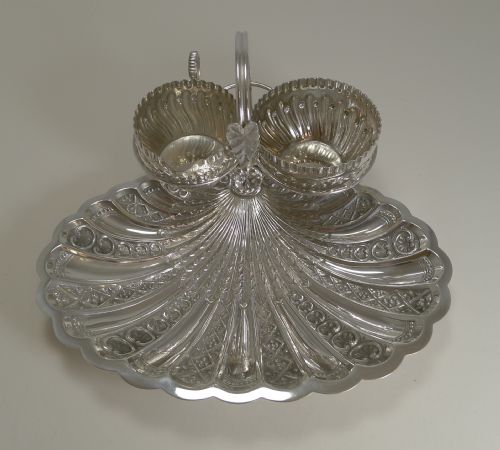


Silver Plated Centrepiece Tray
A silver plated centrepiece tray brings undeniable presence to a dining table, offering a reflective stage for fruit, flowers, or glassware.
Silver Plated Centrepiece Tray
A silver plated centrepiece tray encompasses a diverse group of tablewares designed to anchor a formal dining arrangement or sideboard. These items emerge from various periods including Victorian, Edwardian, and Art Deco eras, capturing the changing tastes in domestic display.
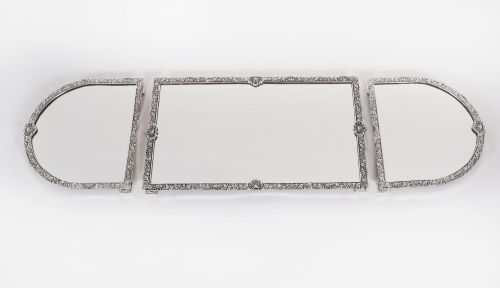
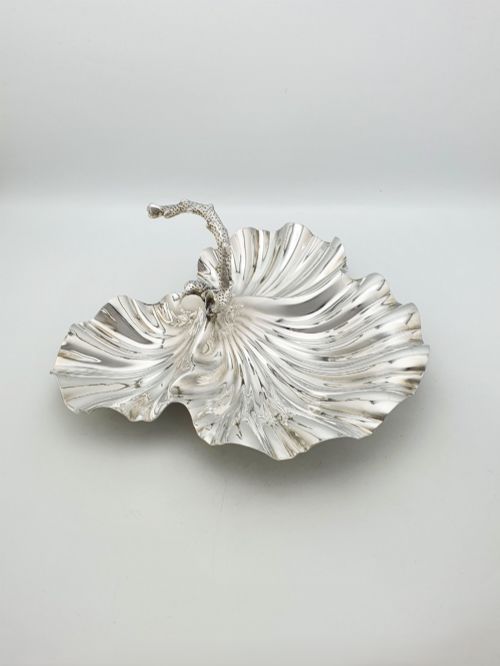
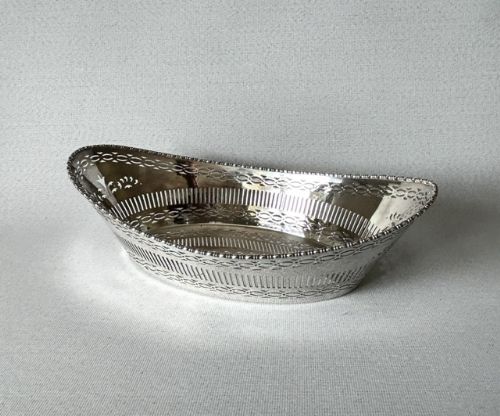
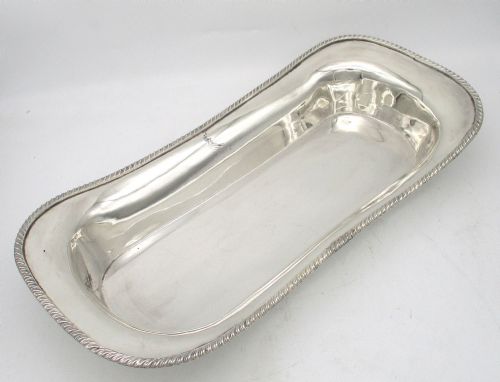
The most common iterations on this page include serving dishes, bread baskets, and mirror plateaus that utilise silver plate over base metals. Such objects frequently feature specific forms like shell dishes, double heart shapes, and circular mirror bases intended to reflect candlelight.
Originating from British workshops and French makers, these items range from heavily engraved serving pieces to geometric baskets. Each piece reflects the functional demands of nineteenth and early twentieth century hospitality.
How they were made
Production relies heavily on electroplating silver onto a base metal or nickel silver core, a technique that democratised metal tableware during the nineteenth century. Manufacturers applied thin layers of silver to durable white metal foundations, creating the lustre of solid silver without the prohibitive cost.
Glass and mirror plate inserts frequently complement the metalwork, held within cast or pierced frames. Artisans embellished these surfaces through floral engraving, etching, and the construction of stylised handles such as coral or botanical motifs.
Asparagus serving dishes appeared because Victorian dining etiquette demanded a specific vessel for every single vegetable.
What varies in quality
The standard of execution in chasing, engraving, and casting defines the upper tier of these metalwares. Superior items display crisp botanical or geometric patterns that retain their depth across the plated surface.
The integrity of the underlying electroplated nickel silver and the clarity of integrated mirror glass or porcelain components dictate longevity. Heavier gauge base metals and robust mounts indicate careful workshop production.
Mappin & Webb·Walker & Hall·Brille Paris·Roberts and Belk·Coalport
The Silver Plated Centrepiece Tray Glossary
- EPNS
- Electroplated Nickel Silver. This acronym denotes a base metal alloy of copper, nickel, and zinc coated with a thin layer of pure silver through an electrical process.
- Mirror Plateau
- A table base inset with mirror glass. These items were placed centrally to reflect silver objects, crystal, and candlelight.
- Entree Dish
- A covered serving vessel. These pieces typically feature removable handles to allow the base to function independently as an open platter.
- Silver Plate
- A manufacturing method. This term describes items where a thin coating of silver is bonded to a less precious base metal.
Silver Plated Centrepiece Tray: Frequently Asked Questions
What is a silver plated centrepiece tray used for?
These pieces serve as decorative table focal points for holding fruit, bread, or serving dishes during meals.
They also function as reflective mirror plateaus beneath candelabras or floral arrangements.
How do I clean a silver plated tray?
Maintenance requires gentle washing with warm soapy water and a soft cloth to protect the underlying electroplate.
Harsh abrasives should be avoided entirely to prevent wearing away the thin silver layer over the base metal.
How can I tell Victorian from Art Deco pieces?
Victorian items often display ornate floral engraving, naturalistic motifs, and heavy cast handles.
Art Deco pieces from the later period favour clean geometric lines and stylised French forms.
What metals are beneath the silver plate?
Manufacturers typically used nickel silver or other copper-based white metal alloys as a durable foundation.
This base metal provided structural strength while keeping the weight and cost manageable.