



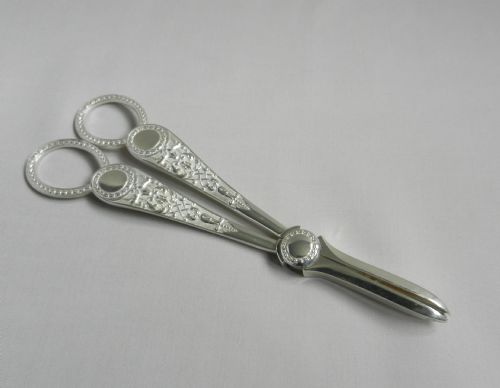
Antique Silver Fruit Servers
Antique silver fruit servers bring refined elegance to the dining table, combining precious metals with organic handles for period hospitality.
Antique Silver Fruit Servers
Antique silver fruit servers encompass specialist cutlery and serving implements designed specifically for portioning fruit at the formal dining table. These items emerge predominantly from the Georgian, Victorian, and Edwardian periods, reflecting the shifting domestic habits of the nineteenth and early twentieth centuries.
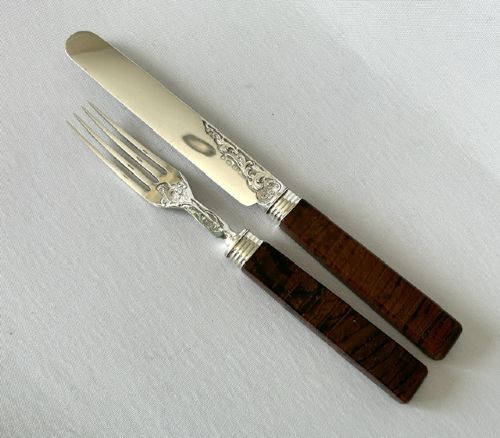
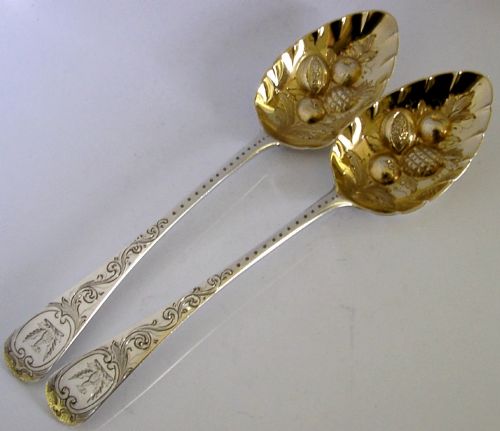
The assortment on this page includes grape shears, berry serving spoons, and matched serving knives and forks. Collectors frequently encounter pieces fashioned in sterling silver and silver plate, often paired with natural handles.
Form follows function closely within this category, yielding dedicated tools such as pierced berry spoons and heavy grape shears. Such implements reveal the Victorian and Georgian appetite for elaborate dessert courses and specialised table silver.
Materials and construction
Silversmiths utilised sterling silver and silver plate as the foundational metals, occasionally applying gold gilt highlights to bowls and blades. These metals provided the necessary durability and lustre required for high-status dining table accessories.
Makers integrated natural materials such as mother of pearl and agate for handles, contrasting the polished metal surfaces. Metal components incorporate techniques including casting, piercing, and engraving to achieve intricate decorative motifs.
Listings span the Georgian, Victorian, and Edwardian eras, incorporating sterling silver, silver plate, agate, and mother of pearl.
Assessing quality and craftsmanship
Superior examples distinguish themselves through the crispness of cast and pierced decoration upon the metal blade or bowl. Finer pieces maintain balanced proportions between the handle material and the metal working part.
The integration of prestigious makers or detailed family crests elevates certain sets above standard domestic utility ware. Quality rests on the precision of the silversmith's hand in handling delicate natural handles alongside precious metals.
Paul Storr·Thomas Bradbury·Roberts and Belk
The Antique Silver Fruit Servers Glossary
- Sterling silver
- A silver alloy containing 92.5 percent pure silver by mass, standard for high-quality British tablewares.
- Grape shears
- Specialised scissors designed for cutting clusters of grapes at the table without damaging the fruit.
- Berry spoon
- A large serving spoon, often later gilt and heavily chased, intended for serving soft fruits.
- Silver plate
- A base metal coated with a thin layer of silver, offering the appearance of solid silver at a lower cost.
Antique Silver Fruit Servers: Frequently Asked Questions
What are antique silver fruit servers used for?
These implements were created to serve delicate fruits like berries, grapes, and stone fruits during formal dessert courses. They allowed hosts to portion food cleanly without staining or damaging fine tableware.
Today, collectors utilise them for modern dining or display them as examples of nineteenth-century metalwork and specialised domestic design.
How do I care for silver fruit servers?
Cleaning requires a soft cloth and specialised silver polish designed to remove tarnish without harming the metal or natural handles. Avoid abrasive materials that can scratch delicate gilt surfaces or delicate agate.
Storage in a dry, tarnish-resistant lining helps preserve the polish and prevents unnecessary wear on antique materials.
How do I distinguish Victorian from Georgian pieces?
Georgian pieces generally exhibit neoclassical restraint or early nineteenth-century vigor, while Victorian items often feature heavier, highly ornate decoration and elaborate chasing. Maker's marks and hallmarks provide definitive dating clues.
Examining the style of the crests and the handle materials also helps place an item within its correct historical decade.
Why do some fruit knives have non-metal handles?
Acidic fruit juices react poorly with certain metals, tarnishing them and altering the taste of the food. Mother of pearl and agate provided hygienic, acid-resistant grip materials that contrasted attractively with silver.
These natural materials also added tactile luxury and visual variety to the dessert service.