




Silver Plate Serving Bowl
These silver plate serving bowl examples span Victorian fruit baskets to Art Deco bread dishes, offering practical elegance for the modern table.
Silver Plate Serving Bowl
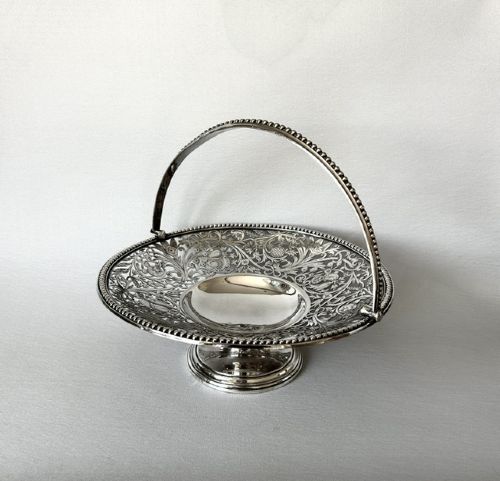
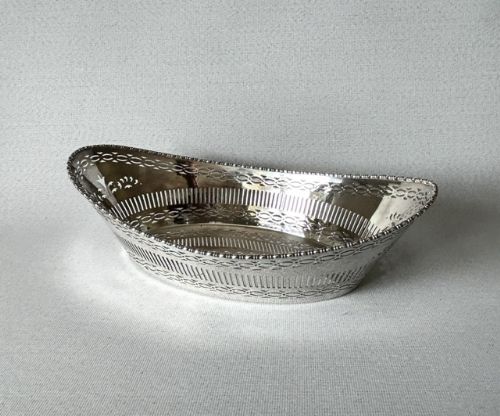
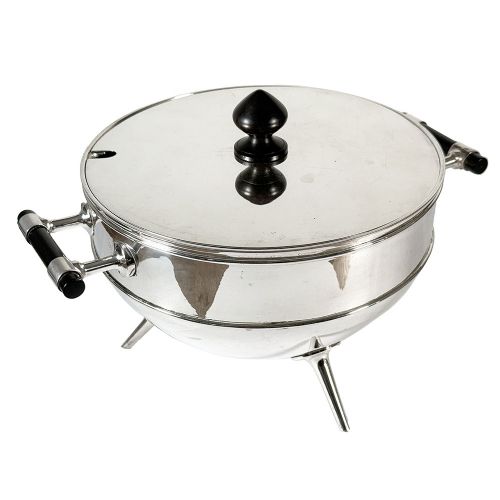
A silver plate serving bowl covers a diverse assortment of dining vessels, including fruit baskets, entree dishes, tureens, and specialised pieces like strawberry dishes and sweetmeat holders. These items originate predominantly from British and French workshops, spanning the Georgian, Victorian, Edwardian, and Art Deco periods.
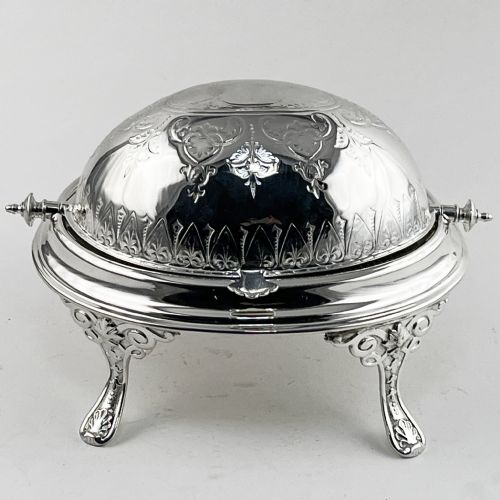
The pieces encountered most frequently on this page date from the late nineteenth century through to the early twentieth century. Victorian and Edwardian examples often feature elaborate piercing or floral engraving, whereas later Art Deco versions from makers such as Brille or Christofle display geometric simplicity.
Buyers also encounter utilitarian forms adapted for specific table functions, such as revolving butter dishes, warming dishes, and salad bowls incorporating cut glass or polished oak. Each variation reflects the evolving dining customs and social rituals of its respective era.
Materials and Technique
Makers constructed these serving vessels using base metals like copper or nickel silver, applying a thin outer layer of silver through electroplating or the older Old Sheffield plating process. Electroplated nickel silver, commonly designated as EPNS, became the standard method for durable domestic tableware during the Victorian period.
Beyond metalwork, many items incorporate contrasting natural materials such as ebonised wood, polished oak, and cut glass or crystal inserts. These additions provide textural variety and structural utility, particularly in salad bowls and lidded preserve dishes where glass liners protect the plated surface from acidic foods.
Listings feature serving bowls and dishes spanning the nineteenth and twentieth centuries, incorporating materials like cut glass, copper, and sterling silver alongside standard silver plate.
Distinctions in Standard
Quality in these pieces rests primarily upon the precision of the underlying manufacturing, the crispness of chased or engraved ornamentation, and the preservation of the silver coating over the base metal. Superior examples display balanced proportions, substantial weight, and maker marks from renowned firms indicating careful craftsmanship.
The integrity of secondary materials, such as heavy hand-cut glass liners or properly seasoned timber mounts, further separates utilitarian pieces from exceptional table art. Original matching elements, including serving ladles or dedicated servers, enhance the coherence and desirability of the ensemble.
Mappin & Webb·Hukin & Heath·Elkington·Walker & Hall·Hamilton & Inches·Tiffany & Co·Roberts and Belk·Daniel and Arter·James Dixon·Dan Holy·Brille·Christofle
The Silver Plate Serving Bowl Glossary
- EPNS
- Electroplated Nickel Silver. A durable base alloy coated with a thin layer of silver widely utilised in British manufacturing from the mid-nineteenth century onwards.
- Old Sheffield Plated
- A composite material formed by fusing a sheet of silver to a thicker copper core before shaping. This predecessor to electroplating is found on earlier eighteenth and nineteenth-century pieces.
- Entree Dish
- A covered vessel designed for serving main courses or side dishes at the dining table. They frequently feature removable handles to allow the base to function independently as an open platter.
- Sweetmeat Dish
- A small decorative bowl intended for confectionery, nuts, or small sweet delicacies. They often appear with pierced ornamentation or delicate swing handles.
- Tureen
- A deep, large bowl with a cover used for serving soups, stews, or sauces. These pieces often rest upon fixed or matching stands and may include two loop handles.
Silver Plate Serving Bowl: Frequently Asked Questions
How do I clean silver plate?
Clean these items gently using warm soapy water and a soft cloth, avoiding abrasive pastes that can wear away the thin silver layer over the base metal.
Dry the vessel thoroughly after washing to prevent water spots and store it in a dry environment away from direct sunlight.
Can I use these for food?
Most of these vessels are safe for serving dry foods, fruits, and bread, provided the internal plating remains intact without exposing the underlying copper or nickel.
For acidic foods or dressings, ensure the piece includes an original glass or ceramic liner to protect the metallic surface from chemical erosion.
What is Old Sheffield Plate?
Old Sheffield Plate is an early composite material created by fusing silver to a copper block before rolling them into sheets. This technique predates modern electroplating and produces a warm tone visible where the silver layer naturally thins over time.
Pieces manufactured with this method usually date from the late eighteenth or early nineteenth century.
How do I date a serving bowl?
Dating relies upon a combination of stylistic clues, such as Victorian floral engraving or Art Deco geometric lines, alongside stamped manufacturer marks and registry numbers. Consulting historical maker registries helps narrow the production window of stamped items.
Construction techniques, such as the transition from fused copper sheets to electroplated nickel silver around the mid-nineteenth century, provide further chronological markers.