



Silver Plate Pepper Caster
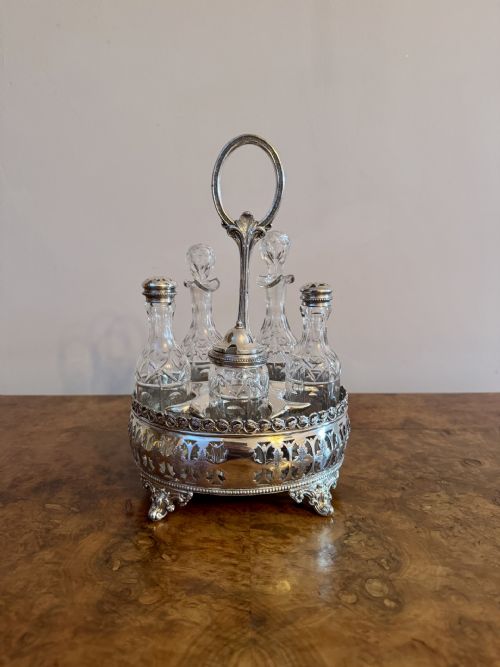
A silver plate pepper caster or cruet set brings proper dining tradition to the table, offering gleaming frames and cut glass bottles that have served meals for over a century.
Silver Plate Pepper Caster
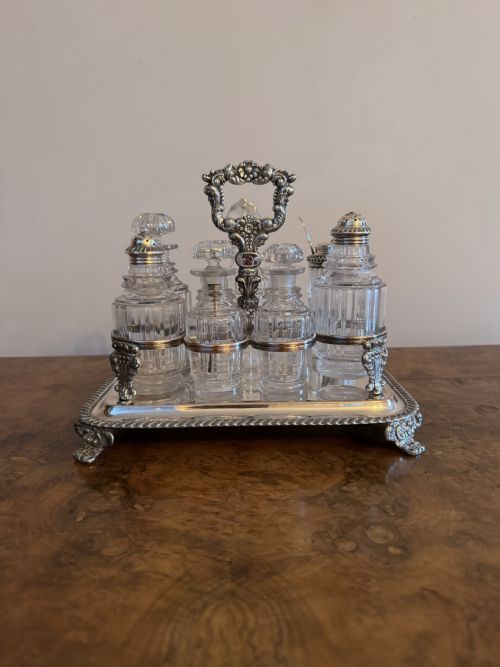
A silver plate pepper caster typically appears alongside larger cruet and condiment sets on this page, spanning Victorian, Edwardian, and Georgian periods. These table pieces organise essential seasonings within matched stands.
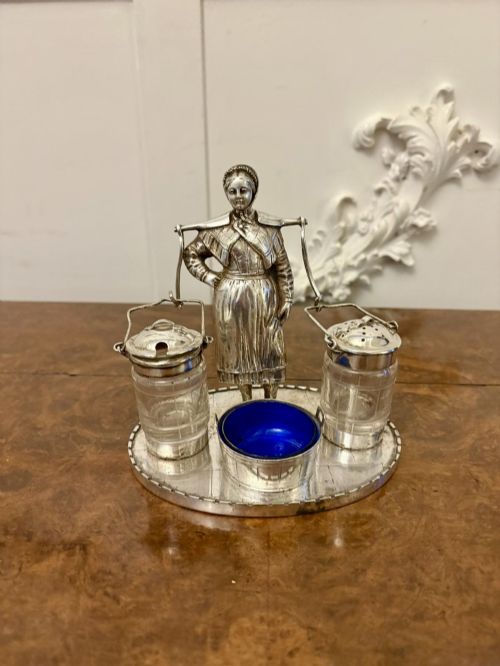
The selection ranges from simple single-bottle casters to substantial multi-bottle cruet frames holding five, six, or seven glass vessels. Novelty designs also emerge from the nineteenth century, taking the form of farmyard themes, hunting scenes, and butlers' trays.
Edwardian and Victorian examples dominate the available styles, often executed in electroplated nickel silver. Buyers will also encounter bachelor cruet sets intended for smaller households or individual dining.
Materials and Construction
Manufacturers built these sets using electroplated nickel silver as the primary metallic base, creating a durable foundation beneath a protective silver layer. This technique allowed workshops to produce complex frames efficiently while maintaining a bright metallic finish.
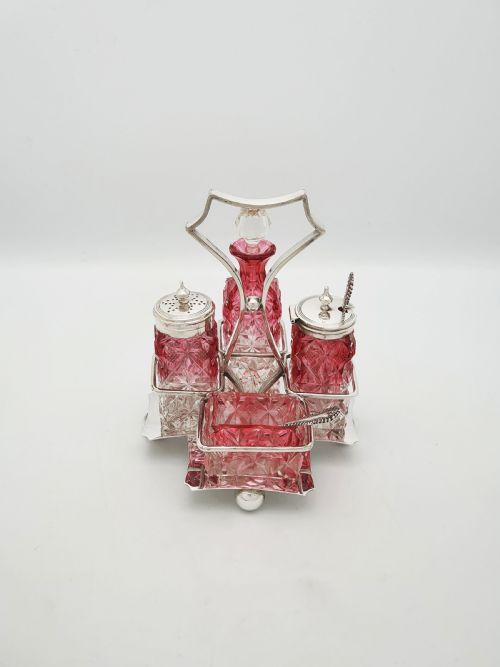
Glass elements feature prominently alongside the metalwork, incorporating cut glass, cobalt glass, and cranberry flashed glass. These coloured and clear glass bottles provide a decorative contrast to the polished silver plate.
Specialist makers occasionally combined oak woodwork with silver plate in novelty stands, such as miniature butlers' trays. Gilt highlights also appear on select components within the cruet assemblies.
Silver Plate Pepper Caster Retail Price Guide 2026
Typical asking prices for silver plate pepper caster among the pieces listed under this phrase on Sellingantiques today, from the lower quarter to the upper quarter. They describe what is for sale here now, not the wider market.
Some Victorian dining tables featured miniature butlers' trays holding the pepper and salt, bringing a tiny touch of domestic staff to the meal.
Evaluating Quality and Craftsmanship
The distinction between standard production and superior pieces lies in the crispness of the cast mounts and the weight of the metal frame. Heavier stands with intricate piercing or chased decoration demonstrate a higher level of silversmithing skill.
The integrity and match of the glass bottles greatly influence the desirability of a cruet set. Original cut glass or coloured glass liners that fit their respective silver compartments snugly represent the upper tier of surviving examples.
Mappin Brothers·Walker & Hall·Mappin & Webb
The Silver Plate Pepper Caster Glossary
- Cruet set
- A matched collection of bottles and casters held within a fitted metal or wooden frame. These sets sit upon the dining table to dispense condiments such as pepper, mustard, vinegar, and oil.
- Electroplated nickel silver
- A base metal alloy of copper, nickel, and zinc coated with a thin layer of pure silver through an electrical process. This method became the standard industrial practice for producing domestic tableware during the Victorian era.
- Bachelor cruet set
- A smaller scale cruet assembly designed for individual use or intimate dining. These compact sets typically hold fewer bottles than standard family dining variants.
- Cranberry flashed glass
- Glassware created by fusing a thin layer of gold-rich cranberry coloured glass over a clear glass body before cutting decorative patterns through the outer layer. This technique produces deep red highlights against clear facets.
- Novelty cruet
- A condiment set formed into a pictorial or figurative shape, such as animals, farmyards, or miniature furniture. Makers used these playful designs to entertain guests at nineteenth-century dining tables.
Silver Plate Pepper Caster: Frequently Asked Questions
How do I clean a silver plated caster?
Clean silver plate gently using a dedicated silver polishing cloth to preserve the thin metallic layer over the nickel silver base. Avoid harsh abrasive cleaners that can wear away the plating over time.
Wash glass inserts separately in warm soapy water and dry them completely before returning them to the metal frame.
Were these sets used daily?
Victorian and Edwardian households relied on cruet sets at every formal and family meal to dispense seasonings and sauces. They remained central fixtures on dining tables throughout the late nineteenth and early twentieth centuries.
Smaller bachelor sets served individual diners or smaller households during morning and evening meals.
How are Victorian pieces dated?
Dating relies on stylistic clues, manufacturing techniques, and maker marks stamped into the silver plate frames. Victorian examples often display heavier cast decoration and more traditional bottle shapes compared to later designs.
Edwardian pieces tend to show lighter framing, reflecting changing dining fashions around the turn of the twentieth century.
Can I use these sets today?
These pieces function well for modern dining when fitted with clean glass bottles for everyday condiments and pepper. Many collectors enjoy integrating antique cruet sets into contemporary table settings.
Careful handling ensures the silver plate and glass components remain preserved for daily use or display.