


Silver Plate Mustard Pot
These silver plate mustard pot examples range from Victorian novelties to Edwardian cruets, offering practical elegance for the table.
Silver Plate Mustard Pot
When you search for a silver plate mustard pot, you encounter small table vessels designed to hold mustard alongside other condiments. The evidence shows these pieces appearing as standalone items such as drum shapes or fretted cylinders, or as part of larger cruet sets and condiment holders.
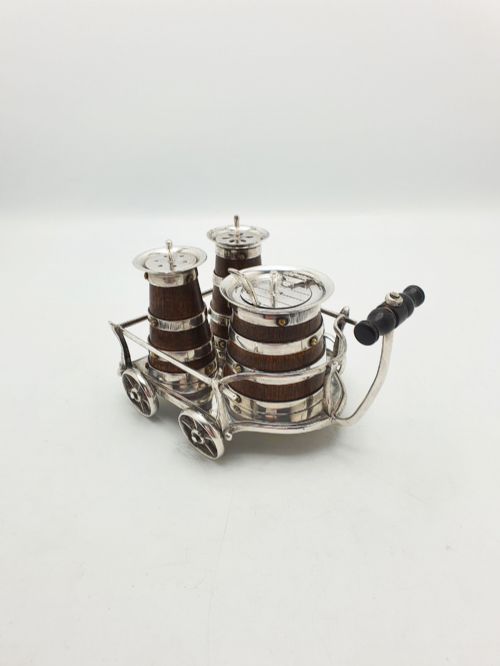
Most examples date from the Victorian and Edwardian periods, stretching from the eighteen-seventies into the nineteen-twenties. Alongside straightforward silver plate containers, the selection includes novelty designs shaped like barrels, carriages, farmyard scenes, hunting motifs, butler's trays, and musical violins.
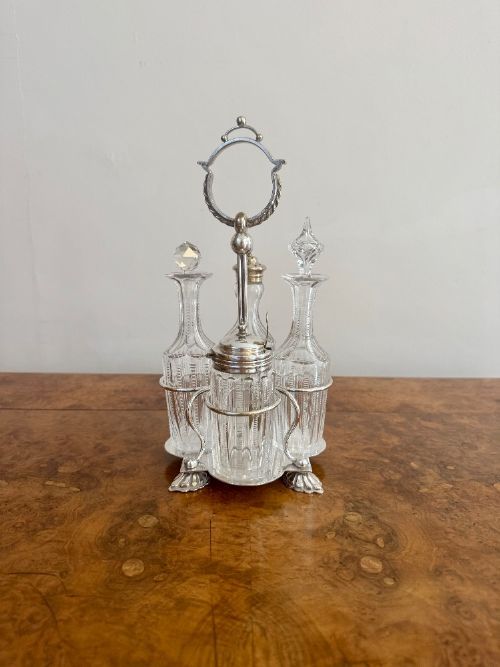
Makers and workshops of the late nineteenth and early twentieth centuries produced these items in silver plate, frequently combining the metal with cut glass, cranberry glass, oak, walnut, and other woods. Buyers looking for these pots will find both individual receptacles and complete condiment stands from the same eras.
How they were made
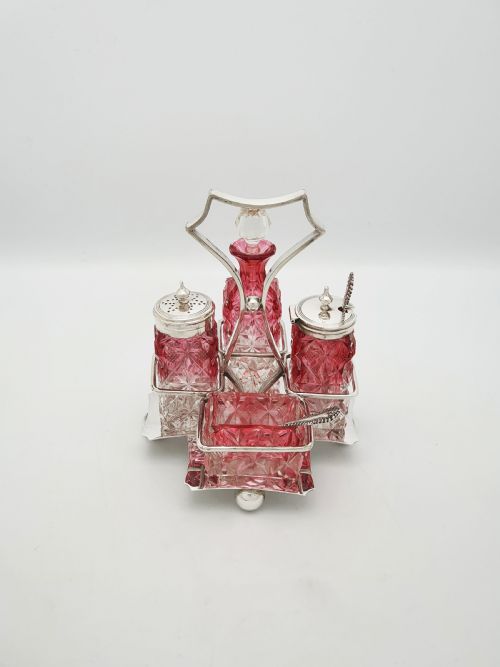
The construction of a silver plate mustard pot relies on a base metal, typically copper or a white metal alloy, coated with a thin layer of silver. Workshops combined this plated metal with cut glass and coloured glass liners, such as cranberry glass, to hold the condiment safely.
Wooden elements like oak and walnut appear in stands and novelty forms such as barrels and butler's trays. Wirework frames and fretted metalwork demonstrate the detailed soldering and piercing techniques employed by period silversmiths.
Among the novelties are mustard pots disguised as farmyard scenes, horse-drawn carriages, and miniature violins.
What varies in quality
Quality in these pieces rests upon the crispness of the casting and the execution of novelty details, such as the wheels on a carriage cruet or the staves on a wooden barrel. Substantial weight in the metal and clean piercing in fretted designs distinguish better items from simpler production.
The integrity of the combination materials also matters. Well-preserved cut glass liners that fit their metal frames precisely and retain their original clarity represent higher standards of period manufacture.
Mappin Brothers
The Silver Plate Mustard Pot Glossary
- Silver Plate
- A base metal coated with a layer of silver. This technique allowed nineteenth-century makers to produce affordable tableware with the appearance of solid silver.
- Cruet Set
- A collection of small bottles or pots for holding condiments like mustard, oil, vinegar, salt, and pepper. These sets usually sit within a metal or wooden stand.
- Cranberry Glass
- A rich red-pink transparent glass created by adding gold chloride to the molten glass batch. It frequently appears as liners in Victorian and Edwardian mustard pots and cruets.
- Fretted
- Metalwork decorated with pierced or cut-out patterns. This technique reduced the weight of the piece while creating ornamental designs around the body of the pot.
Silver Plate Mustard Pot: Frequently Asked Questions
What is a silver plate mustard pot used for?
These pots served dining tables as dedicated containers for prepared mustard, keeping the condiment ready for meals.
They were used individually or as part of larger condiment and cruet sets alongside oil, vinegar, salt, and pepper.
How do I date a silver plate mustard pot?
Dating relies on stylistic clues, accompanying materials, and hallmarks or maker marks stamped into the metal.
Victorian pieces often feature heavy ornamentation or novelty shapes, while Edwardian examples tend toward lighter, cleaner lines.
Are glass liners original to the pots?
Original glass liners fit the interior dimensions and contours of the metal frame without excessive movement.
Match the glass type, such as cut glass or cranberry glass, to the period of the silver plate holder.
How should I clean silver plate?
Clean silver plate gently using a specialised silver cloth or mild polish to preserve the thin plating.
Avoid harsh abrasives that can wear through the silver layer and expose the base metal underneath.