


Edwardian Glass Cruet Stand
An edwardian glass cruet stand brings table condiment service into sharp focus, offering an organised centrepiece for dining.
Edwardian Glass Cruet Stand
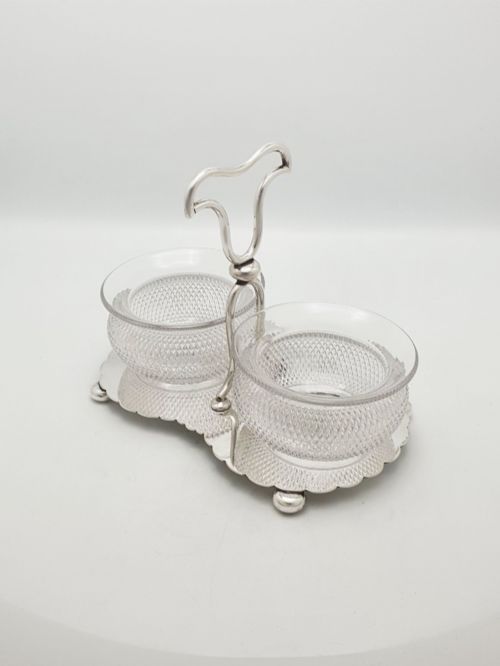
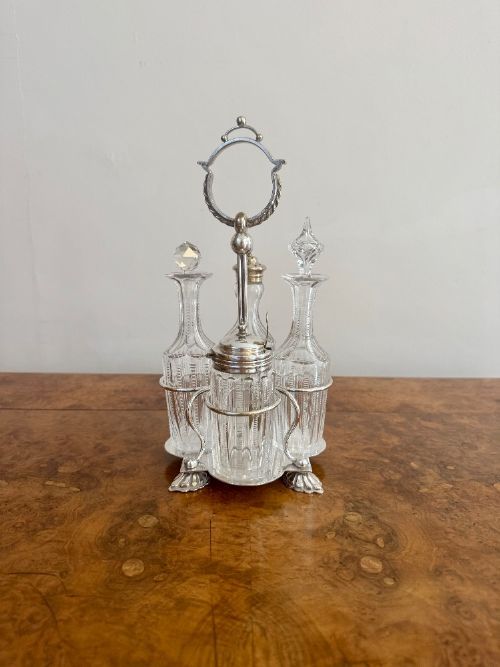
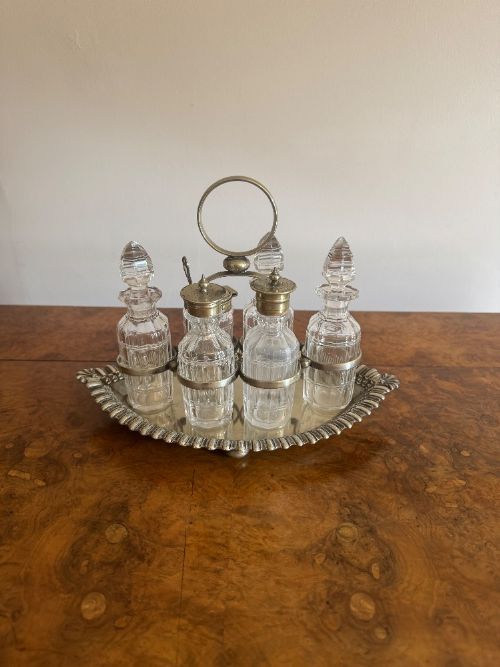
An edwardian glass cruet stand serves as a tabletop frame designed to hold condiment bottles and jars together for easy dining service. These pieces emerge predominantly from the Edwardian period alongside late Victorian and nineteen-twenties examples.
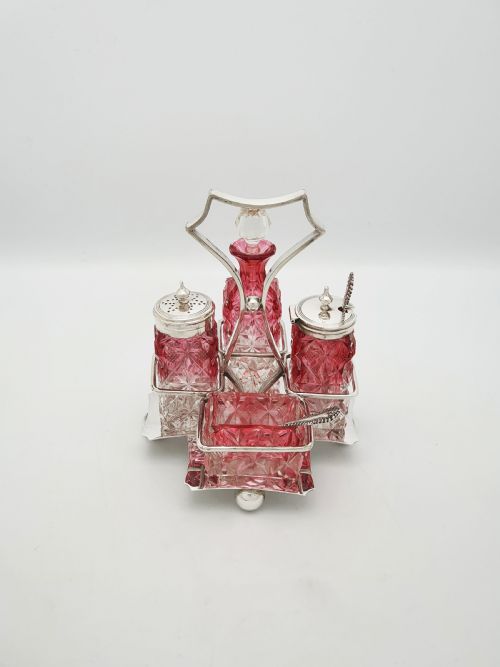
Most selections on this page pair silver plated frameworks with cut glass containers, holding everything from twin bowls to six-bottle configurations. Buyers encounter varied formats including oval stands, decanter carriers, and novelty figural designs.
How they were made
Maker workshops built the structural frames using silver plate over a base metal, shaping them into oval trays, carrying handles, and secure bottle rings. Skilled artisans formed the condiment vessels from clear crystal, cut glass, and occasional cranberry flashed glass.
Production combined metal plating techniques with heavy glass cutting to create durable pieces meant for daily dining use. Certain items incorporated fitted velvet linings inside presentation cases.
Listings feature periods spanning from eighteen-eighty through the nineteen-twenties, showcasing silver plate, cut glass, and velvet materials.
What varies in quality
The distinction between standard and superior pieces rests on the weight and depth of the glass cutting, alongside the crispness of the silver plated framework. Larger multi-bottle sets and those bearing maker attributions demand closer attention for their heavier construction.
Design complexity also defines the tier, moving from simple twin bowl condiment sets up to large eight-piece configurations and figural novelty frames.
Walker & Hall
The Edwardian Glass Cruet Stand Glossary
- Cruet set
- A matched group of bottles or containers holding condiments such as oil, vinegar, salt, and mustard, held within a single stand. These units sat at the centre of the dining table for convenient guest access.
- Silver plate
- A thin layer of silver fused to a base metal core like copper or nickel brass. This technique allowed manufacturers to produce tableware with the appearance of solid silver at a lower cost.
- Cranberry glass
- A rich pinkish-red glass created by adding gold chloride to the molten batch. It appears frequently in decorative tableware from the Victorian and Edwardian eras.
- Cut glass
- Glassware decorated by grinding facets and patterns into the surface using a rotating wheel. Deep cutting catches the light and adds considerable weight to condiment bottles.
Edwardian Glass Cruet Stand: Frequently Asked Questions
What is an edwardian glass cruet stand used for?
These stands hold bottles and jars containing liquid and dry condiments during meals. They kept seasonings organised and portable for guests around the dining table.
Today, they function as decorative table centrepieces or serve practical condiment duties during formal dinners.
How do I clean a silver plated cruet stand?
Clean the silver plated metal using a soft cloth and a gentle silver polish formulated for plated items. Avoid abrasive pads that can wear away the thin silver layer.
Wash the glass bottles separately in warm soapy water, ensuring they dry completely before returning them to the metal frame.
How can I tell Edwardian pieces from Victorian ones?
Edwardian cruet stands often feature lighter, airier metalwork influenced by neoclassical tastes compared to the heavier ornamentation of earlier decades. Makers also registered designs under specific periods or patent marks which help confirm the date of production.
Looking at the depth of the glass cutting and the style of the silver plate can further clarify the manufacturing era.
Are all the glass bottles original to the stand?
Many sets retain their matched cut glass bottles, though replacements do occur due to breakage over the decades. Checking whether the bottle bases match the apertures in the silver plated frame helps determine originality.