


Silver Plate Jam Stand
These silver plate jam stand pieces bring structured elegance to the table, pairing polished metalwork with coloured glass containers.
Silver Plate Jam Stand
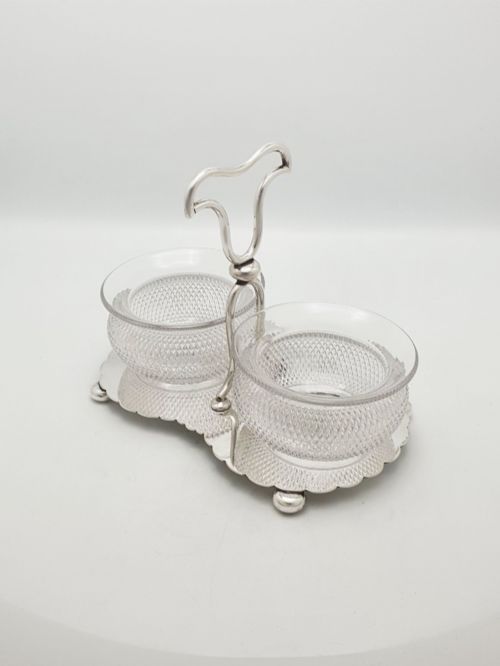
A silver plate jam stand is a tabletop piece designed to hold preserve dishes or jars securely within a metal frame. When searching for this phrase, you encounter forms from the Edwardian period and around 1900, alongside related condiment stands and dessert sets.
The most common versions combine silver plated stands with cranberry glass, cut glass, or porcelain vessels. These items served formal dining and breakfast tables, holding jam, honey, or relish ready for service.
How they were made
Makers formed the metal frames using silver plating techniques over a base metal, shaping them into stands, caddies, and frames to support glass inserts. The glass elements required blowing, moulding, or cutting, sometimes resulting in cranberry glass, vaseline glass, or hand painted porcelain plates.
Constructed during the Victorian, Edwardian, and Art Deco periods, these objects combined durable metalwork with fragile glass components. Individual pieces integrated spoons, handles, and fitted bowls designed specifically for the frame.
Several stands double as stag inkwells, proving that Victorian stags held jam just as happily as ink.
What varies in quality
Quality rests in the precision of the silver plating and the weight and clarity of the glass or porcelain components. Heavier metal frames and crisper cut glass or hand painted details distinguish superior examples from standard production.
The integration between the metal stand and its fitted dish demonstrates the maker's care. Pieces that retain their original matched bowls, spoons, and undamaged glass show higher integrity than assembled sets.
Walker and Hall·James Dixon And Sons·James Deakin·James Shaw And Fisher·Doulton Burslem
The Silver Plate Jam Stand Glossary
- Silver Plate
- A thin layer of silver bonded to a base metal such as copper or Britannia metal. This technique allowed makers to produce bright, reflective tableware at a lower cost than solid silver.
- Cranberry Glass
- A rich red-pink glass coloured with gold chloride during production. It appears frequently in Edwardian preserve dishes and stands.
- Condiment Stand
- A metal frame designed to hold multiple small jars, bottles, or bowls for table sauces and preserves. These share construction methods with jam stands.
- Cut Glass
- Glass decorated by cutting geometric or floral patterns into the surface using rotating wheels. This adds weight, brilliance, and texture to jam jars and relish containers.
Silver Plate Jam Stand: Frequently Asked Questions
What is a silver plate jam stand?
A silver plate jam stand is a decorative metal holder designed to display and serve fruit preserves or jam at the table. It typically secures one or more glass bowls within a plated frame.
These items originated in periods such as the Edwardian era and around 1900, combining functional tableware with ornamental design.
How were jam stands used?
They were placed on dining and breakfast tables to hold jam, marmalade, or honey for guests to serve themselves. A small spoon usually accompanied the glass bowl for portioning.
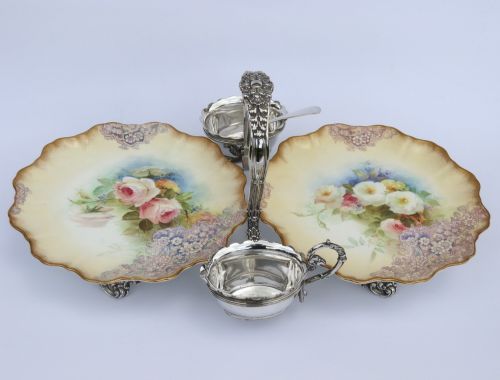
In larger household settings, they formed part of wider condiment sets or dessert services alongside matching plates.
How do I clean silver plate?
Silver plate requires gentle cleaning with a soft cloth and a specialised silver polish designed to protect the plated surface. Avoid abrasive cleaners that can wear away the thin silver layer.
Glass inserts and porcelain plates should be removed and washed separately in warm soapy water without harsh chemicals.
How can I tell the period?
Dating relies on stylistic clues, manufacturer marks stamped into the metal, and the type of glass used. Edwardian and 1900s pieces often feature cranberry glass or delicate wirework frames.
Later styles shift towards geometric Art Deco forms, while Victorian examples tend to be heavier with intricate cast mounts.