


Silver Plate Cruet
When you explore a silver plate cruet, you examine coordinated table vessels designed to hold condiments, bottles or breakfast eggs within a metal frame.
Silver Plate Cruet
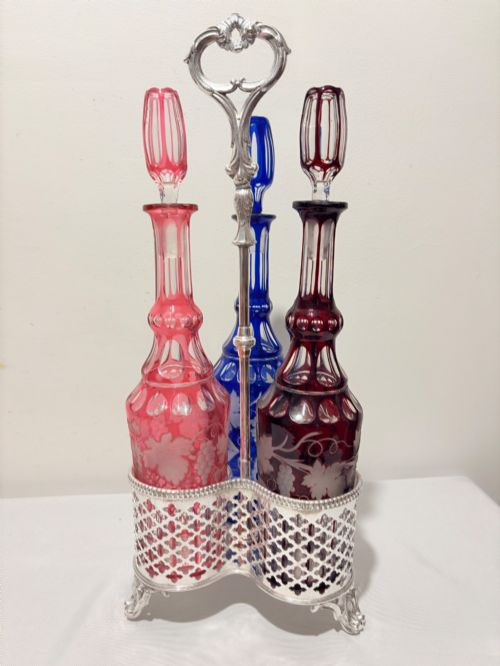
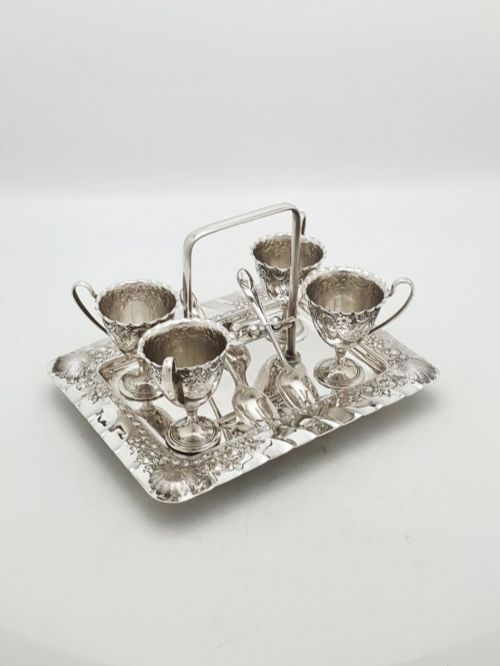
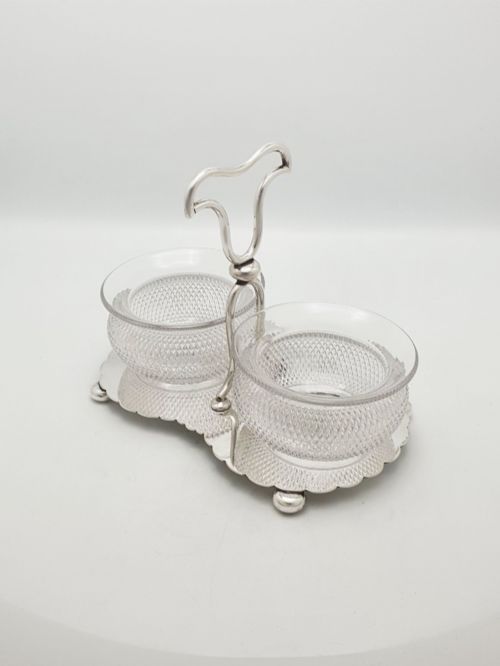
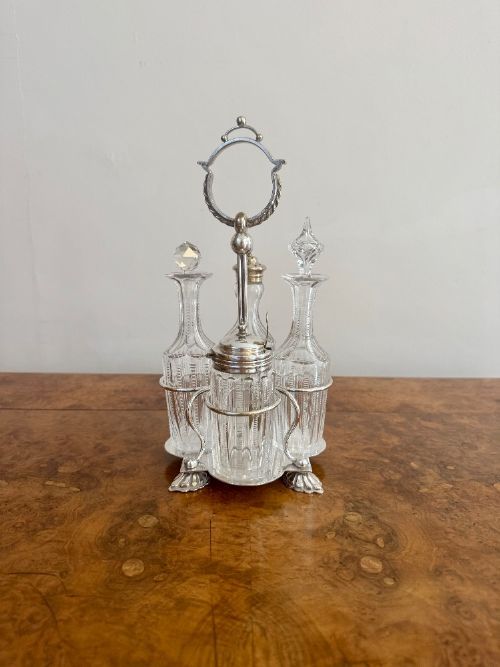
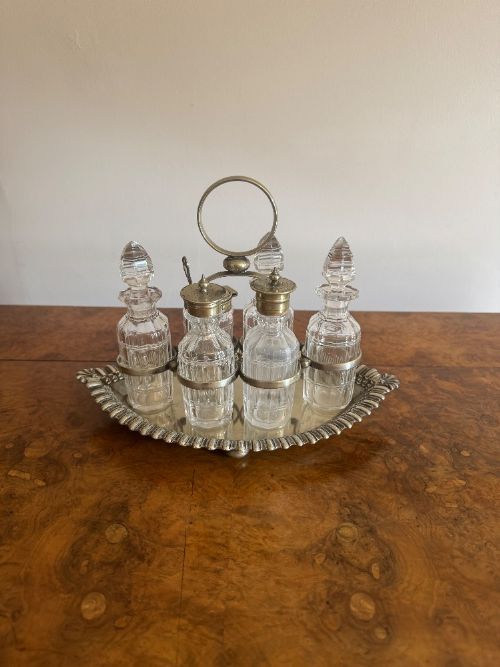
A silver plate cruet groups multiple glass or ceramic condiment containers into a single metal stand for table service. The selections range from multi-bottle stands for vinegar, oil and sauces to specialised breakfast sets intended for eggs.
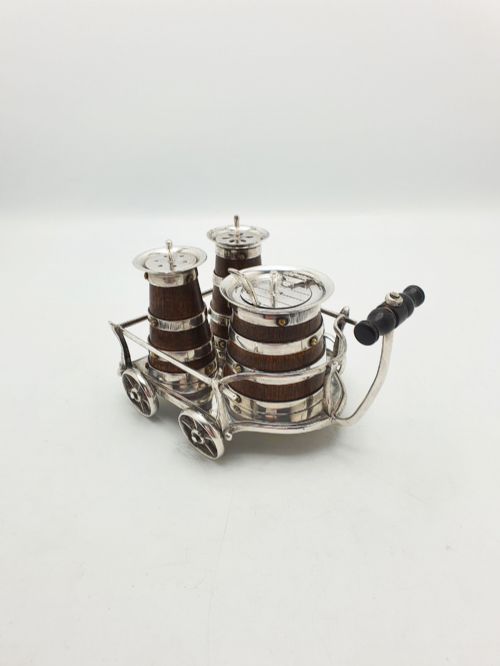
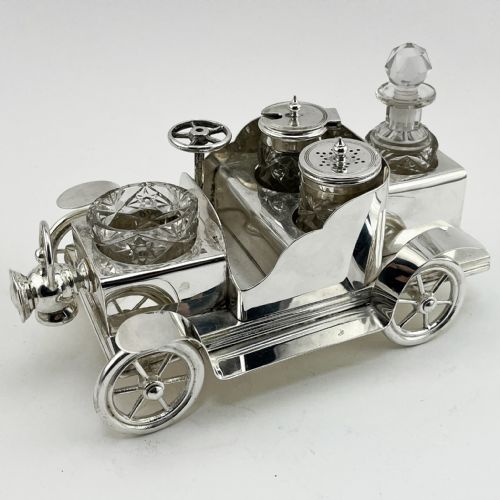
Edwardian and Victorian pieces dominate the forms, frequently incorporating cast handles, fitted frames and matching spoons. Novelty shapes modelled as animals, carts or transport appear alongside standard oval and round bottle frames.
The configurations vary from small bachelor sets designed for individual use up to large seven-bottle dining table arrangements. Frames rest upon feet or wheels, occasionally integrating wooden elements such as oak bases or barrel bodies.
Materials and construction
Makers applied thin layers of silver onto base metals like nickel silver or used older fusion methods such as Old Sheffield Plate. Frames were often cast or stamped with decorative borders, handles and cartouches.
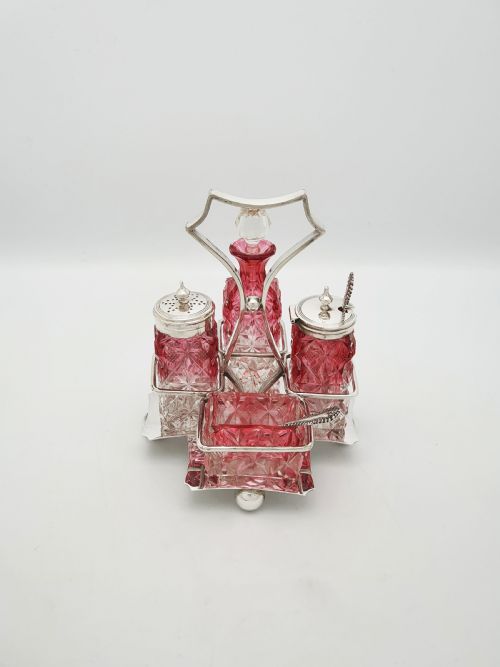
Containers combined clear glass, cut glass, and occasionally cranberry flashed glass or china inserts. Wooden components utilised oak or general hardwoods for barrel bodies and fitted interior partitions.
The listings encompass items spanning the Georgian era through the Edwardian period, incorporating cut glass, oak and cranberry glass.
Assessing craftsmanship and condition
The refinement of the casting in the frame and handle dictates the standard of the piece, separating mass-produced items from finely detailed examples. Crisp botanical or geometric embossing and solid joints indicate superior manufacturing.
The integrity and matching nature of the glass bottles or egg cups affect overall completeness, as replacements alter the original uniformity. Thick cut glass with deep facets and undamaged rims represents higher initial cost.
Mappin Brothers·Walker & Hall·Wade Wingfield Wilkins·William Hutton & Sons·Martin Hall & Co·Mappin & Webb·James Dixon & Sons
The Silver Plate Cruet Glossary
- Electroplated Nickel Silver
- A manufacturing process where a layer of silver is deposited onto a nickel alloy base using electrical current.
- Old Sheffield Plate
- An early method of fusing a sheet of silver to a copper core before rolling them together into combined sheets.
- Bachelor Cruet
- A small-scale condiment or breakfast set intended for single occupancy or intimate dining use.
- Cranberry Flashed Glass
- Glass blown with a clear interior and a thin outer layer of rich red glass, often cut back to reveal the colour.
- Cruet Stand
- The metal framework or chassis equipped with a handle designed to securely hold individual condiment bottles or cups.
Silver Plate Cruet: Frequently Asked Questions
What is a silver plate cruet?
A silver plate cruet is a tabletop stand holding multiple glass bottles for condiments like oil, vinegar and mustard, or fitted with cups for boiled eggs.
These pieces served functional roles during formal dining and breakfast services, keeping table settings organised.
How do I date a cruet set?
Dating relies on stylistic clues within the metalwork, bottle cuts and mounting designs, spanning from Georgian frames through Victorian ornamentation to Edwardian elegance.
Maker marks stamped onto the metal base provide reliable attribution to specific firms and active decades.
Were all cruets used for dining?
Many sets served general dining purposes, while specific breakfast versions focused on egg service with integrated spoons and salt cellars.
Novelty items formed conversational centrepieces shaped as animals, vehicles or household objects for amusement at the table.
How do I care for silver plate?
Maintenance requires gentle cleaning with non-abrasive silver cream to preserve the plated surface over the base metal.
Glass inserts and bottles wash separately in warm soapy water to protect both the vessels and the metal frames.