

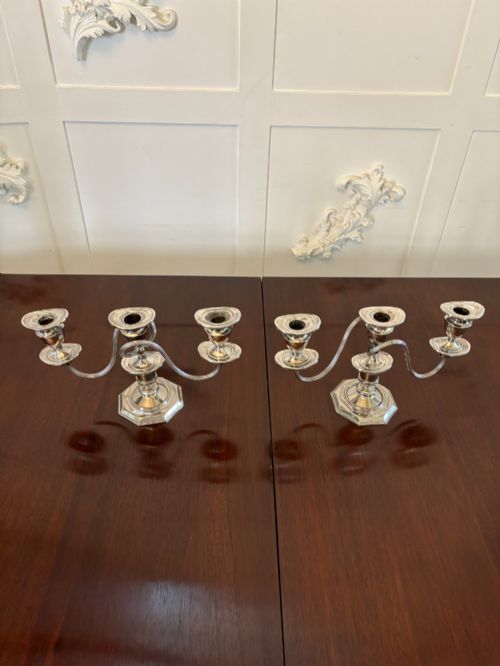
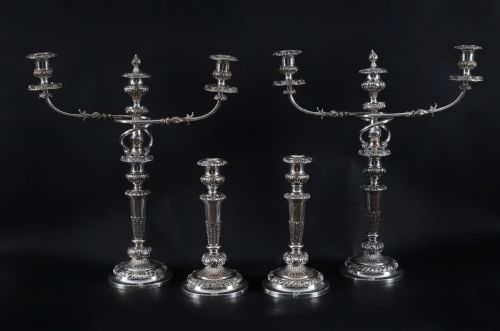
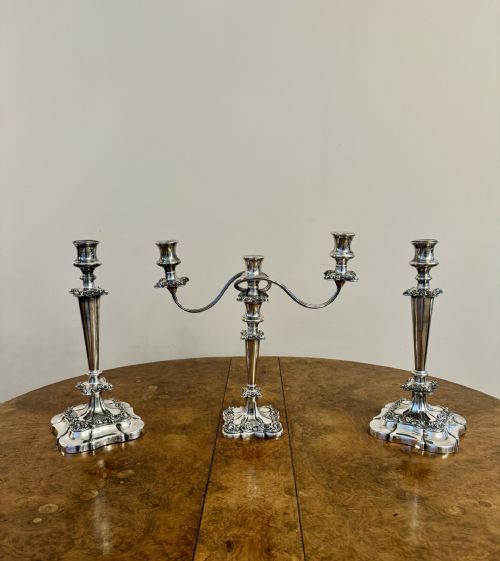


Silver Plate Candlestick Set
These silver plate candlestick sets bring matched illumination to a dining table, combining the weight of copper or nickel silver with the bright gleam of applied metal.
Silver Plate Candlestick Set
A silver plate candlestick set brings together matching pairs or groups of four lighting pieces designed to hold taper candles. These groupings range from formal sets of four candlesticks to larger suites and multi-light candelabra arrangements.
The versions met most frequently on this page span the Georgian, Victorian, and Edwardian eras, encompassing both Old Sheffield plate and later electroplated wares. Buyers encounter chambersticks with shallow drip pans as well as taller column forms.
Makers shaped these sets in styles running from Georgian simplicity through Grand Regency lines to ornate Victorian Rococo Revival ornamentation. Each grouping reflects the dining and parlour habits of its period.
How they were made
Early pieces utilise Old Sheffield plate, a technique fusing a thin sheet of silver onto a thicker copper base under heat and pressure. This method often reveals thin lines of copper showing through where the surface has worn.
Later manufacturing adopted electroplated nickel silver, applying a silver coating via an electrical current over a white metal alloy. Copper and plain metal also form the core structures beneath the plated exterior.
Certain sets incorporate glass elements alongside the plated metal, particularly within column designs that balance reflective metallic bases with transparent shafts.
Silver Plate Candlestick Set Retail Price Guide 2026
Typical asking prices for silver plate candlestick set among the pieces listed under this phrase on Sellingantiques today, from the lower quarter to the upper quarter. They describe what is for sale here now, not the wider market.
Listings feature silver plate candlestick sets spanning the Georgian, Victorian, and Edwardian periods, utilising copper, glass, and nickel silver.
What varies in quality
The distinction between tiers rests upon the integrity of the plating layer and the depth of the underlying metalwork. Thicker application of silver and substantial base metal weight provide greater endurance through generations of cleaning.
Ornamentation detail separates standard production from finer output, visible in crisp casting around foliate scrolls, gadroon borders, and engraved family crests. Sets that retain all matching components without later replacements command greater appreciation.
Smith and Sissons
The Silver Plate Candlestick Set Glossary
- Old Sheffield plate
- An early method of fusing silver to a copper ingot before rolling them into sheets. This process produces a rich tonal depth that distinguishes it from later electrical plating.
- Electroplated nickel silver
- A mid-nineteenth century innovation using electricity to bond a coating of silver onto a nickel alloy base. It offers a bright, uniform finish across complex cast shapes.
- Chamberstick
- A low candlestick fitted with a wide saucer base and a small handle, designed for carrying bedroom illumination. They frequently include a detachable conical snuffer.
- Candelabra
- A branched lighting fixture holding multiple candles upon a single central stem. These pieces often feature removable arms that convert the top into a standard candlestick.
- Gadroon border
- A decorative embossed edge pattern consisting of curved convex curves, common along the rims of bases and drip pans on Georgian and Victorian wares.
Silver Plate Candlestick Set: Frequently Asked Questions
What is a silver plate candlestick set?
A silver plate candlestick set consists of matching pairs or groups of four holders designed to support taper candles upon a table or mantelpiece. They use a base metal beneath a layer of silver to achieve the appearance of solid silver.
These groupings include tall column designs, branched candelabra suites, and low chambersticks intended for carrying through a house. Matching sets of four remain particularly sought after for formal dining arrangements.
How do I care for plated candlesticks?
Cleaning requires non-abrasive silver polish and a soft cloth to protect the thin outer layer of precious metal from wearing through to the copper or nickel beneath. Gentle handling preserves the original chased or engraved details around the bases and sockets.
Avoid aggressive scrubbing, especially on Old Sheffield pieces where the underlying copper is prone to showing through thin spots. Regular dusting helps prevent tarnish accumulation in recessed scrollwork.
How can I tell Old Sheffield plate apart?
Old Sheffield plate displays a warm tonal quality and often reveals subtle lines of exposed copper along cut edges or high points where the outer silver layer has worn thin over time. The manufacturing technique involves fusing silver and copper sheets together before shaping.
Later electroplated items present a more uniform silver surface applied through an electrical bath onto a white metal or nickel silver core. These pieces lack the distinctive edge seams characteristic of fused plate manufacture.
Were these sets used for dining?
Dining tables during the Georgian and Victorian periods relied on matched sets of candlesticks or large candelabra suites to provide illumination during evening meals before the widespread adoption of gas and electric lighting. Their reflective metal surfaces helped amplify the modest light cast by wax tapers.
Larger suites often sat centrally on the table alongside matching epergnes or mirrored plateau bases. Chambersticks served a different domestic purpose, lighting the way to bed along dark corridors.