
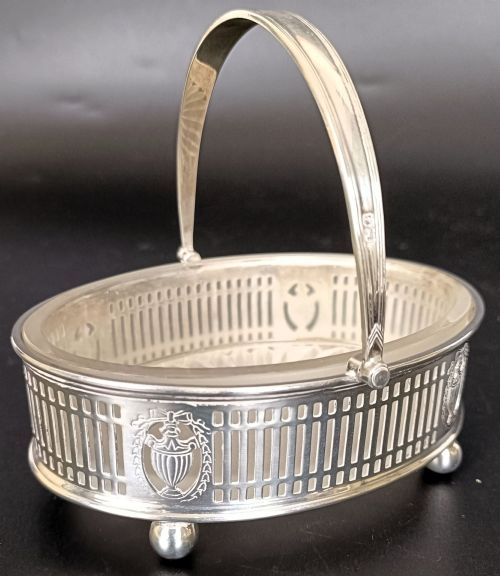


Silver Pierced Cake Basket
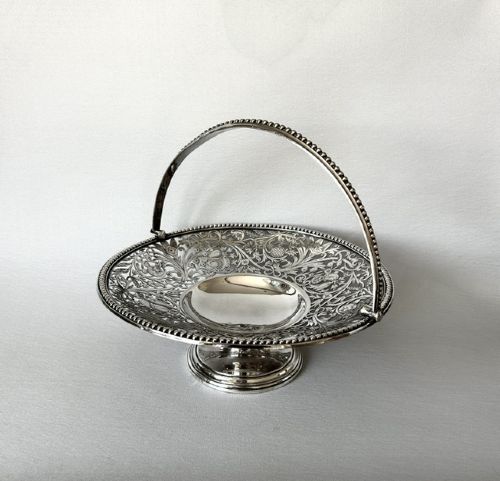
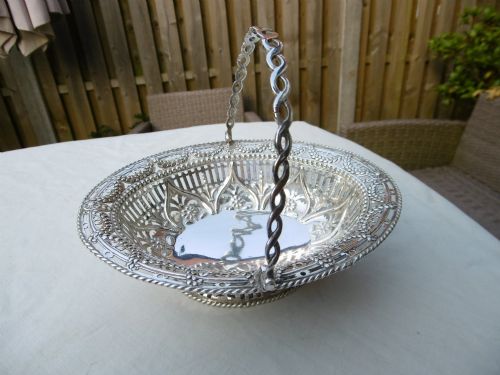
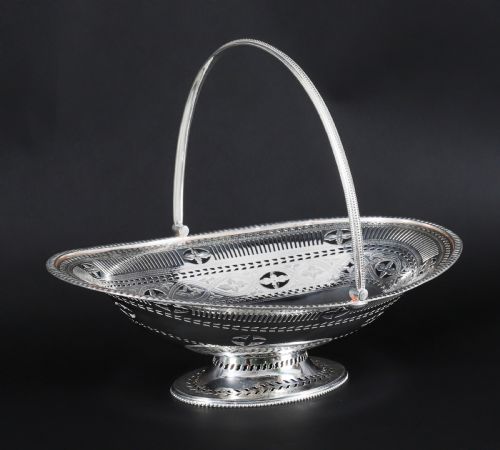
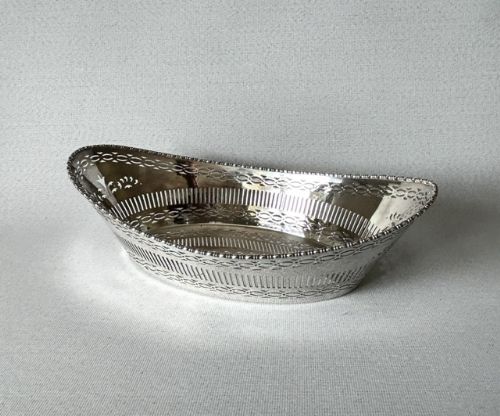
These silver pierced cake basket examples span the Georgian, Victorian, and Edwardian eras, offering elegant openwork design and swing handles for formal tea service.
Silver Pierced Cake Basket
A silver pierced cake basket represents a refined form of serveware designed for presenting cakes, bread, or fruit on the dining table. When exploring this category, you encounter pieces spanning from the mid-eighteenth century through the Georgian, Victorian, Edwardian, and Art Deco periods. Solid sterling silver and silver-plated metals predominate, often featuring intricate openwork, lattice, fretwork, or reticulated patterns.
The version you are most likely to meet on this page is an Edwardian or Victorian silver-plated or solid silver basket, frequently equipped with a swing handle. Forms vary from oval fruit baskets to footed bowls and bread baskets, originating from English makers in London, Birmingham, and Sheffield, alongside continental European examples like an Austrian piece from Vienna. These objects reflect changing social rituals of entertaining and hospitality over two centuries.
Materials and manufacturing techniques
Makers utilised solid sterling silver and various plated compositions including EPNS and electroplated nickel silver to construct these vessels. Solid silver pieces required manual hammering, casting, and piercing, whereas plated items involved applying silver layers to base metals through early electroplating methods or Sheffield plating techniques.
The characteristic openwork or pierced decoration was achieved by hand-piercing or stamping intricate lattices, fretwork, and reticulated designs into the metal sheet before shaping. Swing handles were engineered with hinged mounts attached to the rim, allowing the handle to fold down flat against the body of the basket.
Swing handles on these baskets are designed to flop lazily to one side if the hinge wears down.
Distinctions in quality and execution
The caliber of a silver pierced cake basket rests upon the crispness and depth of the pierced work and the structural integrity of the metal. Superior examples display meticulously hand-cut piercing with clean, burr-free edges and harmonious proportions, whereas lesser pieces rely on simpler stamped patterns that lack three-dimensional definition.
Weight and balance also dictate distinction, particularly in how the swing handle moves and rests against the rim. Solid silver items bearing clear hallmarks from established assay offices demonstrate higher material integrity compared to plated wares, though heavy electroplating on firm nickel silver bases maintains durability across decades of use.
Mappin & Webb·Elkington·John Hunt·Samuel Herbert·Hammond Creake Co·William Hutton & Sons·James Dixon & Sons Ltd·Walker and Hall
The Silver Pierced Cake Basket Glossary
- Pierced work
- Metalwork decoration formed by cutting or piercing apertures through the sheet to create ornamental patterns such as lattices and fretwork. This technique lightened the visual weight of large serving vessels.
- Swing handle
- A movable arch-shaped handle attached to opposite sides of a basket by hinges, allowing it to drop flat against the rim. It facilitates compact storage and elegant presentation during service.
- Electroplated Nickel Silver
- A base alloy of copper, nickel, and zinc coated with a layer of pure silver through an electrical process. It provided an affordable alternative to solid silver while retaining a bright metallic finish.
- Reticulated
- Net-like or web-like ornamentation achieved by piercing or interlacing metal strips. This style was particularly favoured during the Victorian and Edwardian periods for decorative serveware.
- Hallmark
- Official stamps applied to precious metals indicating the standard of purity, the assay office, the date of testing, and the maker's mark. These marks provide verifiable historical provenance for solid silver pieces.
Silver Pierced Cake Basket: Frequently Asked Questions
What were silver pierced cake baskets used for?
These baskets served as formal table centerpieces for presenting baked goods, pastries, bread, or fresh fruit during afternoon tea and dinner dessert courses. The openwork design allowed air circulation around delicate cakes while displaying the host's refined taste.
Over time, their domestic function shifted as dining habits evolved, turning them into decorative display items or functional containers for modern gatherings.
How do I distinguish between solid silver and silver plate?
Solid silver pieces typically bear a series of official hallmarks stamped into the metal, indicating the purity standard and the specific assay office where the piece was tested. These marks confirm precious metal content.
Silver-plated items usually feature manufacturer marks related to electroplating processes, such as EPNS, rather than statutory precious metal hallmarks.
How should I clean and care for a silver basket?
Maintain the finish by washing the basket in warm soapy water using a soft cloth, avoiding abrasive pads that can scratch the metal or wear down thin plating. Dry thoroughly immediately after washing.
Apply a proprietary silver polish only when necessary, using gentle strokes around the intricate pierced areas to prevent polish residue from building up in the apertures.
How can I tell the Georgian pieces from Edwardian ones?
Georgian examples, dating from the eighteenth century, often feature hand-wrought construction, heavier gauge silver, and classic neoclassical or rococo motifs executed by hand. They reflect the lighting and dining customs of the Georgian period.
Edwardian pieces, from the early twentieth century, frequently incorporate machine-assisted stamping alongside hand-piercing, utilising lighter plated or solid metals with symmetrical Edwardian revival styles.