



Silver Open Salt Dips
Silver open salt dips sit low on the dining table, offering fine metals and coloured glass to hold condiments.
Silver Open Salt Dips
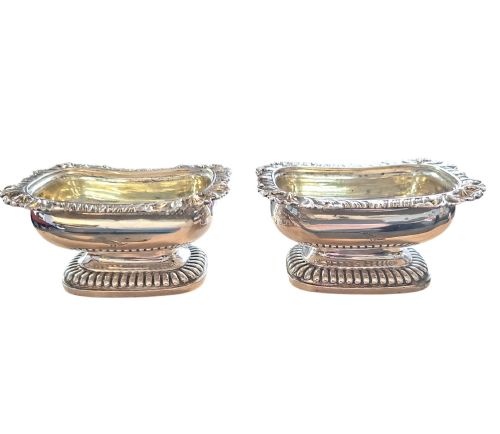
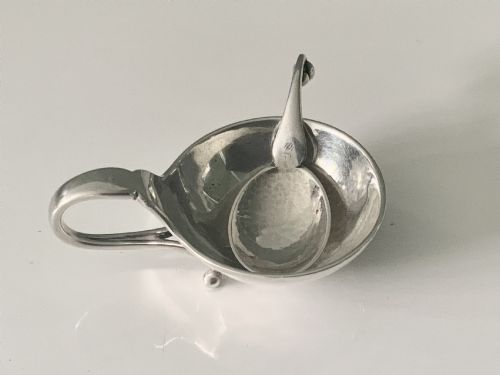
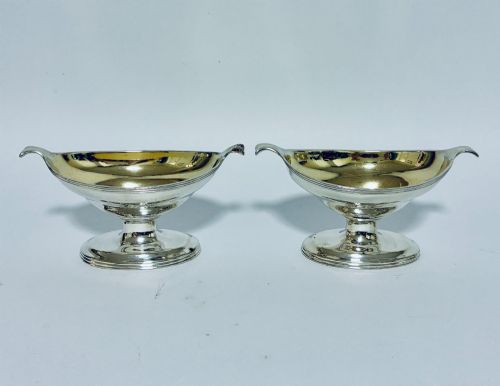
When you search for silver open salt dips, you encounter table vessels designed to hold loose salt before modern shakers took over the dining room. These pieces appear in forms ranging from plain circular bowls to footed cauldrons and boat-shaped dishes.
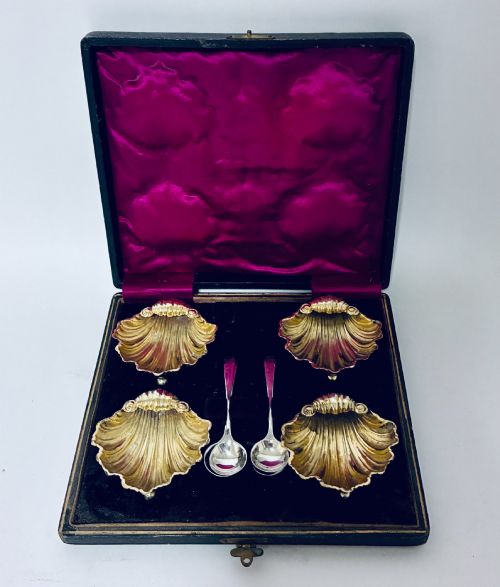
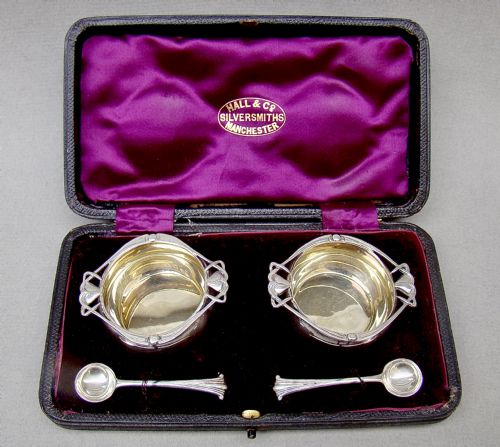
The selections span multiple eras, with Georgian, Victorian, and Edwardian examples forming the core of the items seen here. You frequently meet pairs and matched sets complete with glass liners and small spoons.
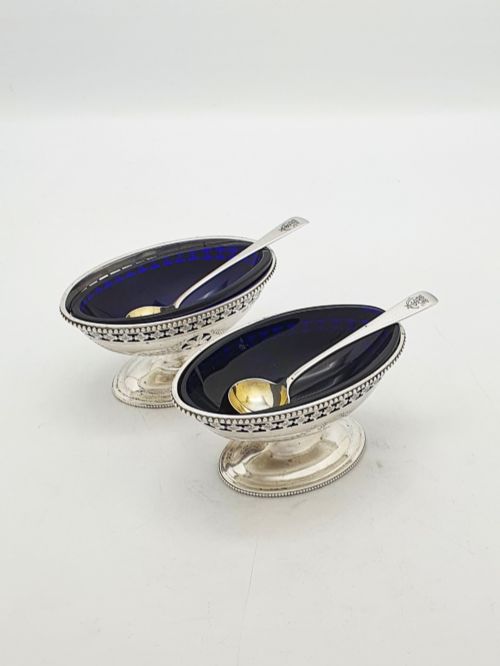
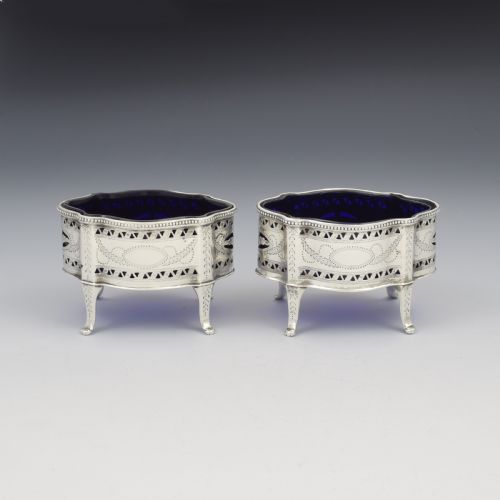
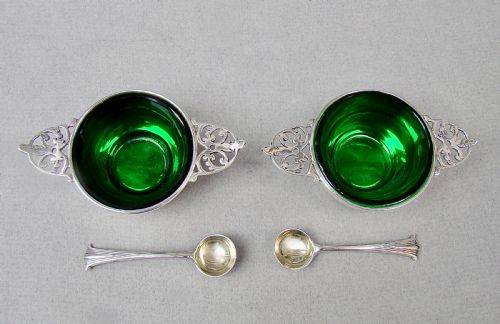
Makers produced these salt cellars in solid sterling silver and silver plate, often pairing the metal frames with contrasting inserts in cobalt blue or cranberry glass.
Materials and construction
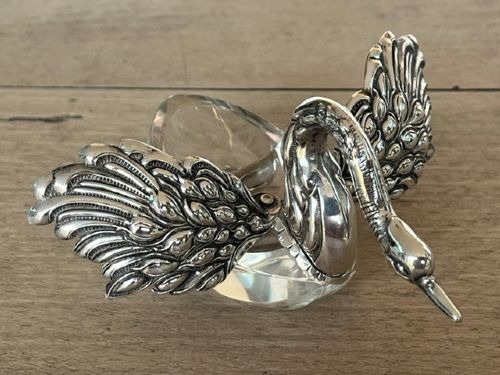
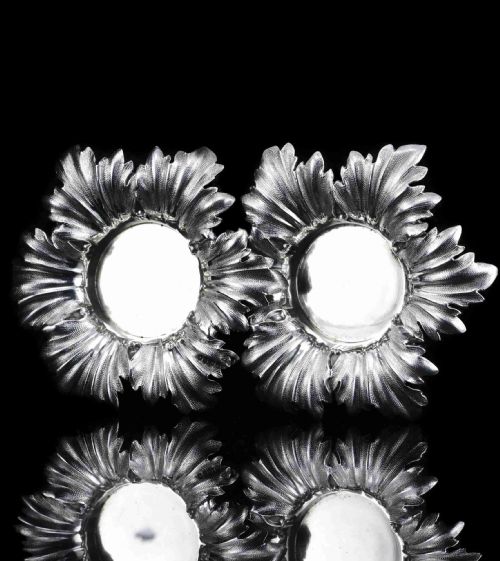
Silversmiths shaped sterling silver and silver plate through techniques such as casting, piercing, and chased foliate ornamentation. Many vessels incorporate fitted glass liners made of cobalt or crystal to protect the metal from the corrosive nature of salt.
Finer examples rest on three or four legs, sometimes shaped as animal claws or bird forms, requiring precise metalwork and soldering. Interior gilding, known as wash, appears in older pieces to prevent tarnishing.
Silver Open Salt Dips Retail Price Guide 2026
Typical asking prices for silver open salt dips among the pieces listed under this phrase on Sellingantiques today, from the lower quarter to the upper quarter. They describe what is for sale here now, not the wider market.
Listings feature periods spanning from the eighteenth century through to the Art Deco era, utilising both sterling silver and silver plate.
Distinctions in craftsmanship
The hierarchy of quality rests on the crispness of the chasing, the thickness of the silver gauge, and the presence of matching original glass inserts. Pieces bearing clear hallmarks from notable silversmiths command greater interest.
Weight and balance separate standard production items from masterworks. Superior salts show meticulous finishing on the underside and clean piercing work that remains symmetrical and sharp.
Georg Jensen·Josiah Williams & Co·David Hennell·John Edmonstone·Paul Storr·Thomas Smily·Edward Wood·Vale Brothers and Sermon
The Silver Open Salt Dips Glossary
- Trencher salt
- A heavy, often geometric salt cellar placed on the dining table for sharing before personal individual salts became common in the eighteenth century.
- Cauldron salt
- A small round salt cellar raised on three feet, resembling a cooking pot, popular during the Georgian and Victorian periods.
- Salt boat
- A table salt cellar shaped like a small water vessel, usually featuring two handles or an elongated body resting on a fixed foot.
- Cobalt glass
- A deep blue glass used for bowl liners inside silver salt frames to create a striking colour contrast.
- Chasing
- A metalworking technique where the silversmith hammers patterns into the front surface without removing material.
Silver Open Salt Dips: Frequently Asked Questions
How were silver open salt dips used?
Diners used small spoons or pinches of fingers to take salt from the open vessel onto the side of their plate.
This method predated the widespread use of shaker bottles and allowed households to display wealth through polished metalwork.
How do I clean silver salt cellars?
Wash the metal gently with warm soapy water and a soft cloth, keeping moisture away from any glued or lined parts.
Remove glass liners before cleaning to avoid damaging the coloured glass with silver polish.
How can I date my salt dips?
Check the interior or base for stamped hallmarks, which indicate the assay office, standard of silver, and year of manufacture.
Stylistic cues such as heavy chased foliage point to Victorian work, while simpler geometric forms often indicate Georgian origins.
Why do some salt dips have glass liners?
Glass liners prevented the salty contents from corroding and pitting the silver surface over prolonged periods of use.
Coloured glass also provided a decorative contrast against pierced or openwork silver frames.