

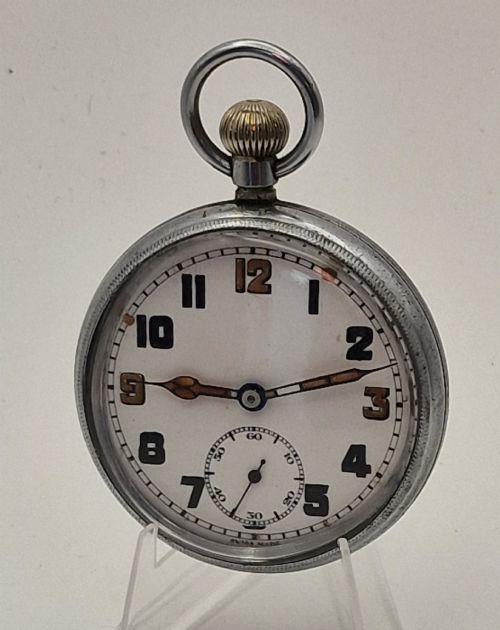
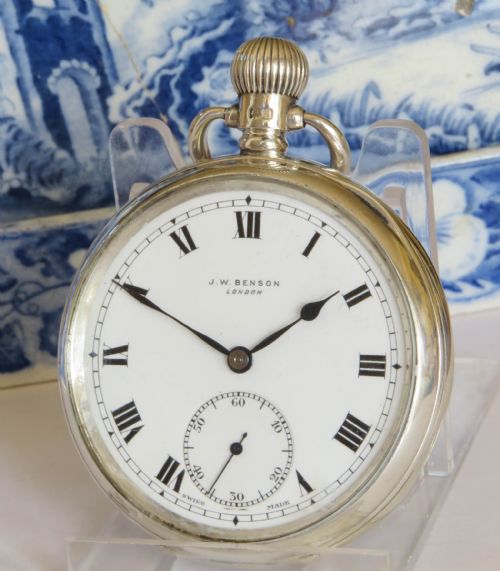
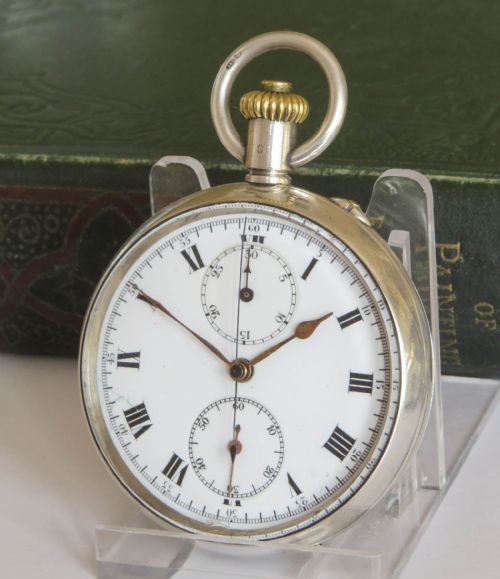
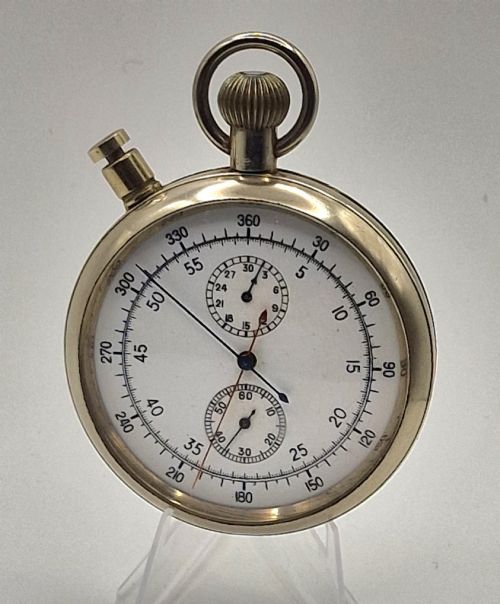
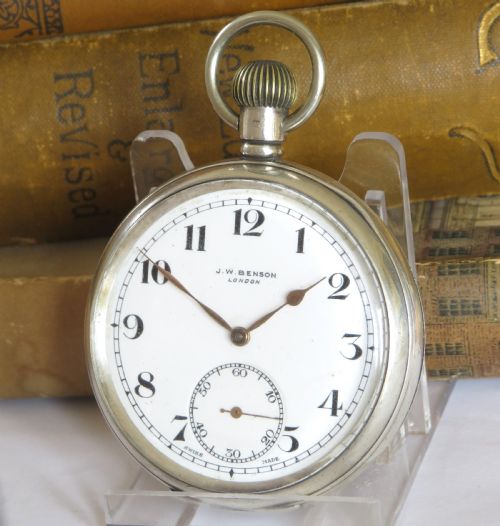
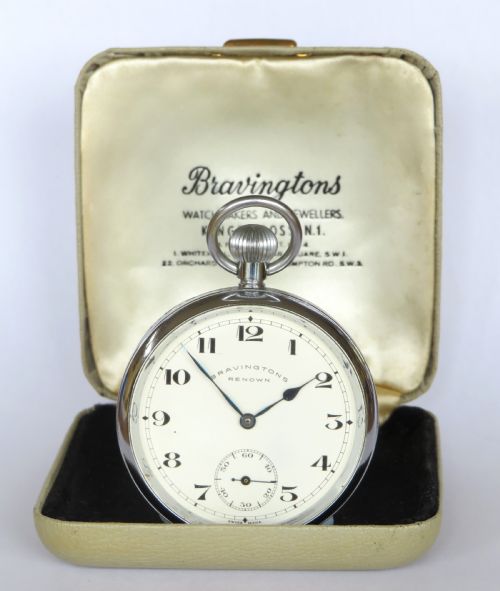
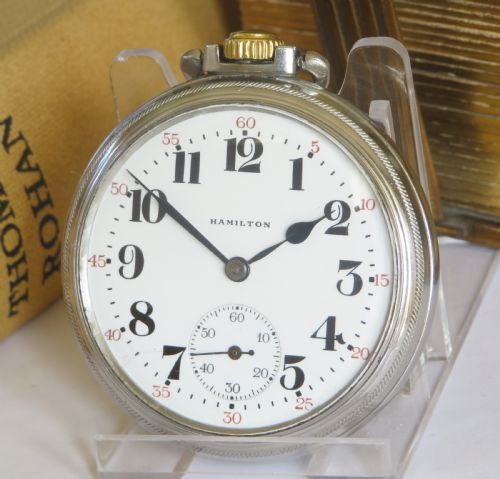
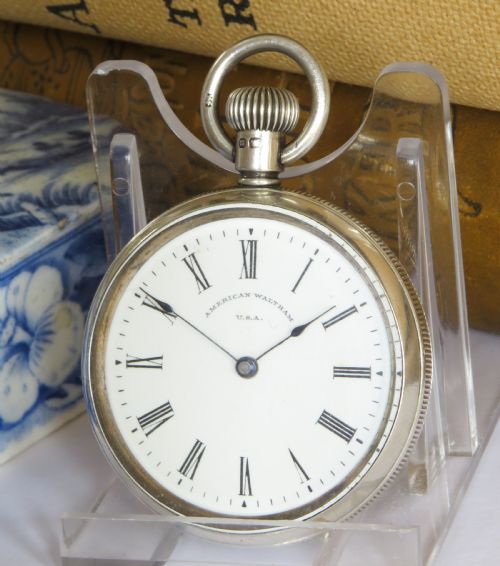


Silver Open Face Pocketwatch
These silver open face pocketwatch examples span decades of precise engineering, offering reliable timekeeping wrapped in classic metal cases.
Silver Open Face Pocketwatch
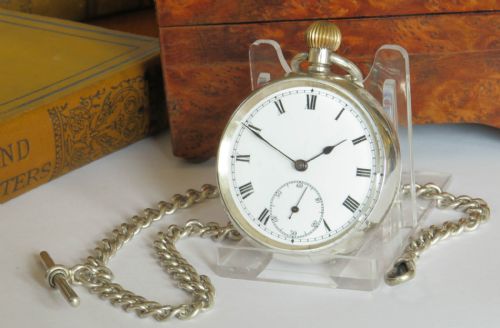
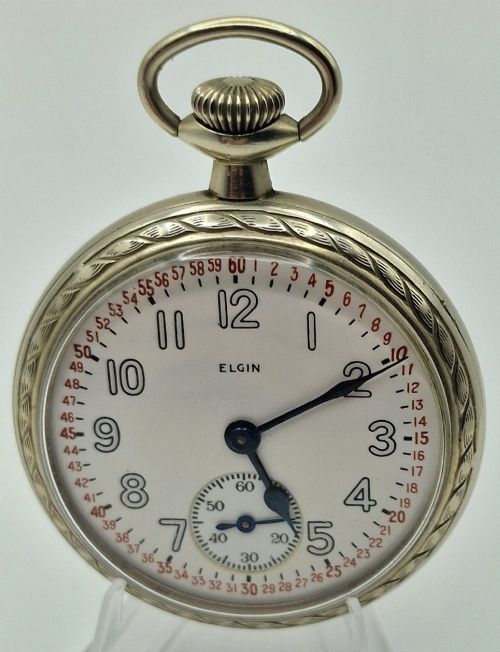
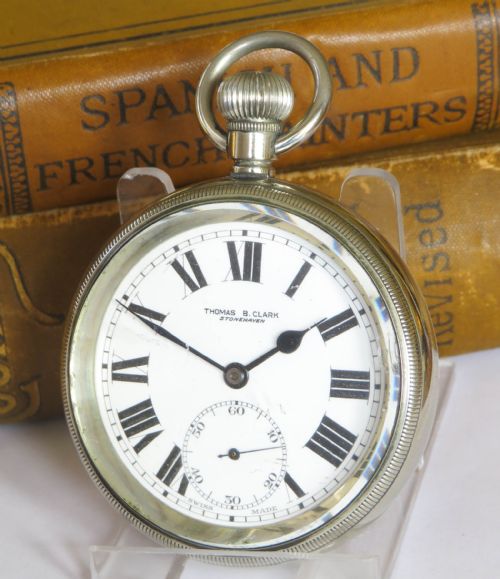
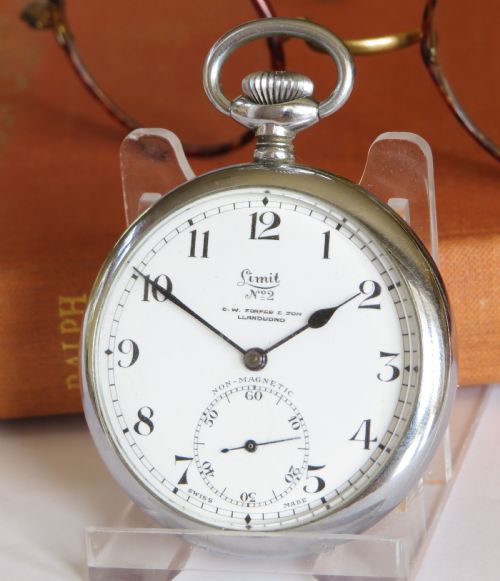
A silver open face pocketwatch is a portable timepiece housed in a metal case without a hinged protective cover over the glass dial. When people search for a silver open face pocketwatch, they encounter portable timepieces spanning the Victorian era through the mid-twentieth century. The selection ranges from late nineteenth-century Fusee mechanisms to mid-century stainless steel and chrome variations.
Victorian and Edwardian versions dominate the selection alongside Art Deco and 1920s creations. These pieces originate from diverse periods including the 1880s, 1890s, 1900s, 1910s, 1920s, 1930s, and 1950s. Most examples feature silver or nickel silver housings, often paired with enamel dials and glass covers.
How they were made
Makers constructed these watches using durable metals such as silver, nickel silver, steel, and chrome for the outer cases. Dial faces typically utilise crisp enamel surfaces protected by clear glass covers.
Internal movements rely on intricate mechanical components developed by established watchmakers and retail jewellers. Cases reflect the prevailing design standards of their respective periods, moving from ornate Victorian styles to geometric Art Deco forms.
Silver Open Face Pocketwatch Retail Price Guide 2026
Typical asking prices for silver open face pocketwatch among the pieces listed under this phrase on Sellingantiques today, from the lower quarter to the upper quarter. They describe what is for sale here now, not the wider market.
Listings feature silver, nickel silver, steel, and chrome cases paired with enamel dials and glass covers across eight different decades.
What varies in quality
The sophistication of the internal movement dictates much of the distinction between standard timepieces and higher-grade examples. Fusee mechanisms and lever escapements represent advanced mechanical engineering compared to simpler calibres.
Case materials and finishing also differentiate the pieces, with solid silver housings and finely detailed enamel dials showing greater craftsmanship. The reputation of the maker or retailer inscribed on the dial or movement adds historical weight to individual pieces.
Bickley London·Record·Limit No 2·Cyma·J W Benson·Revue·Bravingtons Renown·Waltham·Hamilton·Omega·Longines·Sir John Bennett·Electa·Alliance Lever·H.W. Bedford
The Silver Open Face Pocketwatch Glossary
- Open face
- A pocket watch design where the dial is visible without lifting a hinged outer metal cover. This style allows for quick time checks during daily wear.
- Fusee
- A conical pulley mechanism used in older pocket watches to equalise the driving force of the mainspring as it unwinds. It ensures consistent timekeeping accuracy across the power reserve.
- Lever escapement
- A mechanical linkage that controls the release of gear train energy to the balance wheel. It remains a standard feature in reliable mechanical watches.
- Enamel dial
- A fused glass powder surface applied to a metal dial plate, producing a smooth and durable face. These dials often feature painted numerals and minute tracks.
- Nickel silver
- A copper alloy containing nickel and zinc, offering a bright silvery appearance without using precious metal. It provided a robust and economical alternative for watch cases.
Silver Open Face Pocketwatch: Frequently Asked Questions
How do I wind a pocket watch?
Most mechanical pocket watches require turning the crown at the top of the case until resistance is felt. Care should be taken not to overwind the mainspring.
Some older fusee models utilise a separate key inserted through the dial or rear dust cover to tension the movement.
Are these watches suitable for daily use?
Vintage timepieces function well for regular wear provided they receive proper mechanical servicing and gentle handling. They lack modern shock resistance, so caution is necessary.
Carrying the watch in a dedicated waistcoat pocket or paired with a matching chain helps prevent accidental drops.
What is the difference between silver and nickel silver?
Solid silver cases bear traditional hallmarks indicating the purity standard of the precious metal used. Nickel silver is an alloy containing no actual silver, valued instead for its durability.
Both materials were widely utilised across different price points during the Victorian and Edwardian periods.
How do I date a pocket watch?
Dating relies on hallmarks stamped inside the silver case, serial numbers on the movement, and stylistic clues on the enamel dial. Retailer signatures also provide chronological context.
Records from specific manufacturers help narrow down the year of production based on movement serial numbers.