


Silver Novelty Peppers
Silver novelty peppers are amusing tabletop containers shaped as animals and objects, offering collectors miniature sculptural silver with a distinct personality.
Silver Novelty Peppers
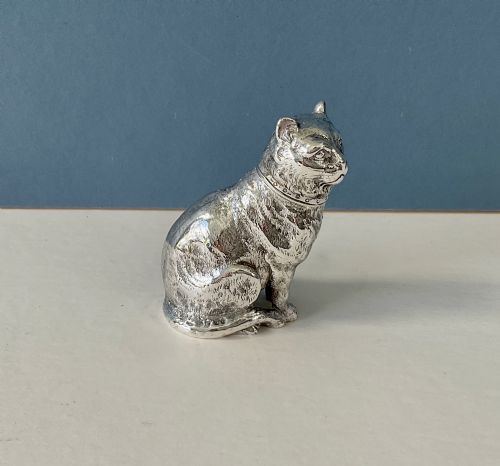
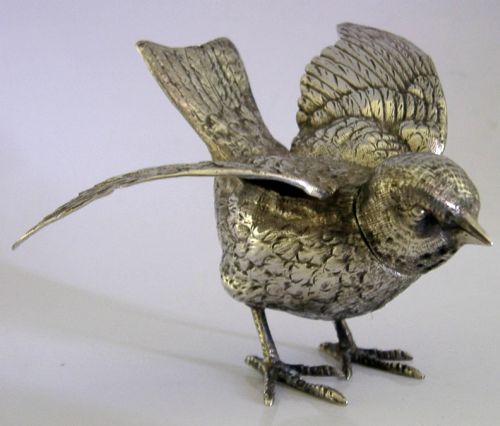
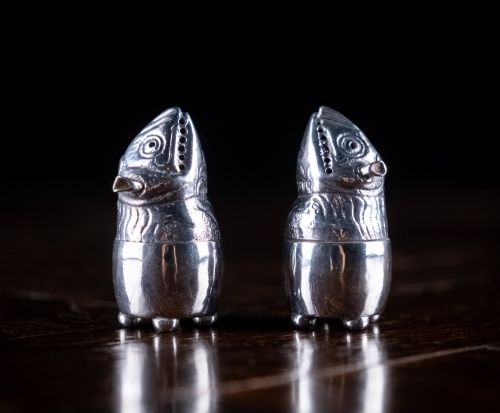
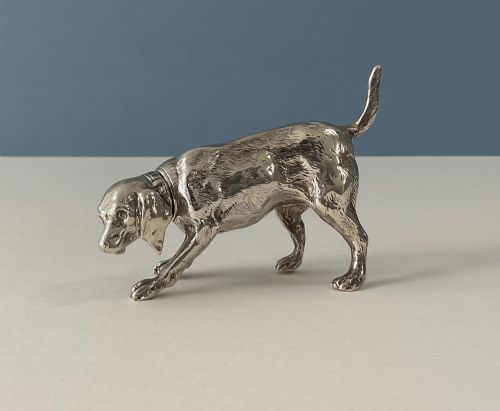
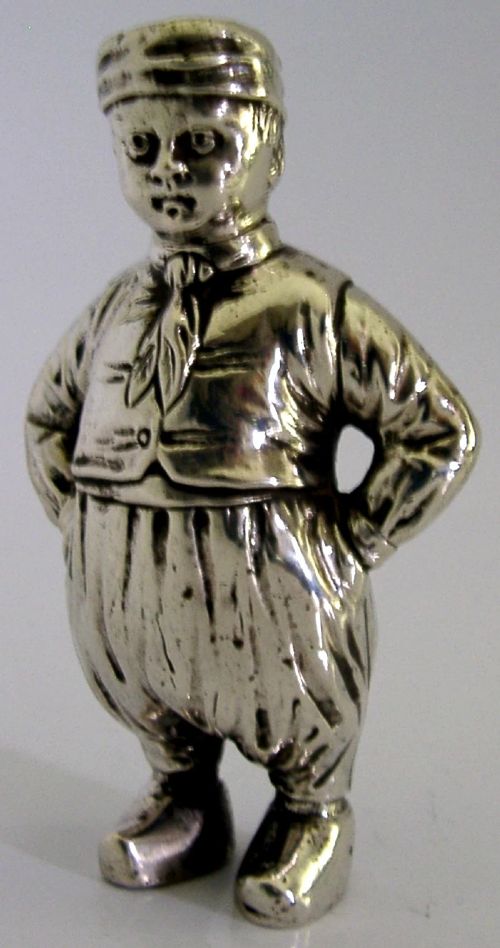
Silver novelty peppers take the form of birds, animals, human figures and domestic objects, serving both a functional purpose at the dining table and a decorative role as small sculptures. When searching for silver novelty peppers, buyers encounter many Victorian and Edwardian examples alongside later twentieth-century pieces.
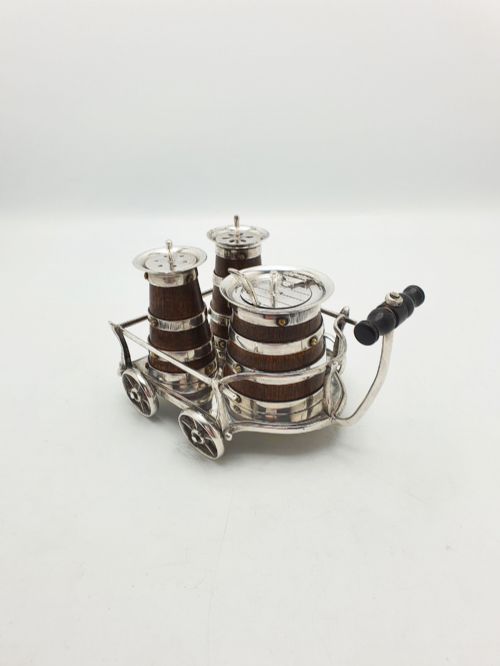
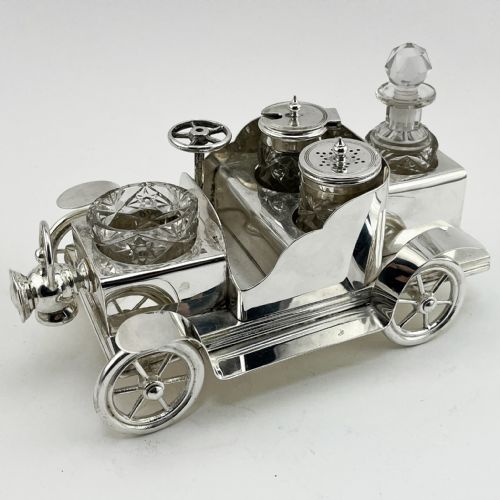
The assortment on this page includes owls, chicks, dogs, pheasants, and unusual subjects such as vintage cars and oak barrels. These pieces appear singly or as matched pairs, often forming part of wider cruet sets or condiment services.
Origins span across British workshops as well as Continental makers, particularly in the Netherlands and Germany, reflecting a broad nineteenth and twentieth-century enthusiasm for whimsical table silver.
How They Were Made
Silversmiths utilised sterling silver, solid silver of various standards, and silver plate over base metals, frequently combining metalwork with cut glass or oak components. Many figural pieces involve casting, where molten silver is poured into moulds to create detailed animal forms such as birds and dogs.
Surface texture is achieved through careful chasing and hand engraving, defining feathers, fur and facial expressions before polishing or gilding the interior surfaces. Removable heads or base plugs allow for easy refilling of the spice chamber within each miniature sculpture.
Listings feature sterling silver, silver plate, glass, and oak across Victorian, Edwardian, and mid-century periods.
What Varies In Quality
The standard of a silver novelty pepper rests upon the crispness of the casting and the sensitivity of the modelling, separating lifelike representations from generic silhouettes. Superior examples retain fine feather and fur detail without softening from excessive wear or over-polishing.
Engineering integrity matters greatly in pieces with moving parts, such as screw fittings on removable heads or hinged components. The reputation of the maker and clarity of the hallmarks further distinguish finer domestic silver from standard commercial output.
Frederick Brasted·Sampson Mordan·Thomas Johnson·Berthold Muller·Mappin & Webb
The Silver Novelty Peppers Glossary
- Pepperette
- A small container designed specifically for dispensing ground pepper at the dining table. These often take slender tubular or figural shapes.
- Cruet set
- A matched group of containers holding condiments such as salt, pepper, mustard, oil and vinegar. They sit together on a stand or tray.
- Hallmark
- An official stamp applied to precious metals indicating the standard of purity, the assay office, and the year of testing. These marks help verify the age and origin of silver pieces.
- Chasing
- A metalworking technique where the silversmith hammers the front surface to create raised decorative patterns and texture. It brings definition to fur and feathers on animal forms.
- Sterling silver
- An alloy of silver containing 92.5 percent pure silver and 7.5 percent other metals, usually copper, chosen for durability.
Silver Novelty Peppers: Frequently Asked Questions
How were silver novelty peppers used?
These small containers sat upon dining tables during formal meals to hold and dispense ground pepper for guests. Servants or diners removed the head or base to refill the internal chamber.
Over time, they transitioned from functional dining accessories to collectible display objects prized for their sculptural qualities.
How do I clean antique silver peppers?
Careful dusting with a soft cloth preserves the original finish and patina accumulated over decades. Avoid harsh chemical dips that strip away the subtle dark oxidation in recessed chased details.
Specialist silver polish should be used sparingly and washed away completely, particularly around small shaker holes where residue can accumulate.
Are these pepper pots safe to use?
Most antique silver and silver-plated peppers remain fully functional for modern dining if cleaned thoroughly on the interior. However, many collectors prefer to keep them on display rather than expose antique metal and delicate mechanisms to daily moisture and seasoning.
Verify that any internal screw threads or closures still secure properly before attempting to fill them.
How can I tell the age of a piece?
Hallmarks stamped onto the metal provide the most reliable guide to date British silver pieces accurately. Date letters, maker's marks and assay office symbols indicate the exact year and location of manufacture.
Stylistic cues such as Victorian ornamentation or Edwardian proportions offer further clues when hallmarks are rubbed or absent on plated items.