
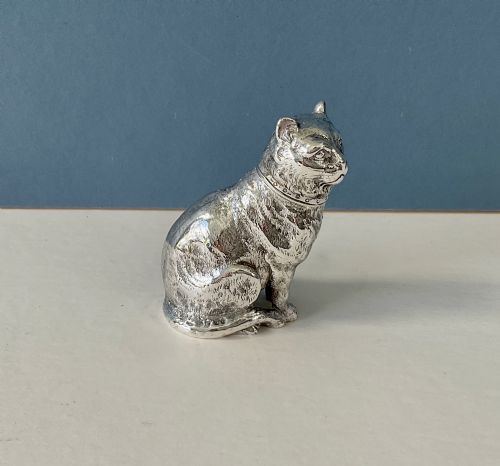
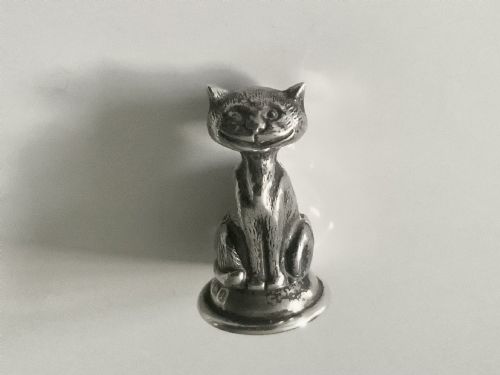


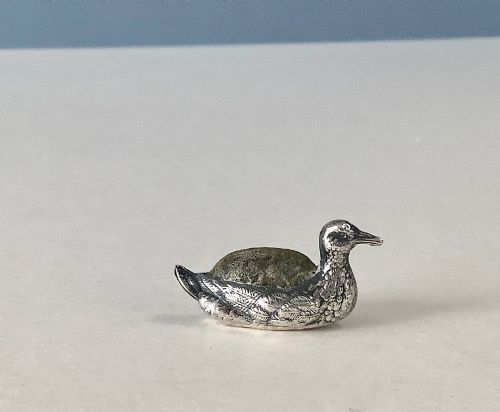


Silver Novelty Desk Ornament
A silver novelty desk ornament turns a practical workspace accessory into a whimsical miniature animal, vehicle, or household object.
Silver Novelty Desk Ornament
A silver novelty desk ornament brings playfulness to a workspace through miniature sculptural forms like cats, cars, foxes, and folding chairs. These desk accessories span from the Victorian period through the Edwardian era and into the Art Deco style of the 1930s.
The most common versions encountered here take the shape of small pin cushions modelled as animals or vehicles, alongside functional desk items such as inkwells, seals, and letter openers. Each piece serves a dual purpose as both a desk accessory and a conversation-starting figurine.
Originating largely from English workshops during the late nineteenth and early twentieth centuries, these ornaments combine solid sterling silver or silver plate with subsidiary materials like velvet, glass, and ebonised wood.
How they were made
Silversmiths shaped these novelty items using traditional casting and stamping techniques in sterling silver, often mounting the metallic figures on bases of ebonised wood or fitting them with internal weights. Many pieces incorporate secondary elements such as glass inserts for inkwells or velvet and felt linings for pin cushions.
Makers integrated functional mechanisms into the silver designs, such as mechanical desk bells, hinged inkwell lids, and folding chair frames with enamel details. The combination of durable metals and tactile fabrics allowed these miniature sculptures to withstand daily use upon a desk.
What varies in quality
The weight of the silver and the precision of hallmarks also distinguish finer pieces, where the maker expended greater effort on finishing interior components and operational parts like mechanical bells or hinged lids.
The Silver Novelty Desk Ornament Glossary
- Sterling silver
- A standard alloy composed of pure silver and other metals to increase durability. This material forms the primary body for the majority of these desk ornaments.
- Pin cushion
- A small padded fixture designed to hold sewing pins. In novelty desk items, these are frequently upholstered in velvet or fabric and shaped as animals or vehicles.
- Inkwell
- A small container for holding ink, often fitted with a hinged lid. These items sit upon inkstands and feature prominently among desk accessories.
- Desk seal
- A handheld tool bearing an engraved matrix for pressing into hot wax to seal correspondence. The handles often take sculptural novelty forms.
- Pen wipe
- A small pad or brush designed remove excess ink from nibs. Victorian and Edwardian examples often use animal figures to conceal the wiping material.
Silver Novelty Desk Ornament: Frequently Asked Questions
What is a silver novelty desk ornament?
A silver novelty desk ornament is a small, sculptural accessory designed for use on a desk while taking the humorous shape of an animal, vehicle, or miniature object.
These pieces combine decorative appeal with practical utility, serving as inkwells, pin cushions, bell pushes, or paperweights.
How were these desk ornaments used historically?
Owners placed these decorative items on writing desks and tables to perform everyday clerical tasks while adding character to a room.
They functioned as practical tools for writing letters, holding ink, or organising pins, as well as serving as engaging conversation pieces for visitors.
How do I care for silver desk items?
Care for silver desk items by dusting them gently with a soft, dry cloth to prevent the accumulation of dirt in intricate crevices.
Avoid abrasive polishes that can wear away fine details or damage secondary materials like velvet, felt, glass, and ebonised wood.
How can I tell the period of a piece?
Dating relies on stylistic clues such as the ornate forms of the Victorian era, the lighter designs of the Edwardian period, or the geometric lines of Art Deco pieces.
Assessing the manufacturing materials, secondary components, and any visible hallmarks helps place the item within its historical decade.