





Antique Ink Stand
An antique ink stand provides a heavy desk vessel for pens and ink, bringing period craftsmanship into modern studies.
Antique Ink Stand
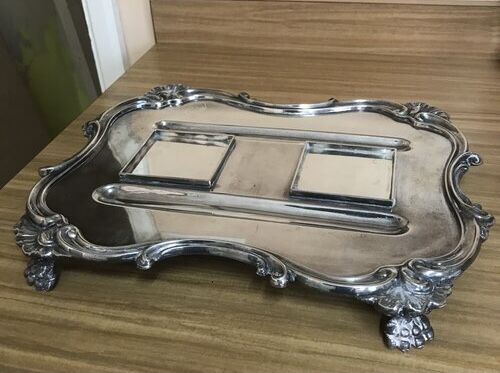
An antique ink stand gathers wells, pen rests, and trays into a single desk accessory designed for correspondence. Buyers encounter varied forms ranging from simple wooden blocks to elaborate multi-piece sets featuring porcelain inserts or metal mounts.
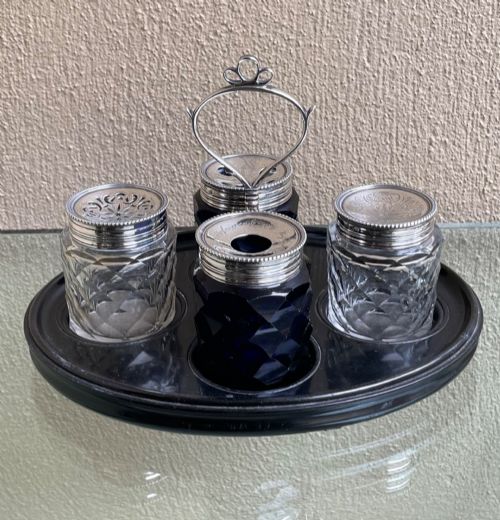
Victorian and Edwardian examples dominate the selection, spanning styles from Gothic Revival and Art Nouveau to plain oak or walnut trays. These desk tidies often incorporate lidded glass bottles alongside compartments for stamps and nibs.
Materials shift according to the period and region, moving from Georgian silver and mahogany to continental bronze, champleve enamel, and carved Black Forest wood. Desk accessories range from modest ceramic wells to large double inkstands fitted with silver mounts.
Materials and Technique
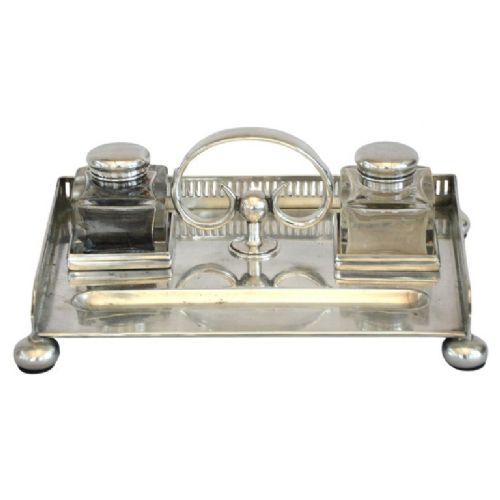
Metals such as brass, bronze, and silver plate form the structural base of many stands, shaped through casting, stamping, and applied ornamentation. Cut glass and ceramic insert bottles fit into designated slots within wooden or metal chassis.
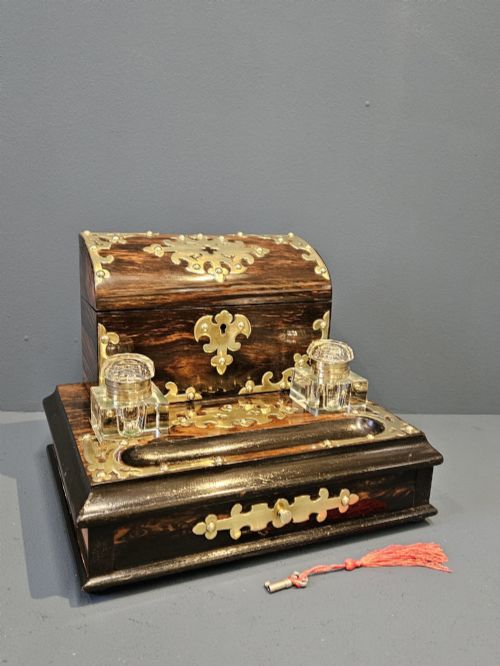
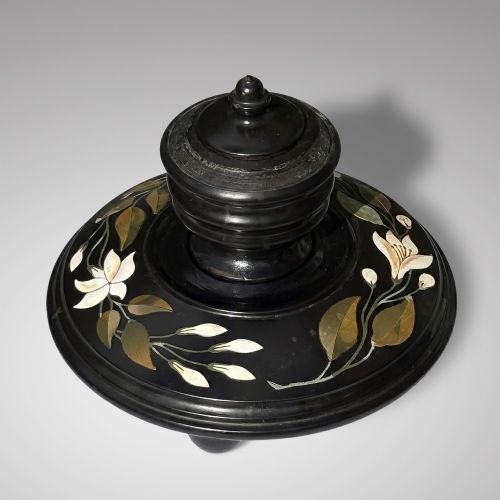
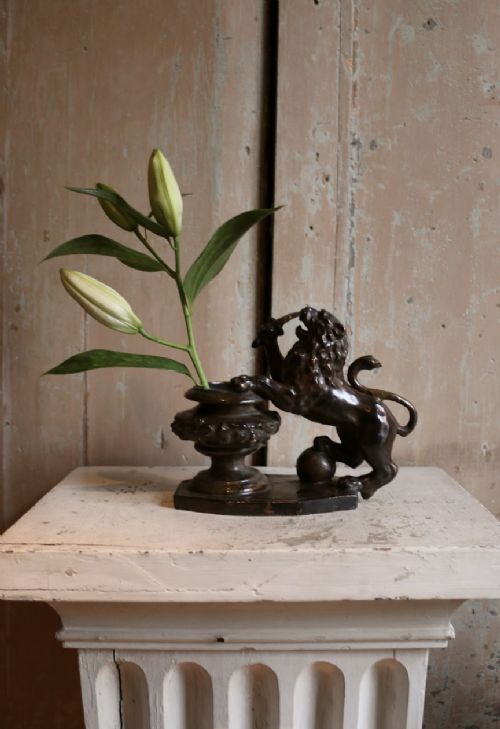
Cabinet makers utilised hardwoods like walnut, oak, coromandel, and satinwood, frequently employing inlay, brass mounts, and carved details such as animals or figures. Papier-mâché and marble trays demonstrate specialised regional crafting techniques including hand painting and stonemasonry.
The selection spans multiple design movements, including Art Nouveau, French Empire, and Victorian Gothic Revival.
Judging the Work
Quality rests in the weight of the materials, the crispness of metal casting, and the precision of the woodwork. Superior examples maintain matching original ink bottles and hallmarked silver components rather than mismatched replacements.
Detailing distinguishes finer pieces, seen in hand-painted ceramic surfaces, intricate champleve enamel work, and well-executed carvings. The integration of functional elements like drawers and hinged lids operating smoothly indicates skilled assembly.
Walker And Hall·James Cartland And Sons·Zimmermann·Martin Hall And Co
The Antique Ink Stand Glossary
- Inkstand
- A desk stand holding one or more inkwells along with provision for pens. These pieces formed the centrepiece of formal writing desks.
- Encrier
- The French term for an inkstand or inkwell. These continental examples often feature ormolu, marble, or porcelain.
- Capstan
- An inkwell shaped like a ship's capstan, typically featuring a wide base tapering upwards to a hinged lid. This form appears frequently in sterling silver during the Edwardian era.
- Standish
- An archaic term for an inkstand, frequently incorporating small bells, sanders, and pen holders. They date from the Georgian period onwards.
- Sheffield Plate
- A material created by fusing a thin sheet of silver to a thicker copper base before rolling. This technique predates modern electroplating.
Antique Ink Stand: Frequently Asked Questions
What is an antique ink stand used for?
These desk accessories held inkwells, pens, and blotting sand for writing letters before the invention of the fountain pen. They kept desktop writing materials organised in one portable tray.
Today, collectors use them as decorative desk pieces or containers for small modern items.
How do I date an antique ink stand?
Dating relies on hallmarks on silver mounts, registration marks stamped into metal, and the prevailing decorative style of the woodwork or ceramics. Georgian and Victorian pieces show distinct shifts in manufacturing techniques.
Comparing the materials, such as early Sheffield plate versus later silver plate, helps narrow the production era.
Are the ink bottles usually original?
Many surviving stands retain their original cut glass or crystal bottles, often featuring matching silver or metal screw lids. Because glass breaks easily, replacement bottles are common.
Examining how the bottle fits the aperture helps determine if it belongs to the stand.
How should I clean a brass and glass ink stand?
Glass inserts wash safely in warm soapy water, taking care to protect any painted or gilded surfaces. Metal bases require gentle dusting and occasional cleaning appropriate to brass or silver plate.
Harsh chemical dips damage patinated bronze and antique plated surfaces.