



Silver Napkin Bands
Silver napkin bands are practical table accessories that bring tactile elegance to formal dining, uniting utility with decorative flair.
Silver Napkin Bands
Silver napkin bands appear across multiple periods including Victorian, Edwardian, and George V, showcasing shifts in taste from elaborate ornamentation to streamlined modernism. Buyers exploring silver napkin bands encounter diverse forms ranging from single examples to boxed sets intended for formal dining arrangements.
The selection includes specific stylistic expressions such as Arts and Crafts, Art Deco, and Mid-Century British designs. Many pieces originate from British assay offices, whilst continental European examples also emerge within the listings.
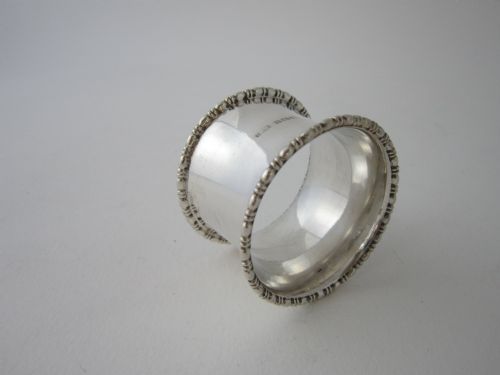
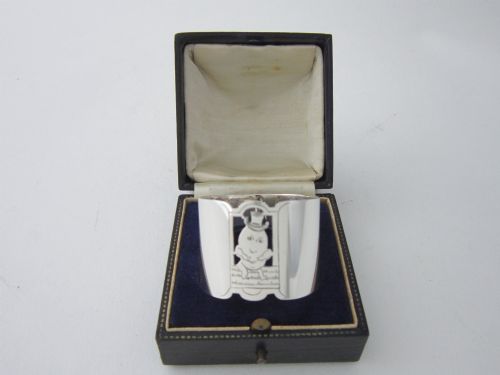
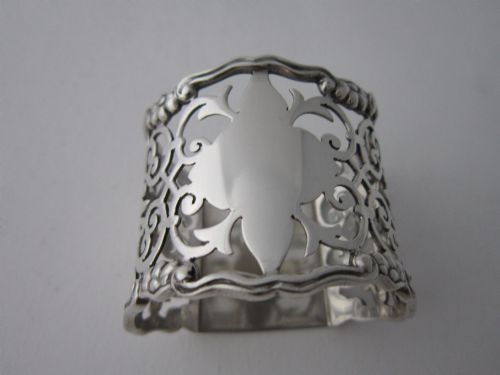
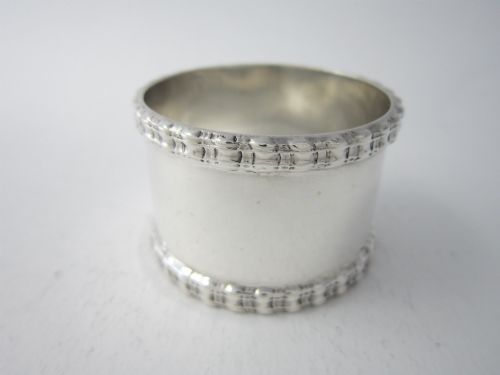
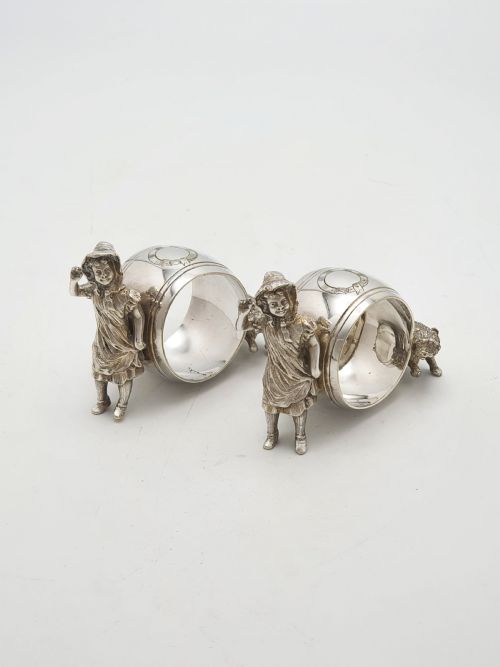
Variations extend to structural presentation, with several items housed in original fitted cases lined with silk, velvet, or leatherette. Plain cylindrical bands share space with novelty shapes, figural motifs, and buckle designs resembling belts.
Materials and construction methods
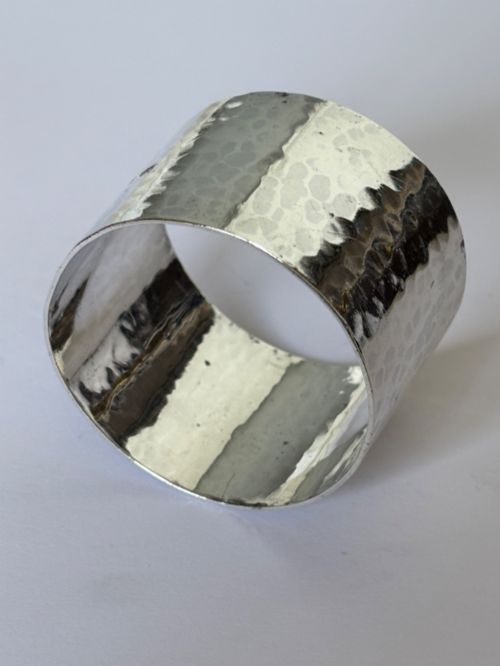
Makers utilised sterling silver and silver plate as primary metallic bases, often employing hammering techniques to create textured surfaces on George V pieces. Pewter also appears among select workshop productions, demonstrating alternative metalworking choices during the early twentieth century.
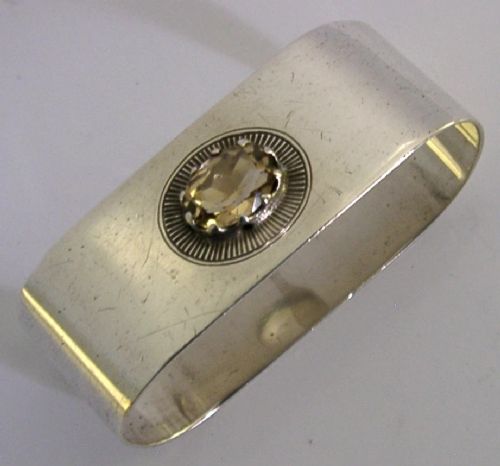
Decorative embellishments incorporate vitreous enamel, guilloche enamel, and citrine gemstones set into the metalwork. Protective presentation boxes integrate supplementary materials such as leather, velvet, silk, and leatherette to cradle individual rings or matched sets.
Silver Napkin Bands Retail Price Guide 2026
Typical asking prices for silver napkin bands among the pieces listed under this phrase on Sellingantiques today, from the lower quarter to the upper quarter. They describe what is for sale here now, not the wider market.
Some Victorian examples are shaped precisely like miniature belts with buckles, ensuring your napkins are securely dressed for dinner.
Distinguishing quality characteristics
Superior examples often display distinguished maker attributions, such as work associated with Liberty & Co, Albert Edward Jones, Cartier, or David Andersen. The presence of crisp hallmarks and original fitted presentation cases enhances the distinction of finer pieces.
Technical execution differentiates standard production from exceptional artistry, particularly where hand-hammered texturing, detailed enamel work, or integrated gemstones like citrine are applied. The inclusion of matched sets housed in original boxes elevates the integrity of surviving ensembles.
Albert Edward Jones·Liberty & Co·Cartier·David Andersen
The Silver Napkin Bands Glossary
- Sterling silver
- An alloy consisting of 92.5 percent silver by mass, with the remainder usually copper. This standard metal underpins the majority of British table wares from the Victorian era onward.
- Silver plate
- A base metal coated with a thin layer of pure silver. This technique provided an accessible alternative to solid silver for domestic dining sets.
- Guilloche enamel
- A decorative technique where translucent enamel covers a precise mechanical pattern engraved into the underlying metal. This method produces a radiant, shimmering surface effect.
- Hallmark
- An official stamp applied by an assay office to indicate the purity of a precious metal, the place of testing, and the year of manufacture.
- Pewter
- A malleable metal alloy historically composed chiefly of tin alloyed with copper and antimony. Makers utilised this material for arts and crafts designs.
Silver Napkin Bands: Frequently Asked Questions
What are silver napkin bands used for?
Silver napkin bands serve to identify individual table napkins during formal meals or family dinners. They keep cloth napkins neatly rolled when not in use.
These accessories also function as decorative table ornaments. Matching sets provide a unified aesthetic across a dining setting.
How do I identify the period of a napkin ring?
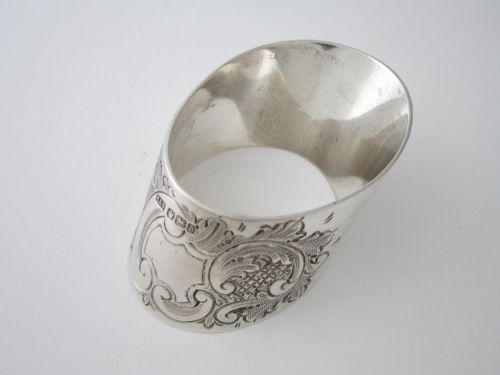
Assay office hallmarks stamped onto the metal provide reliable date letters and standard marks for British pieces. These marks correspond to specific monarchs and production years.
Stylistic indicators such as Arts and Crafts hammering, Art Deco geometric lines, or Victorian figural motifs further clarify the era of manufacture.
Are these items sold as single pieces or sets?
Listings comprise both individual items and matched sets containing multiple rings. Sets frequently arrive complete with their original fitted storage cases.
Single examples often feature distinct novelty shapes, enamel decoration, or specific maker attributions. Boxed pairs and sets of six frequently date from the Edwardian and George V periods.