

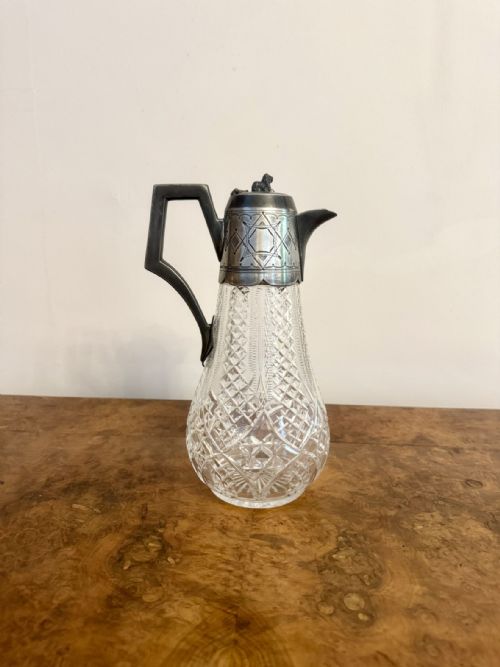
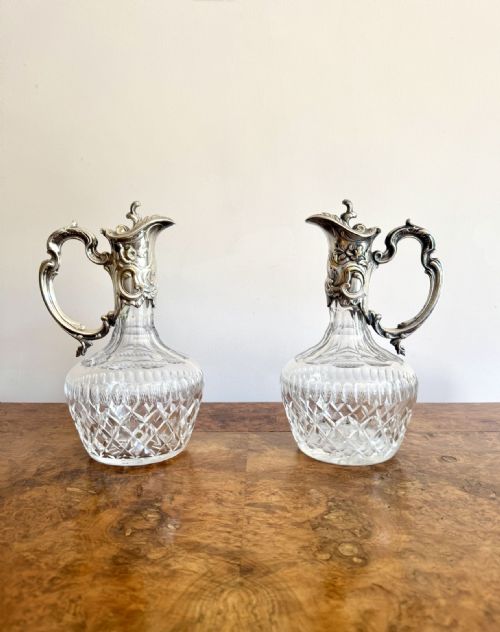
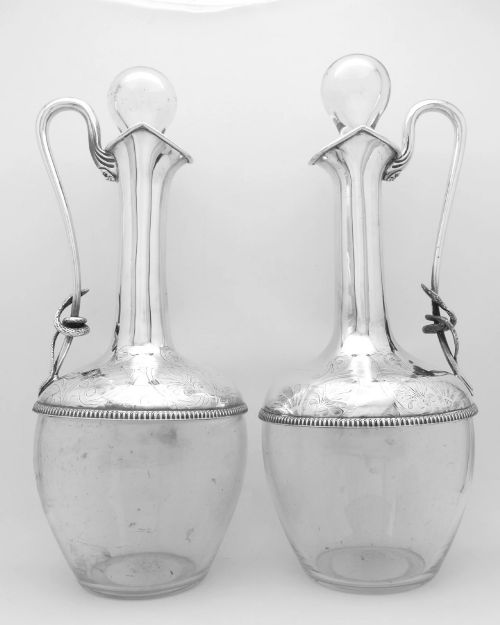


Silver Mounted Crystal Decanter
When you search for a silver mounted crystal decanter, you are looking for a refined vessel combining cut glass and precious metal.
Silver Mounted Crystal Decanter
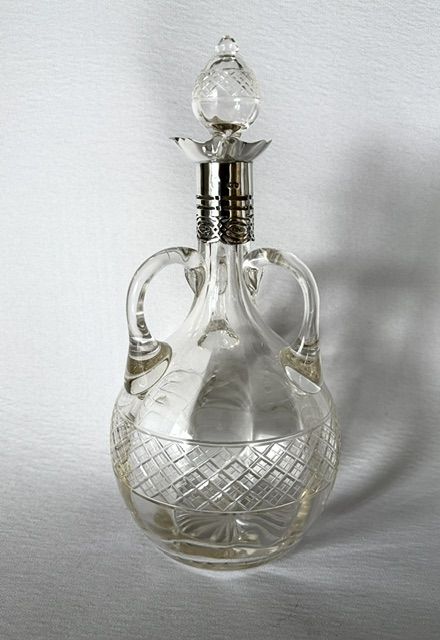
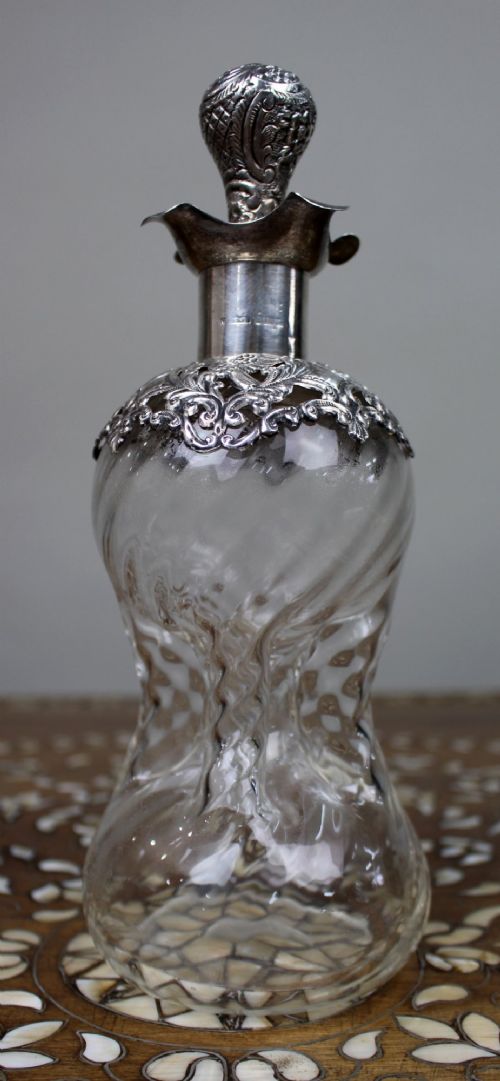
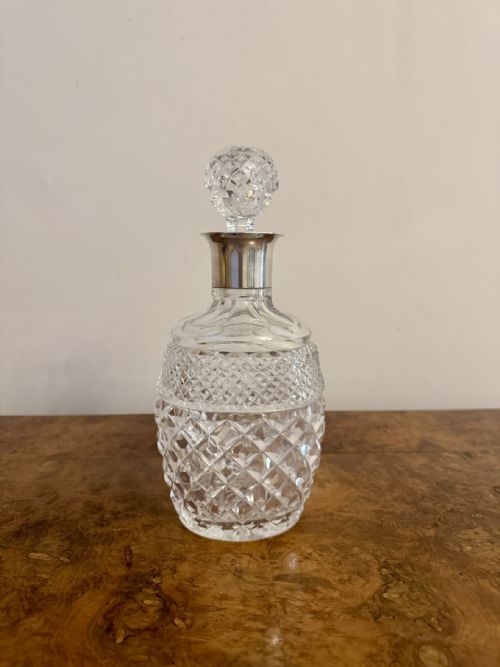
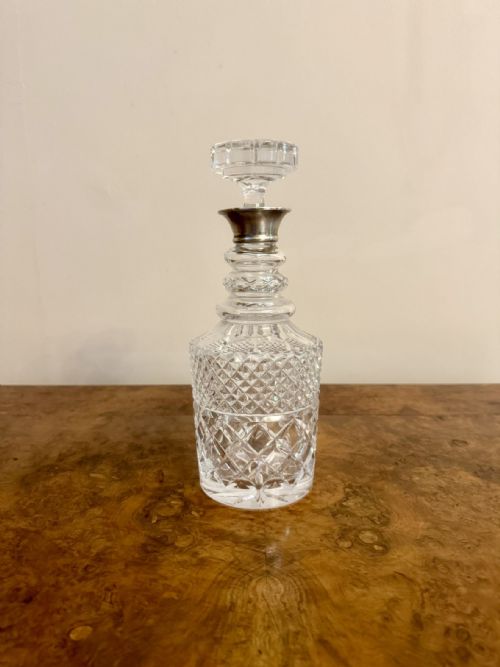
A silver mounted crystal decanter brings together heavy glass bodies and gleaming metal collars, stoppers, or handles. These pieces span the Victorian, Edwardian, and Art Deco periods, alongside mid-century examples.
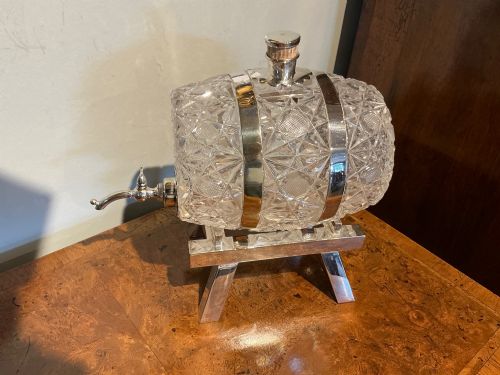
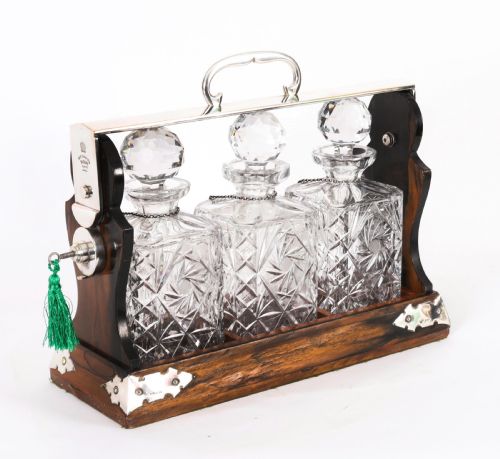
The form stretches from single spirit bottles and claret jugs to elaborate tantalus sets housed in oak or burr walnut frames. Most options found here date from the late nineteenth and early twentieth centuries, reflecting the entertaining habits of those eras.
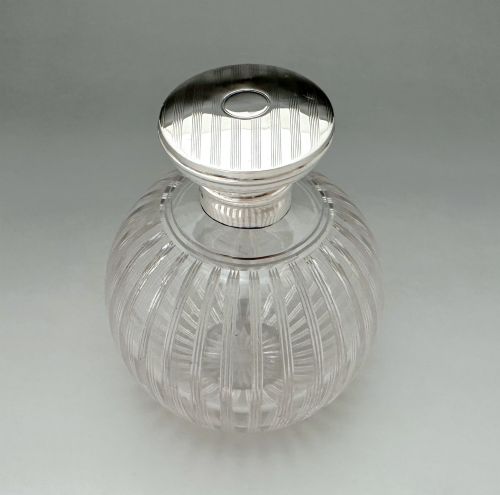
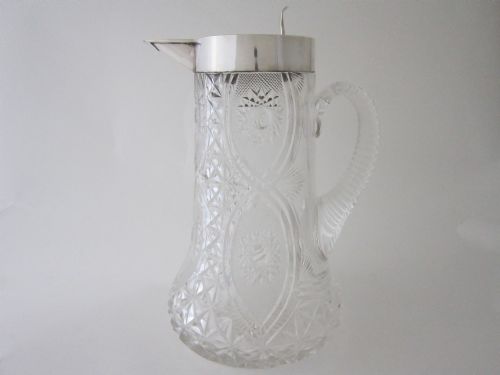
Beyond standard wine and whisky decanters, related serving vessels such as scent bottles and water jugs appear frequently. Each variation serves the dual purpose of aerating or containing liquid while displaying polished metalwork.
How They Were Made
Craftsmen shaped the vessels using heavy cut crystal or glass, often deep-cut with geometric or floral patterns to catch the light. This thick glass provided the necessary weight and durability for daily dining table use.
Silversmiths fitted these glass bodies with mounts made from sterling silver, silver gilt, or silver plate. Collars, hinged lids, and handles were secured around the neck or body, frequently bearing hallmarks that indicate the assay office and year of manufacture.
What Varies in Quality
Quality rests in the crispness of the glass cutting and the weight of the metal mounts. Finer examples display deep, sharp facets on the crystal and substantial gauge silver rather than thin plating.
The integration between glass and metal dictates the overall standard. Superior pieces feature tightly fitted collars, well-balanced handles, and matching stoppers that complete the silhouette.
Asprey and Co. Ltd·Betjemann·Hukin and Heath·Barnsley and Co·Freeman and Son Ltd·A.W. Pennington
The Silver Mounted Crystal Decanter Glossary
- Tantalus
- A locking wooden frame holding decanters securely so guests could not pour drinks without a key. These cabinets often incorporate games compendiums or storage compartments.
- Claret jug
- A specialised pouring vessel with a handle and hinged lid designed specifically for serving red wine. Many feature elaborate silver mounts shaped like masks or serpents.
- Hallmark
- A series of official stamps punched into silver indicating the maker, standard of purity, assay office, and date. These marks provide a secure method of dating the metal mount.
- Silver plate
- A layer of silver fused over a base metal foundation such as copper or nickel brass. This technique offered the appearance of solid silver at a more accessible cost.
- Silver gilt
- Sterling silver that has been coated with a thin layer of gold on the surface. This treatment creates a warm, rich tone on the interior or exterior of the mount.
Silver Mounted Crystal Decanter: Frequently Asked Questions
How do I clean inside a crystal decanter safely?
Fill the vessel with warm water, mild detergent, and specialised cleaning beads or raw rice, then swirl gently to lift residue without scratching the interior.
Avoid extreme temperature changes to prevent the thick glass from cracking, and leave the stopper out until completely dry.
Are these decanters suitable for everyday use?
Most pieces are robust enough for regular dining and entertaining, provided they are handled with care due to their weight and silver elements.
Hand washing is essential to preserve both the clarity of the crystal and the integrity of the silver mounts.
How can I tell the difference between silver plate and solid silver?
Look closely at the metal for official hallmarks, which usually indicate solid sterling silver rather than plated alternatives. Plated items may also show base metal showing through where the silver layer has worn thin over decades of polishing.
What is the purpose of a tantalus?
A tantalus kept expensive spirits locked away securely in Victorian and Edwardian homes to prevent unauthorized access by domestic staff. The locking mechanism held the glass decanters firmly in place while displaying the contents.