




Silver Link Necklace
A silver link necklace spans heavy watch chains worn across waistcoats to fluid collars and modernist pieces designed to catch the eye.
Silver Link Necklace
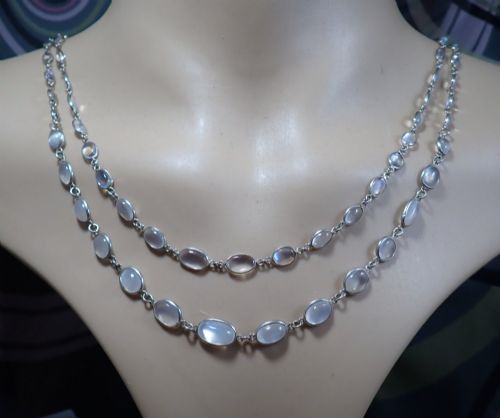
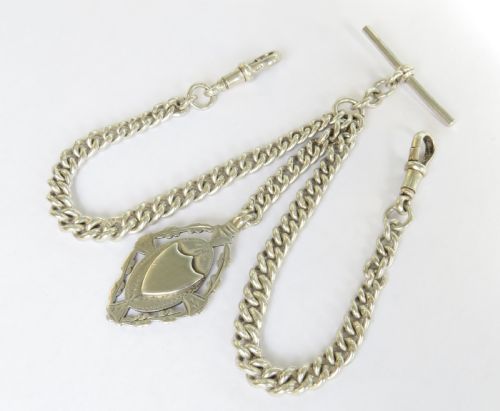
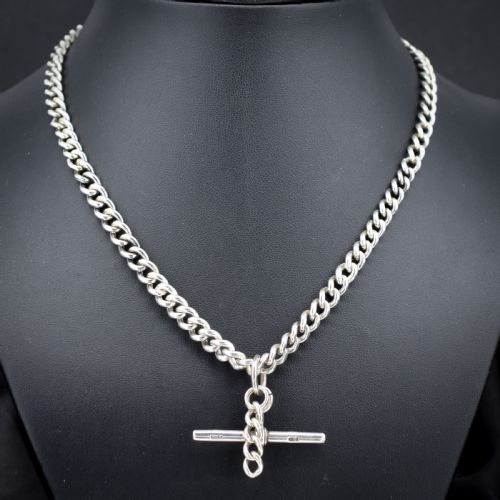
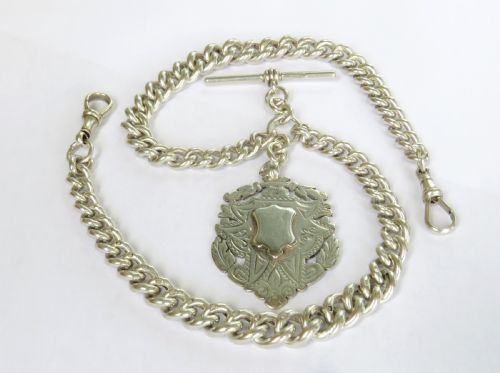
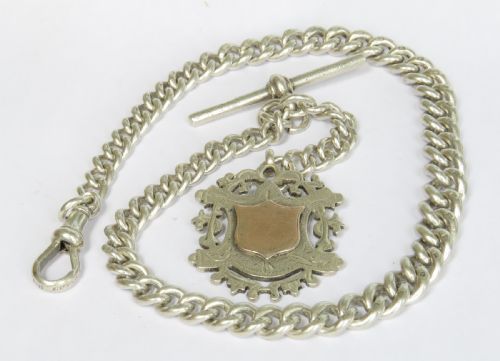
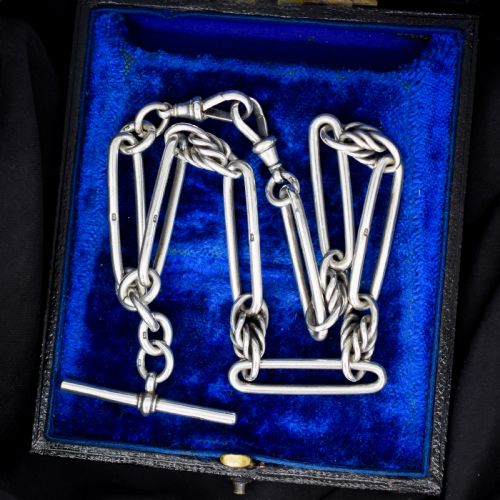
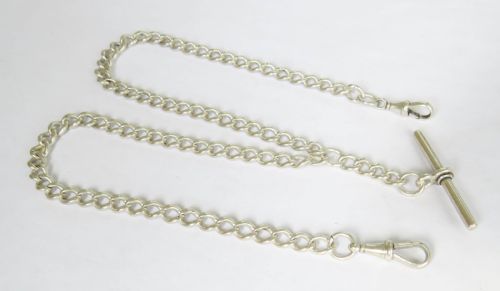
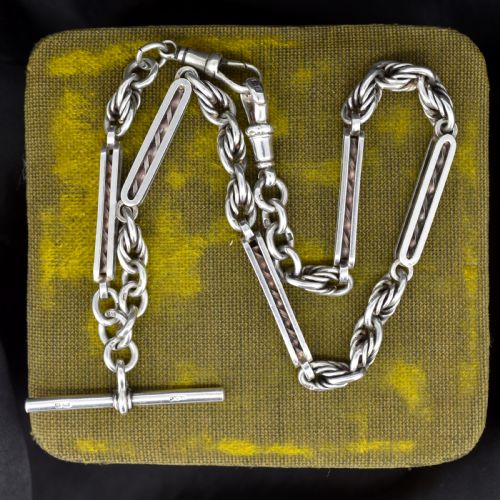
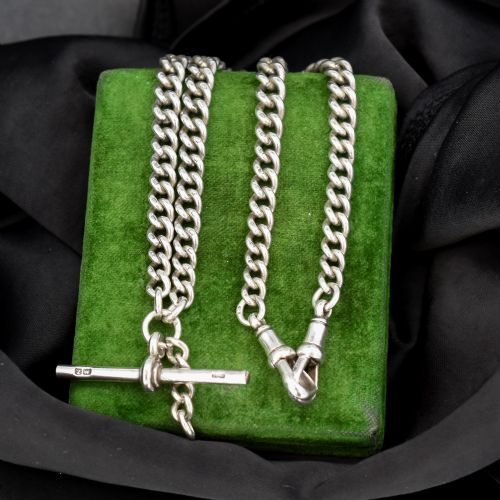
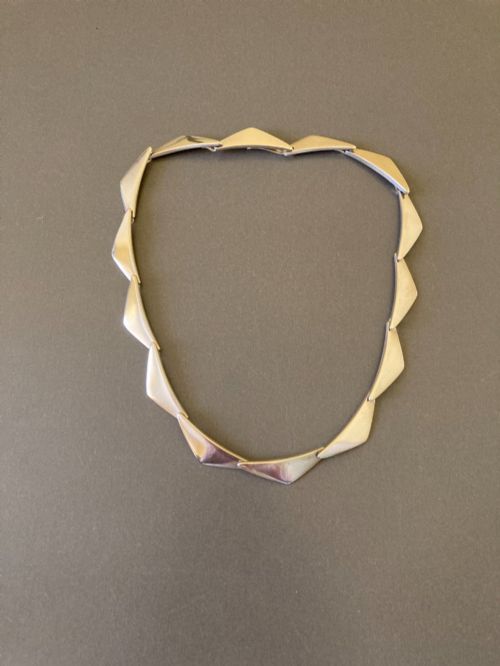
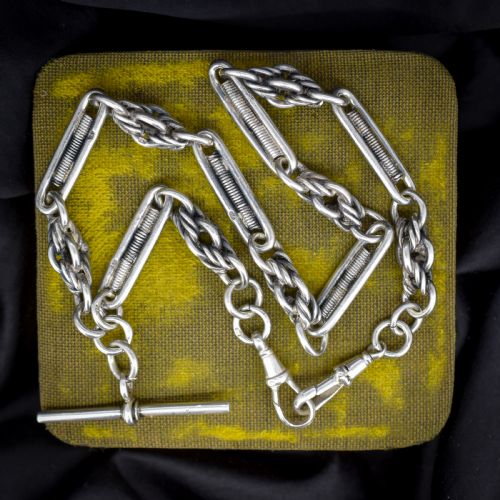
A silver link necklace takes many forms across the evidence, appearing most frequently as converted pocket watch albert chains, heavy curb links, and Victorian fringe collars. These pieces cross numerous periods, stretching from the nineteenth century through Edwardian, Art Deco, and mid-century modern designs.
Buyers encounter substantial curb link chains complete with original dog clips and T-bars alongside delicate pierced collars, geometric modernist designs, and pieces set with moonstones, onyx, or coral. Origins range from English workshops and continental makers to Danish studios.
Character and craftsmanship
Quality rests in the weight of the metal, the crispness of the piercing on collar links, and the integrity of hand-assembled joints. Substantial curb link chains display deep, even wear and solid gauge wire, while finer collars rely on precise piercing and secure catches.
The presence of original components such as dog clips, swivel fobs, and T-bars alters the character of watch chain conversions. Maker marks, clear hallmarks, and the integration of stones like moonstone or coral elevate individual pieces above standard production.
Victorian gentlemen tucked their pocket watches into waistcoats, little knowing their sturdy chains would end up draped around modern necks.
Georg Jensen·Jakob Bengel
The Silver Link Necklace Glossary
- Albert chain
- A heavy chain originally designed to secure a pocket watch to a waistcoat, frequently converted for wear as a necklace.
- Dog clip
- A spring-loaded snap hook used to secure watch chains and necklaces.
- T-bar
- A transverse bar attached to the centre of a watch chain, originally slotted through a buttonhole.
- Fringe necklace
- A necklace featuring drop elements or dangles suspended along a central chain or collar.
- Trombone link
- An elongated rectangular link flanked by smaller circular connecting rings, popular in nineteenth-century chains.
Silver Link Necklace: Frequently Asked Questions
How do I wear a watch chain as a necklace?
Many silver link necklace options originating as pocket watch albert chains feature dog clips and T-bars that allow them to be fastened at various lengths. You can clip the dog clip directly onto any link or wear the T-bar dropping as a decorative front toggle.
This versatility lets you adjust the drop to suit different necklines while keeping the original nineteenth or early twentieth-century hardware intact as a focal point.
What periods are common for these necklaces?
The selection includes pieces from the Victorian era, Edwardian period, and Art Deco years, alongside mid-century modern designs from the 1950s and 1960s. Victorian examples often feature heavy curb links or pierced fringe collars.
Later pieces lean towards modernist geometric patterns or Scandinavian minimalism, showing how link styles evolved over a century of design.
Are these necklaces solid silver?
The evidence records sterling silver, solid silver, German silver, and metal compositions across the inventory. Many nineteenth-century and early twentieth-century pieces carry British hallmarks indicating sterling standard.
Items described as German silver or general metal utilise alternative alloy compositions popular in specific modernist or continental manufacturing traditions.
Can I attach pendants to these chains?
Chains equipped with dog clips or spring rings allow you to attach pendants, lockets, or fobs easily. Watch chain conversions often retain their original swivel clips, which function well for hanging charms or seals.
Heavier curb link chains can support substantial pendants, whereas lighter fringe collars are generally worn alone to showcase their pierced metalwork.