


Silver Lidded Tureen
Silver lidded tureen pieces bring formal dining history to the table, offering covered vessels designed to keep soups, sauces, and entrees warm.
Silver Lidded Tureen
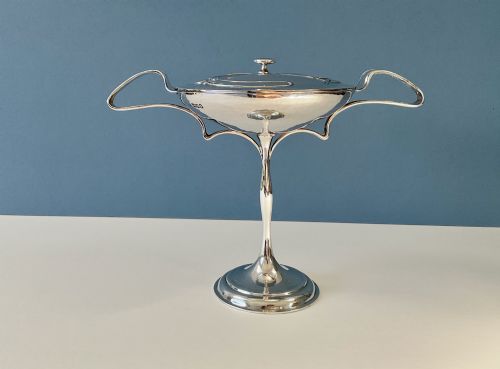
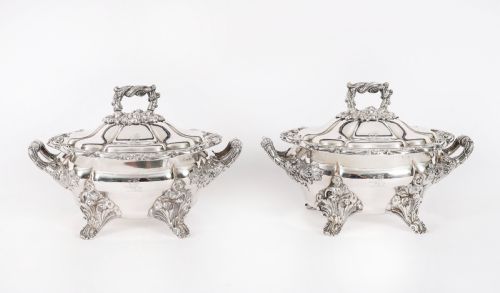
A silver lidded tureen provides a covered container for presenting and serving food at the dining table, taking forms such as oval entree dishes, sauce tureens, and punch bowls. These vessels range from Georgian and Victorian examples to Edwardian and Art Deco designs.
The most frequent version on this page is the Edwardian silver plated entree dish, often rectangular or oval in shape. Alongside these, buyers find Old Sheffield plate sauce tureens and sterling silver gravy boats with matching covers.
How they were made
Silversmiths formed solid sterling silver by hand through hammering and soldering, creating substantial pieces designed for long-term use. Many items utilise Old Sheffield plate or silver plating over copper, nickel silver, and electroplated nickel silver (EPNS).
Manufacturing methods evolved from Georgian smithing traditions into late nineteenth-century industrial silver plating techniques and twentieth-century factory production. Makers applied applied borders, cast handles, and engraved crests to finish the metal surfaces.
Some breakfast dishes feature a rolling mechanism so diners could sneak a sausage without lifting a lid.
What varies in quality
The crispness of chased decoration, cast handles, and engraved crests dictates the visual standard of a piece. Substantial gauge metal ensures the vessel maintains its rigidity and shape over centuries of handling.
The integrity of the underlying metal beneath the silver plating matters significantly, particularly in Old Sheffield plate where copper lines may show through worn areas. Maker marks from established workshops indicate higher standards of design and finishing.
Tiffany and Co·JC Moore·William Grundy·Hamilton and Inches·Mappin and Webb·Daniel and Arter·Walker and Hall·Elkington·Matthew Linwood·William Hutton and Sons·Cresswick·Christofle
The Silver Lidded Tureen Glossary
- Old Sheffield Plate
- A method of fusing a thin sheet of silver to a thicker copper base before rolling into sheets. This technique predates electroplating and produces a warm tone where the base metal occasionally telegraphs through.
- Entree Dish
- A shallow covered serving vessel used for bringing portions of meat or vegetables to the table. These often feature removable handles to allow the lid to double as a secondary serving dish.
- EPNS
- Electroplated Nickel Silver, a method introduced in the nineteenth century for coating a base alloy with a layer of pure silver using electrical current. It provided a durable alternative to solid silver.
- Sauce Tureen
- A small vessel with a fitted lid and handles, specifically designed for holding gravies, sauces, or melted butter. They frequently appear in matched pairs alongside larger serving dishes.
- Revolving Breakfast Dish
- A specialised serving piece with a roll-over cylindrical lid that conceals heated compartments within. These complex mechanisms allowed diners to access food from either side of the table.
Silver Lidded Tureen: Frequently Asked Questions
What is a silver lidded tureen used for?
These covered vessels held hot soups, stews, sauces, or meats at the dining table, keeping the contents warm between courses.
They served both a practical function in food service and a decorative role as a centrepiece on the dining table.
How do I clean my silver tureen?
Wash the piece gently in warm water using a mild soap, then dry it immediately with a soft cloth to prevent water spots.
Avoid abrasive cleaners or harsh scrubbing, which can damage silver plating or wear away thin layers of Old Sheffield plate.
How can I tell old Sheffield plate from electroplate?
Old Sheffield plate often reveals a faint hint of copper showing through along edges and high points where the silver layer has thinned from polishing.
Electroplated pieces usually display an even, bright silver coating without copper undertones, and often carry specific manufacturer marks from the Victorian era onward.
Can I use these tureens for serving food today?
Most antique silver plated and sterling pieces remain fully functional for serving food at modern dinner parties and family meals.
It is wise to check the interior condition and avoid storing highly acidic foods in silver vessels for extended periods.