


Silver Lidded Bowl
These silver lidded bowl examples range from small trinket boxes to large serving dishes, combining metalwork with glass and enamel.
Silver Lidded Bowl
When you search for a silver lidded bowl, you encounter a varied group of vessels spanning multiple centuries and domestic uses. These pieces serve as sugar basins, butter dishes, vanity jars, trinket pots, and sauce tureens.
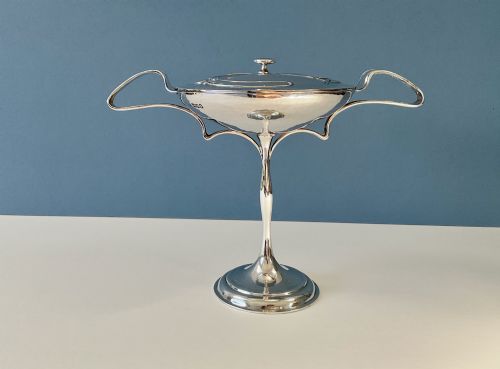
The Edwardian era and the 19th century provide a large portion of the available items, particularly dressing table jars and serving dishes. You also meet pieces from the 1920s and 1930s featuring Art Deco lines alongside earlier Victorian designs.
How They Were Made
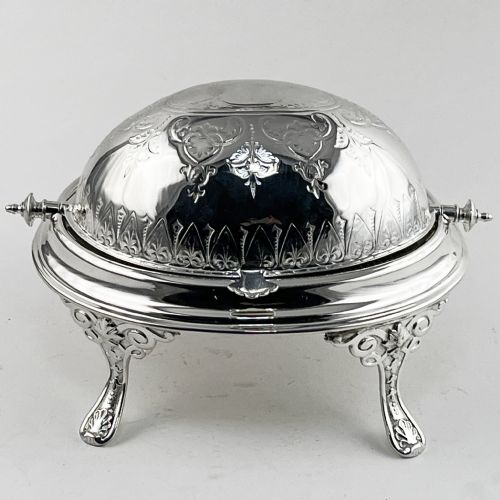
Maker workshops combined sterling silver or silver plate with heavy cut glass, crystal, and ceramics to form these lidded vessels. Metalsmiths utilised techniques such as electroplating on nickel silver and Old Sheffield plating to create durable serving tureens and dishes.
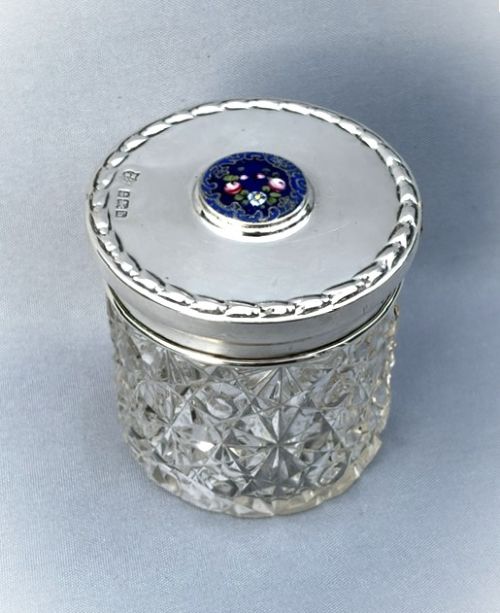
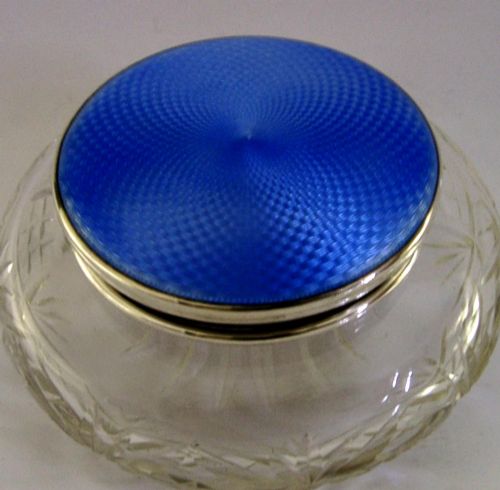
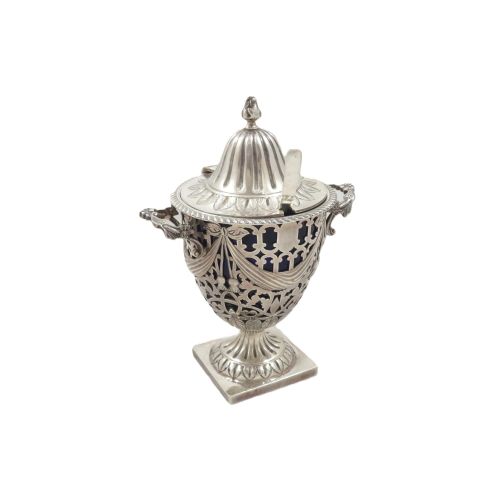
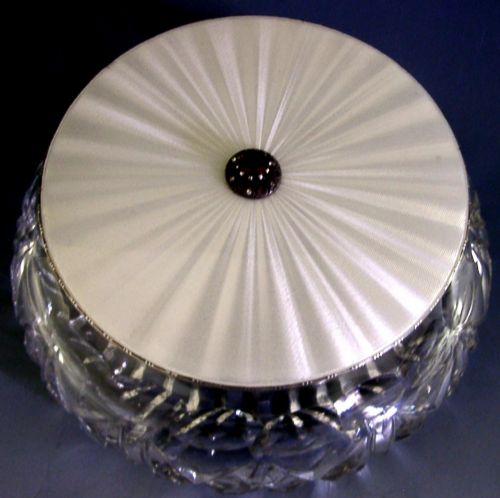
Decorative elements often incorporate blue, guilloche, or polychrome enamel set into the silver lid, alongside tortoiseshell panels. Pierced work appears on sugar baskets and pot pourri bowls, sometimes lined with coloured glass.
Listings feature sterling silver, silver plate, cut glass, enamel, and tortoiseshell across Edwardian and Art Deco designs.
What Varies in Quality
The distinction between standard domestic items and finer pieces lies in the crispness of the chasing and the weight of the silver or glass. Thicker crystal bases and heavier gauge sterling silver indicate superior manufacture.
The integration of decorative materials like tortoiseshell and enamel determines the refinement of a piece. Intricate enamel work and well-preserved plating elevate the status of dressing table jars and serving dishes.
Hamilton and Inches·Daniel and Arter·Christofle Gallia·Asprey·Mappin and Webb
The Silver Lidded Bowl Glossary
- Sterling silver
- A silver alloy containing 92.5 percent pure silver by mass, standard for quality British tableware and boxes.
- Old Sheffield plate
- A composite material formed by fusing a sheet of silver to a copper ingot, common in 19th-century tureens.
- Guilloche enamel
- Decorative metalwork covered in translucent enamel over an engine-turned mechanical pattern.
- Porringer
- A small bowl with one or two horizontal handles, often provided with a matching lid.
- Pot pourri basket
- An openwork or pierced lidded bowl designed to hold dried scented plant material.
Silver Lidded Bowl: Frequently Asked Questions
How were these lidded bowls used?
These vessels served various functions across the home, from dining table tureens and sugar basins to dressing table powder jars and trinket pots.
Larger examples held butter, sauce, or entrees, while smaller lidded pots contained cosmetics, pins, or sugar.
How do I clean silver and glass bowls?
Maintenance requires gentle cleaning with appropriate silver polish, avoiding abrasive cloths on enamel or tortoiseshell panels.
Glass and crystal bases wash safely in warm soapy water, provided you keep moisture away from lined or cemented metal rims.
How do I date a silver lidded bowl?
Hallmarks stamped on the silver components provide the most reliable guide to a piece's age and origin.
Date letters, maker marks, and assay office symbols indicate the exact year and town of manufacture for British items.
What styles dominate these pieces?
The selection reflects major design movements including Victorian, Edwardian, Art Nouveau, and Art Deco.
Edwardian and Victorian pieces lean towards floral motifs and cut glass, while 1930s examples favour geometric lines.