



Silver Inkstand Set
A silver inkstand set brings order and distinction to a desk, holding inkwells, pen trays and taper sticks in precious metal or plated form.
Silver Inkstand Set
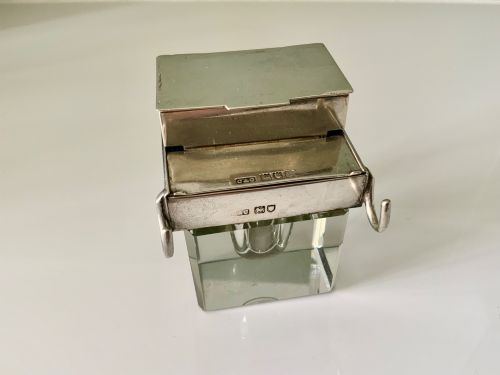
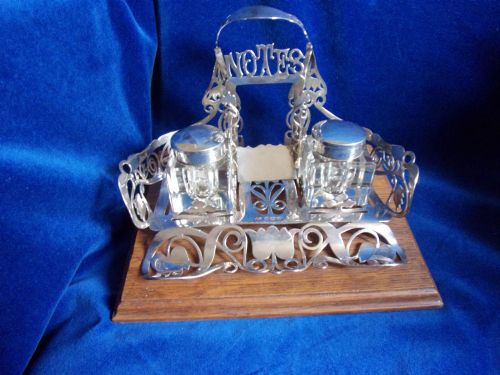
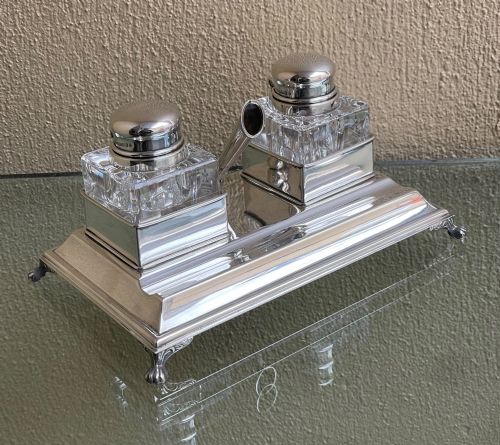
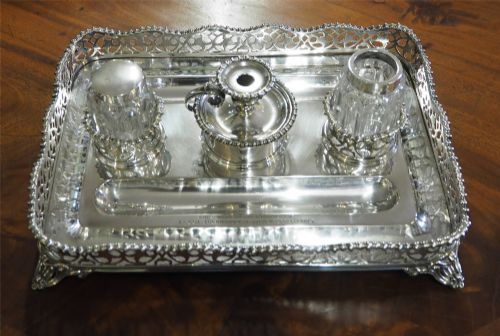
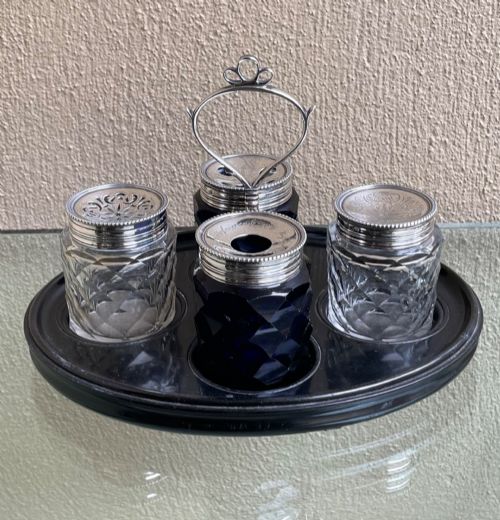
A silver inkstand set groups writing implements onto a single fitted tray or stand, designed to sit permanently on a library table or partners' desk. These pieces span the Georgian, Victorian and Edwardian periods, appearing alongside later Elizabeth II examples.
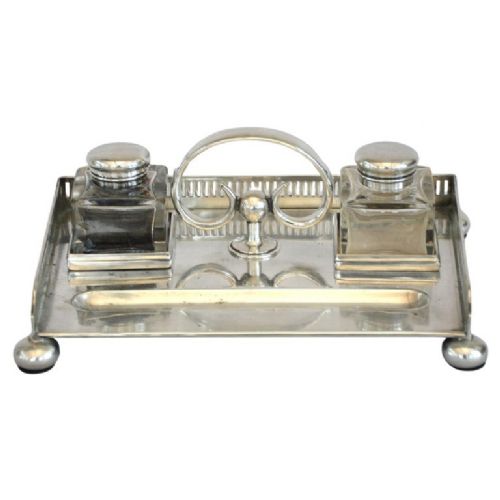
The most common formats on this page range from simple silver-plated desk stands holding a single glass inkwell to large double inkstands fitted with chambersticks, matching bell sets, and compartments for pens, wafers and sand.
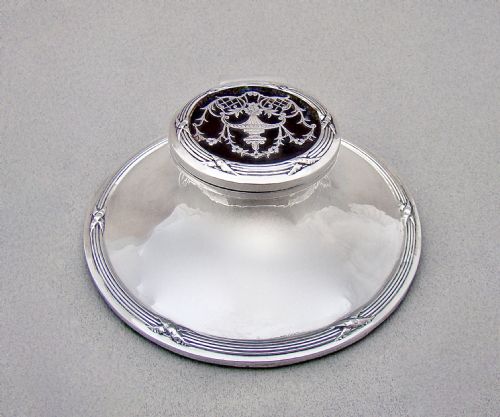
Makers utilised diverse media beyond plain metal, creating stands mounted with horn, tortoiseshell, coromandel, satinwood, onyx and lapis lazuli. Sculptural forms such as capstan inkwells, dolphin bases and animal hooves also surface among the traditional rectangular trays.
How they were made
Silversmiths constructed solid pieces in sterling silver or silver gilt, while workshops employed Sheffield plate and silver plating over base metals for broader accessibility. Cut glass and heavy pressed glass formed the reservoirs for the inkwells, fitted with hinged metal lids to prevent evaporation.
Cabinetmakers and metalworkers combined organic materials such as Scottish oak, horn, tortoiseshell, coromandel and satinwood with silver mounts, hinges and feet. Stoneware and mineral accents like onyx and lapis lazuli were inlaid into wooden or metal trays to create striking contrast.
Decoration relied on period techniques including chasing, repousse work, engraving and casting, yielding styles from Egyptian Revival and Regency to flowing Art Nouveau curves.
Silver Inkstand Set Retail Price Guide 2026
Typical asking prices for silver inkstand set among the pieces listed under this phrase on Sellingantiques today, from the lower quarter to the upper quarter. They describe what is for sale here now, not the wider market.
What varies in quality
The division between standard desk accessories and high-end examples lies in the weight of the metal, the integration of matching components, and the ambition of the design. Heavier gauge solid silver and substantial Sheffield plate distinguish superior work from lighter plated alternatives.
The inclusion of matched sets of inkwells with original glass inserts, functioning clock movements in capstan models, and complex figural elements indicate higher atelier standards. Finer pieces demonstrate meticulous joinery in exotic woods and precise chasing across mounts and trays.
Maker attribution elevates certain pieces, with workshops such as Elkington, Walker and Hall, Martin Hall, and notable silversmiths providing documented craftsmanship that commands greater attention.
Elkington·Henry Matthews·Wilkinson and Co·Walker and Hall·WMF·Marson and Jones·Robert Garrard·Rupert Favell·Robert Hennell·Daniel Holy·Zimmermann·Martin Hall
The Silver Inkstand Set Glossary
- Standish
- An alternative term for an inkstand, often denoting a more elaborate portable or stationary desk set complete with bells, sanders and multiple inkwells. These pieces served as central fixtures in formal writing rooms.
- Capstan inkwell
- A desk inkwell shaped like a ship's capstan, featuring a wide base that tapers upward to a hinged top. This stout profile kept the heavy glass or metal vessel stable on the desk.
- Sheffield plate
- An early form of composite metal created by fusing a sheet of silver to a copper ingot before rolling them together. This technique preceded modern electroplating and leaves characteristic edges where the copper shows.
- Chamberstick
- A low portable candlestick fitted with a handle and a small drip pan, frequently incorporated into larger Victorian desk stands. It provided light for sealing letters with hot wax.
- Silver gilt
- Sterling silver that has been coated with a thin layer of gold through an electrochemical or fire-gilding process. This finish gave interior components and decorative mounts a rich, warm tone resistant to ink corrosion.
Silver Inkstand Set: Frequently Asked Questions
What is the difference between an inkstand and an inkwell?
An inkstand is the complete tray or desk stand that holds one or more inkwells along with pen rests and accessories. An inkwell is simply the individual glass or metal vessel that contains the ink.
Larger stands integrate multiple wells for different coloured inks alongside taper sticks and sand shakers. Many pieces on this page are complete sets featuring matching inkwells nestled into fitted trays.
How were silver inkstand sets used?
These sets served as permanent fixtures on writing desks in studies, libraries and offices, providing a central station for correspondence. Writers dipped their quill or steel nib pens into the lidded wells and used accompanying sand shakers to dry wet ink on paper.
They also held sealing wax, tapers for melting it, and small bells to summon servants. Their prominent placement made them decorative items that signalled the owner's status and taste.
How do I care for a silver desk set?
Keep silver and plated surfaces clean by dusting them gently with a soft cloth and avoiding abrasive cleaning agents that wear away thin plating. If polishing, use a mild cream specifically formulated for silver and remove any residue from hinges and crevices.
Take care with fitted organic materials such as tortoiseshell, horn or wood, keeping them away from direct sunlight and excessive moisture. Glass liners should be washed separately and dried thoroughly before being replaced in their metal mounts.
How can I tell the period of a desk set?
Examining hallmarks stamped on the silver components provides the most reliable date, revealing the assay office, date letter and maker's mark. Stylistic clues also help, as heavy classical revival designs point to the Georgian and Regency eras, while ornate floral repousse indicates the Victorian period.
Art Nouveau and Art Deco pieces display distinct curving motifs or geometric lines typical of the early twentieth century. Materials such as unmounted hardwoods or unusual combinations of horn and silver frequently suggest late nineteenth-century country house tastes.