

Silver Handled Bowl
A silver handled bowl brings together fine metalwork and domestic service, spanning forms from sugar baskets to quaichs across the Victorian, Edwardian and Georgian eras.
Silver Handled Bowl
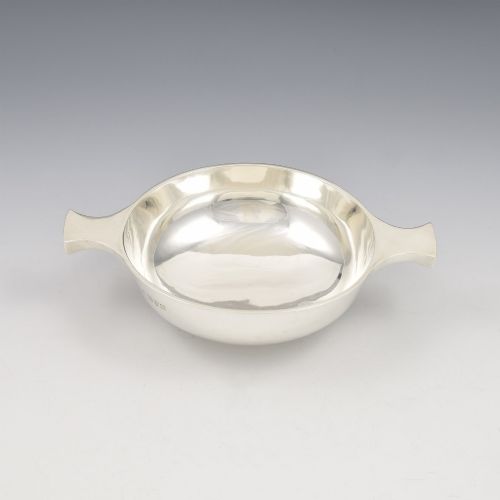
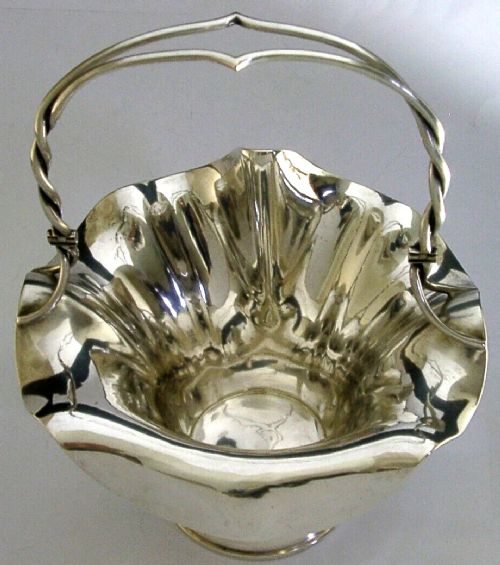
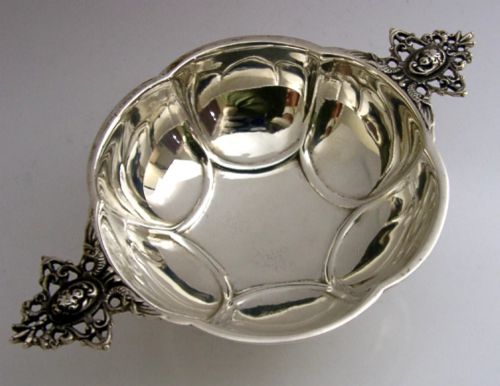
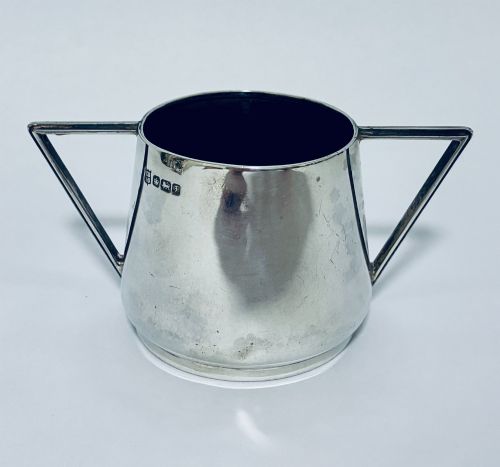
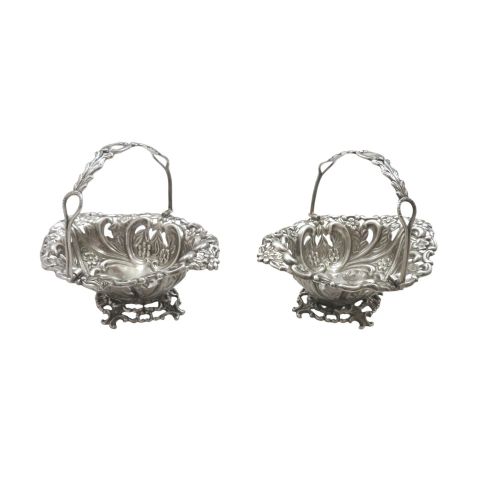
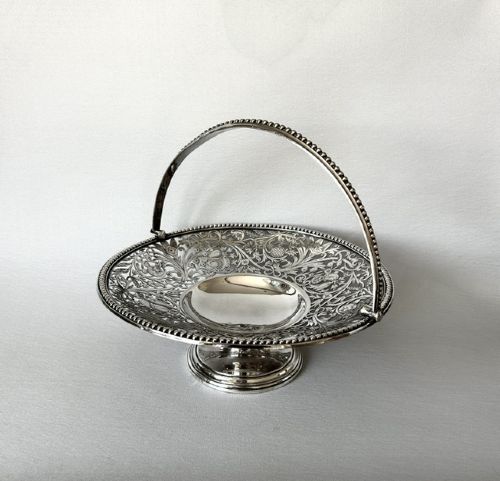
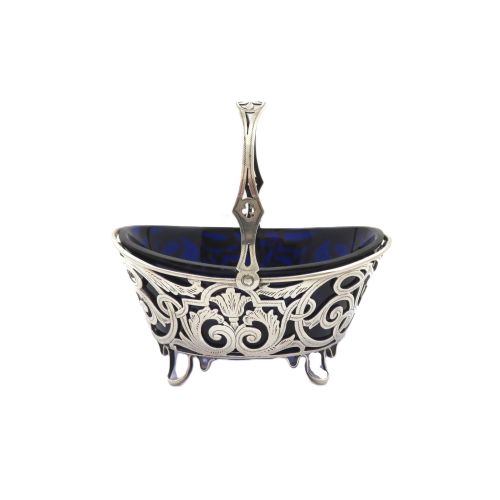
A silver handled bowl encompasses a diverse group of domestic vessels designed for serving sugar, fruit, butter, or spirits. When exploring this category, buyers encounter specific forms such as traditional two-handled porringers, swinging handle baskets with coloured glass liners, and Scottish quaichs.
The objects span multiple centuries, with significant representation from the Georgian, Victorian, and Edwardian periods alongside later mid-century examples. Pieces range from heavy cast silver baskets with pierced decoration to silver plated neo-classical fruit dishes and barware quaichs.
Origins vary across English, Scottish, Dutch, and continental workshops, reflecting shifts in dining habits and hospitality customs. The inventory includes specialised items like cream pails, sweetmeat baskets, and whisky cups equipped with side handles or overarching bails.
Materials and construction
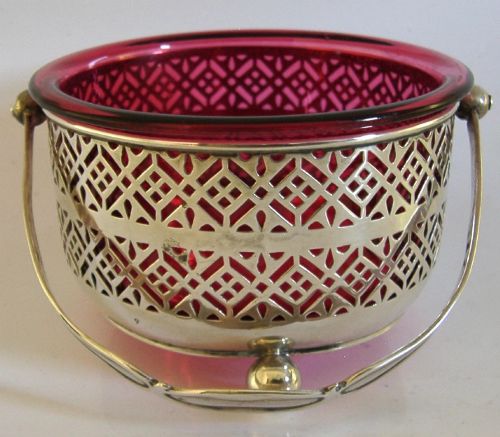
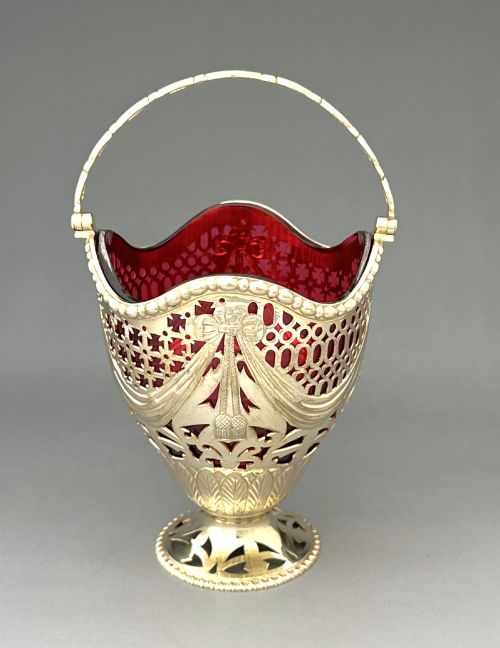
Construction methods rely heavily on solid sterling silver, silver plate, and Old Sheffield plate, often combined with contrasting elements such as cranberry or ruby glass liners and ebonised wood. Metalworking techniques visible across the pieces include piercing, repoussé work, planishing, and silver gilding.
Handles are attached through various structural means, ranging from fixed loop designs and reeded side grips to hinged swing bails supported by mounting ears. Pierced and pierced-and-engraved metal galleries demand meticulous hand-sawing and chasing to achieve delicate geometric or floral patterns.
Certain Victorian fruit baskets feature stylized coral handles, bringing marine textures directly to the dining table.
Markers of distinction
Quality rests in the crispness of chased ornament, the structural integrity of handle attachments, and the weight of the metal relative to the vessel's size. Heavy gauge sterling silver maintains rigidity in pierced galleries where thinner metal might buckle or distort over time.
The integration of secondary materials defines the calibre of the piece, particularly the fit of original glass liners and the preservation of silver gilt interiors. Maker marks, clear hallmarking, and retained crests or engraving add documentary depth that elevates standard tableware to notable examples of silversmithing.
R E Stone·Nathan & Hayes·Martin Hall & Co·George W Scott & Sons Ltd·Aldridge & Green·Henry Chawner·Christopher Dresser·Hukin & Heath·Elkington·Thomas Bradbury
The Silver Handled Bowl Glossary
- Porringer
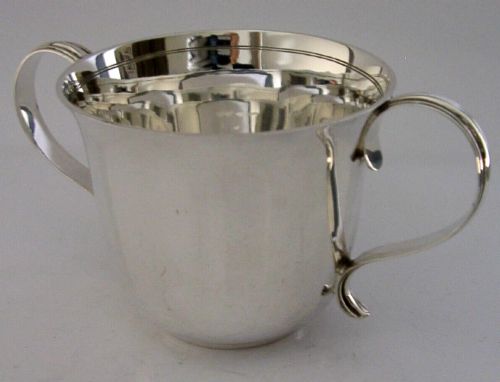
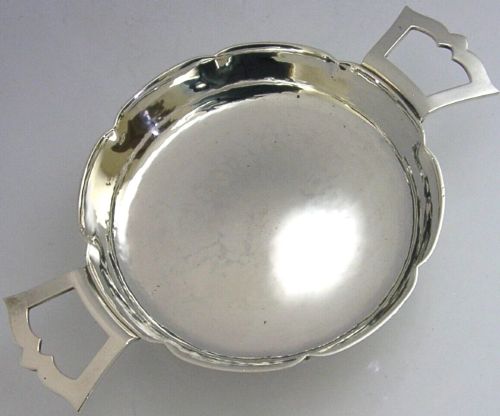
- A small bowl equipped with one or two horizontal flat handles, historically used for porridging, broth, or as a Christening gift. Examples often display solid or pierced ear handles.
- Repoussé
- A metalworking technique where the design is hammered into relief from the reverse side. This method creates tactile floral or scroll motifs along the rim.
- Planished
- A surface finish resulting from light hammer blows delivered with a polished hammer. It leaves a subtle, concentric textured pattern across the silver surface.
- Old Sheffield Plated
- An early fusing technique where a sheet of silver is fused to a copper core before rolling. This process differs markedly from later electroplating methods.
Silver Handled Bowl: Frequently Asked Questions
What is a silver quaich used for?
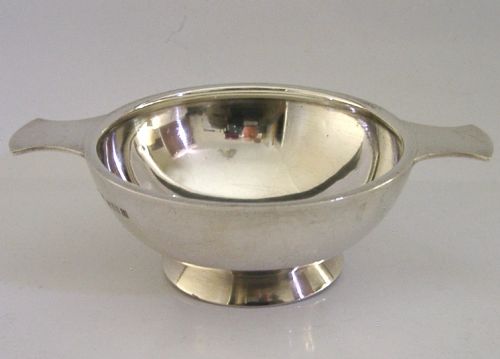
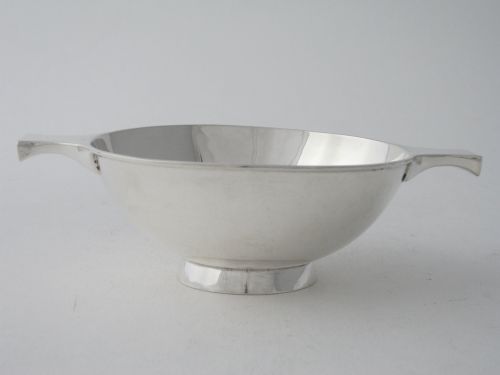
A quaich functions primarily as a drinking vessel for whisky or spirits, featuring two opposing handles known as lugs for secure holding.
Over time, these shallow bowls transitioned into decorative barware and presentation pieces while retaining their distinctive seventeenth-century Scottish silhouette.
How are swing-handled baskets cleaned?
Maintenance requires gentle washing in warm soapy water using a soft cloth, avoiding abrasive dips that strip away delicate patination.
If the piece includes a removable glass liner, it should be washed separately before returning it to the dry silver frame.
What distinguishes Old Sheffield plate?
Old Sheffield plate involves fusing a thin layer of sterling silver to a thick copper core through heat and pressure rather than electricity.
Examining the edges often reveals a thin sliver of exposed copper where the metals meet during the manufacturing process.
How do I identify a Victorian sugar basket?
Victorian sugar baskets frequently incorporate pierced gallery work, swing bails, and fitted coloured glass liners designed to hold loose lumps.
Maker marks stamped near the rim or base typically point to nineteenth-century British assay offices and silversmith partnerships.