



Silver Gold Wall Mirror
A silver gold wall mirror brings dual-tone warmth and reflective depth to a room, drawing the eye with its layered metallic finish.
Silver Gold Wall Mirror
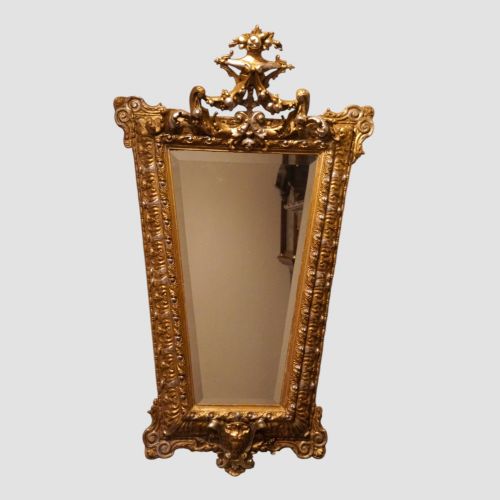
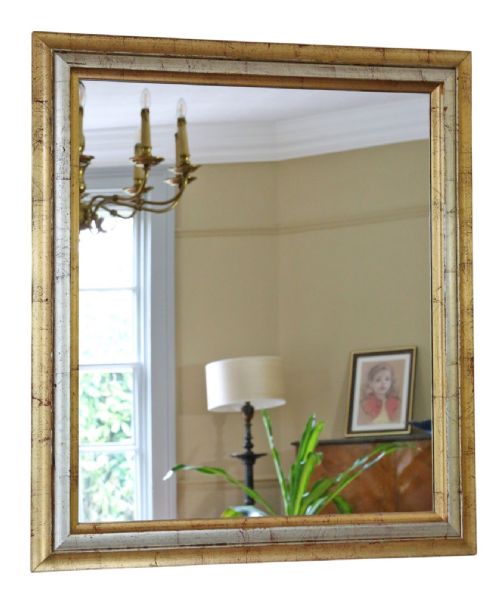
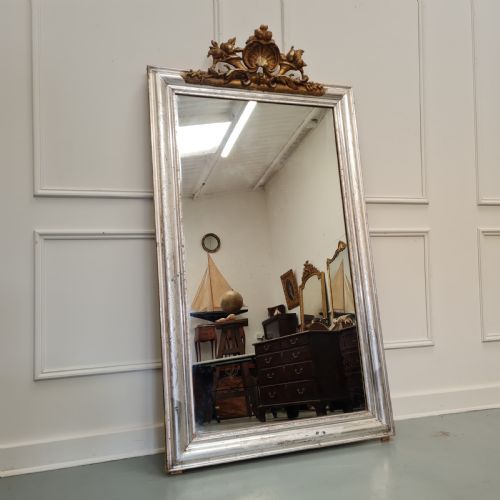
When you search for a silver gold wall mirror, you encounter pieces that combine the cool sheen of silver with the warm glow of gold leaf or gilt. These decorative items function primarily as wall mirrors and overmantle mirrors, designed to anchor a room or sit above a fireplace. The selection spans distinct eras, from nineteenth-century interpretations to mid-twentieth-century examples.
You are most likely to meet French and Italian pieces on this page, particularly those drawing on Baroque Revival, Venetian, and Napoleon III styles. Forms range from large arched top and trapezoidal shapes to classic rectangular frames. Materials typically feature wood and gesso finished with metallic leaf, alongside ebonised accents and original glass plates.
Materials and construction methods
The foundation of these frames relies on carved wood and gesso, providing a stable substrate for intricate ornamentation and shaped top designs. Artisans applied thin sheets of silver leaf and gold leaf directly to the gesso surface by hand. This dual-metal technique required precise control to balance the contrasting tones across the carved mouldings.
Mirrored glass plates were set within these heavy frames, occasionally surviving as original glass with authentic foxing and age spots. Heavier overmantle pieces utilised robust wooden structures, sometimes incorporating brass on oak or ebonised details to frame the reflective plate securely.
Materials recorded across the inventory include silver leaf, gold leaf, gesso, ebonised wood, and brass.
Assessing quality and craftsmanship
The distinction between standard and superior pieces rests on the depth and execution of the carved wood and gesso ornamentation. Finer examples display crisp, hand-carved details and a harmonious application of both silver and gold leaf that ages gracefully together. Simpler designs rely on cleaner lines, as seen in understated overmantle formats where the quality of the finish matters more than heavy relief.
The integrity of the frame construction and the survival of the original plate influence the overall standard. Superior items maintain solid structural joinery in the wood and retain their original mirrored glass without modern replacements. The interplay between the silver and gold surfaces creates a richer visual texture on better-executed pieces.
The Silver Gold Wall Mirror Glossary
- Giltwood
- Wood that has been treated with gold leaf, gilt, or a metallic finish. This forms the foundational frame material for many traditional mirrors.
- Gesso
- A plaster-like mixture applied to wood frames to create a smooth surface for carving and gilding. It allows for intricate relief work before the metal leaf is applied.
- Overmantle mirror
- A large mirror specifically designed to hang above a fireplace mantel. These pieces usually feature wide horizontal or tall arched formats.
- Silver leaf
- Extremely thin sheets of beaten silver applied to decorative surfaces. It provides a cooler, brighter reflection than gold.
- Trapezoidal
- A geometric shape with four sides where two sides are parallel and the other two diverge. This uncommon frame profile appears in nineteenth-century designs.
Silver Gold Wall Mirror: Frequently Asked Questions
How do I clean a silver gold wall mirror?
Dust the carved frame gently with a soft, dry brush to protect the delicate silver and gold leaf surfaces from moisture and abrasion.
Clean the glass plate using a mild glass cleaner applied to a cloth rather than directly onto the mirror, preventing liquid from seeping behind the frame.
Where should I hang an overmantle mirror?
Position the piece centrally above a fireplace mantel to reflect light and create a balanced focal point in the room. Ensure the wall fixings match the substantial weight of these large wooden and gesso frames.
Keep the mirror away from direct, prolonged sunlight to preserve the integrity of the original gilt and silver leaf finish.
How do I identify a nineteenth-century French mirror?
Look for characteristic design elements such as arched tops, carved wood and gesso decoration, and Louis Philippe styling. These pieces often feature heavier proportions and patinated silver and gold surfaces.
Examine the reverse of the frame and the condition of the glass plate for signs of age, including original fixings and oxidation.
What is the difference between gilt and gold leaf?
Gilt refers to a broader category of gold-colored finishes applied to surfaces, which can include paint, powder, or thin metallic foils. Gold leaf specifically denotes hammered sheets of actual gold applied by hand over a prepared gesso base.
Both finishes appear on these mirrors, often combined with silver leaf to create the distinctive dual-tone appearance.