






Silver Glass Liner Pot
A silver glass liner pot is a functional table accessory that pairs precious metalwork with coloured glass, offering utility and period charm for the dining table.
Silver Glass Liner Pot
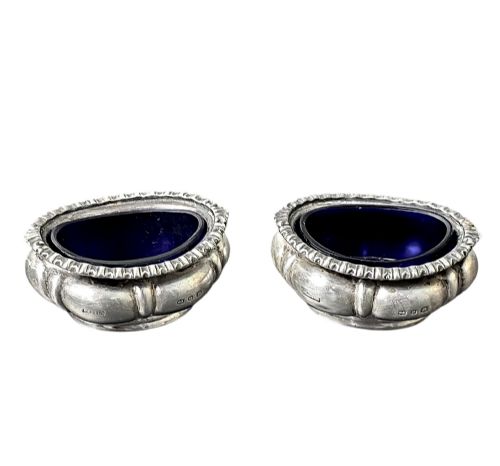
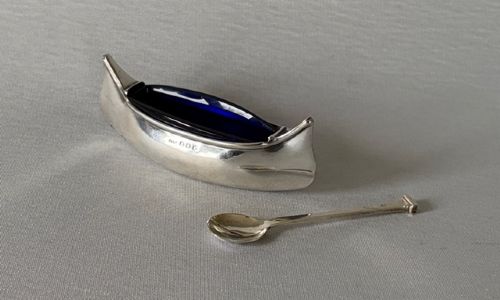
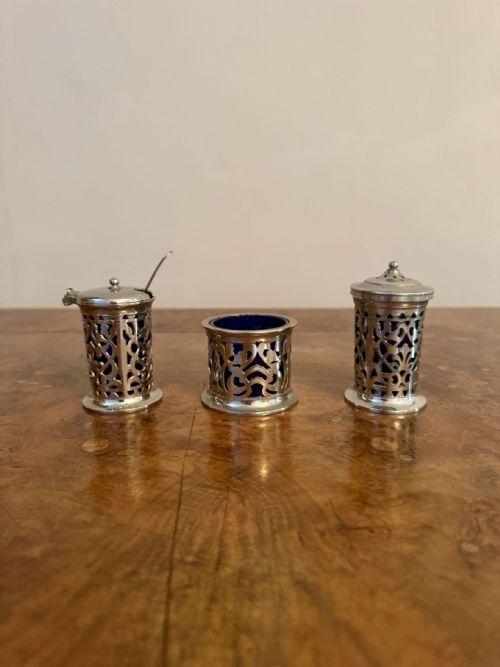
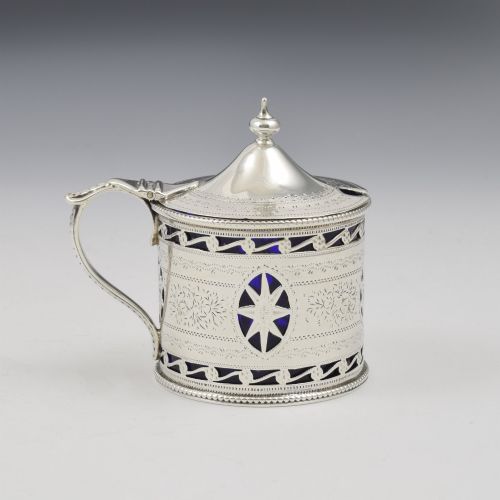
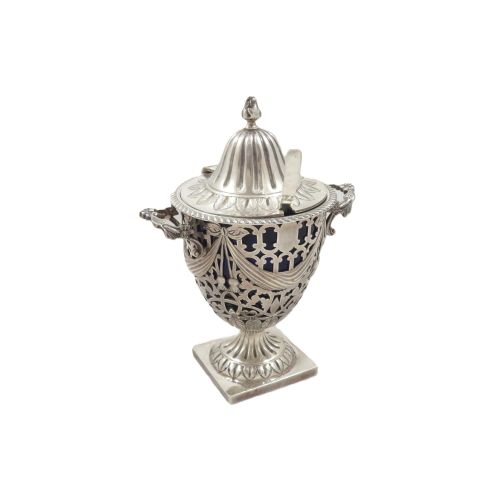
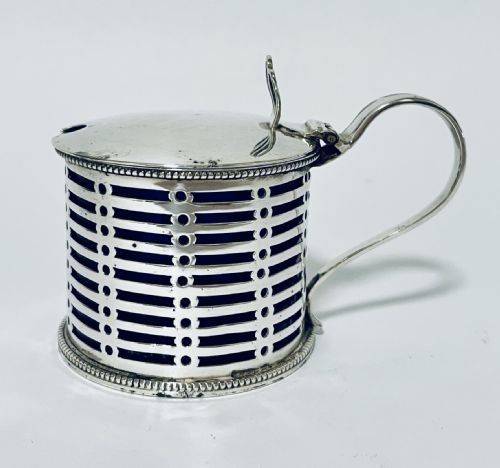
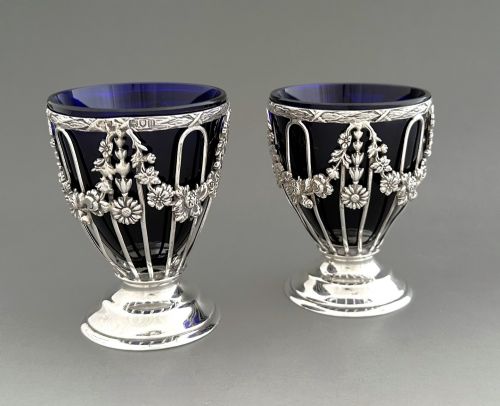
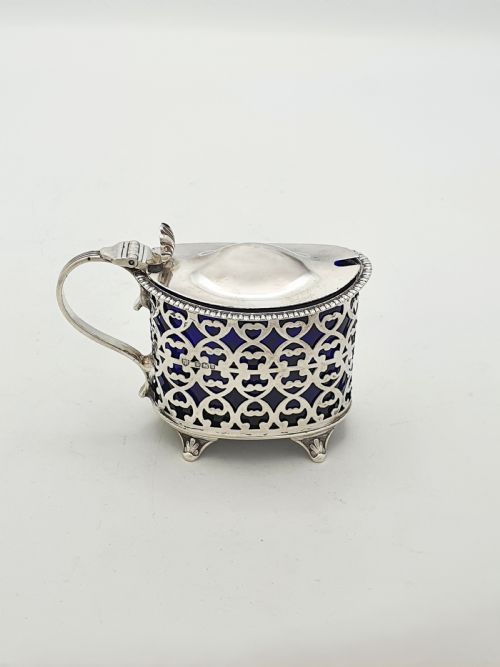
A silver glass liner pot typically takes the form of a mustard pot, salt cellar, or condiment tub designed to hold sauce or seasoning safely against the metal. The silver glass liner pot examples found here span from early Victorian pieces to Art Deco creations, featuring both pierced metalwork and solid bodies.
Most items on this page belong to the Victorian and Edwardian eras, encompassing cruet sets, sugar baskets, and dressing table jars alongside individual mustard pots. These vessels combine heavy sterling silver mounts with inserts of cobalt blue glass, ruby red glass, or clear glass.
Makers such as Nathan and Hayes and Charles Stuart Harris produced these domestic items, which often retain their original removable glass liners. Collectors encounter various forms, including drum shapes, oval vessels, wirework tubs, and novelty salt tubs.
Materials and construction
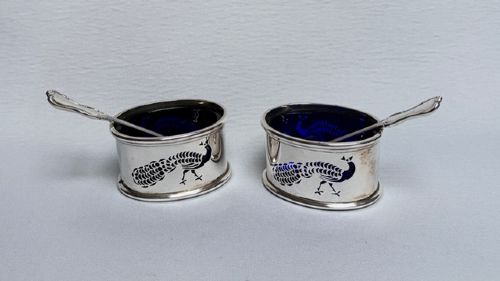
Silversmiths utilised sterling silver to create pierced galleries, drum bodies, and cast mounts, frequently incorporating hinged lids and thumbpieces. Pierced work required careful hand-sawing to produce intricate geometric or figural patterns without compromising structural integrity.
Inside the silver housing sits a blown glass liner, designed to protect the metal from corrosive condiments such as mustard or salt. These glass inserts come in shades of cobalt blue and ruby red, blown and shaped to fit snugly within the silver frame.
Silver Glass Liner Pot Retail Price Guide 2026
Typical asking prices for silver glass liner pot among the pieces listed under this phrase on Sellingantiques today, from the lower quarter to the upper quarter. They describe what is for sale here now, not the wider market.
Assessing quality and craftsmanship
Quality rests in the crispness of the silver piercing, the weight of the metal, and the harmony between the silver mount and its glass insert. Superior pieces display detailed cast motifs, secure hinges, and well-balanced proportions.
The survival of the matching period glass liner significantly influences the integrity of the piece. Master silversmiths ensured that liners fitted precisely, while makers' marks stamped into the silver confirm the origin and silver standard.
Nathan and Hayes·William Neale·Charles Stuart Harris·S Blanckensee
The Silver Glass Liner Pot Glossary
- Cruet set
- A matched group of condiment pots, typically holding mustard, pepper, and salt, housed together on the table.
- Pierced silver
- Metalwork cut through with a saw to create decorative openwork patterns, often revealing the coloured glass liner beneath.
- Sterling silver
- An alloy of silver containing 92.5 percent pure silver and 7.5 percent other metals, usually copper, meeting the British legal standard.
- Salt cellar
- A small open vessel used to hold salt on the dining table before the invention of the spring-loaded salt shaker.
- Removable glass liner
- A separate glass insert placed inside a silver pot to contain food substances and prevent chemical reactions with the metal.
Silver Glass Liner Pot: Frequently Asked Questions
What is a silver glass liner pot used for?
These vessels served primarily as mustard pots, salt cellars, and condiment tubs on formal dining tables.
The glass liner protected the silver metal from corrosive substances while allowing the bright colour of the glass to show through pierced designs.
How do I date a silver glass liner pot?
Dating relies heavily upon the hallmarked assay office marks, date letters, and maker stamps struck directly into the sterling silver body.
Stylistic cues such as Victorian piercing or Art Deco geometric lines also help place the piece within a specific decade.
Are the glass liners usually original?
Many surviving pieces retain their original blown glass liners in cobalt blue, ruby red, or clear glass.
Because glass is fragile, replacements do occur, making a snug fit and matching period characteristics important considerations for collectors.
How should I clean my silver pot?
Cleaning requires warm soapy water and a soft cloth for the glass liner, removing it from the silver mount beforehand.
The sterling silver housing benefits from gentle application of a non-abrasive silver polish to maintain the metal surface without damaging hallmarks.