




Silver Gilt Dishes
Silver gilt dishes bring a warm, reflective luxury to the table, pairing the structural honesty of silver with the rich lustre of gold.
Silver Gilt Dishes
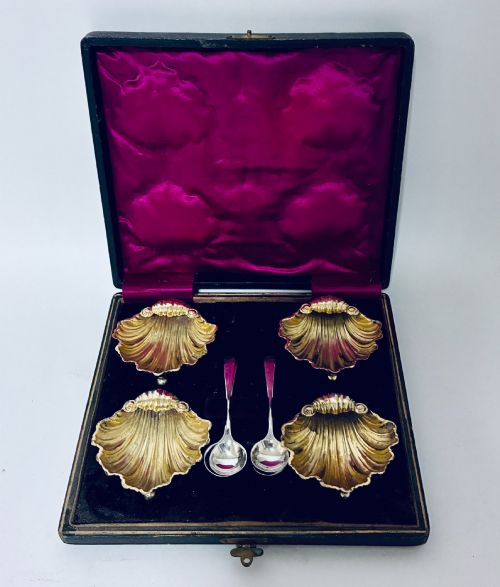
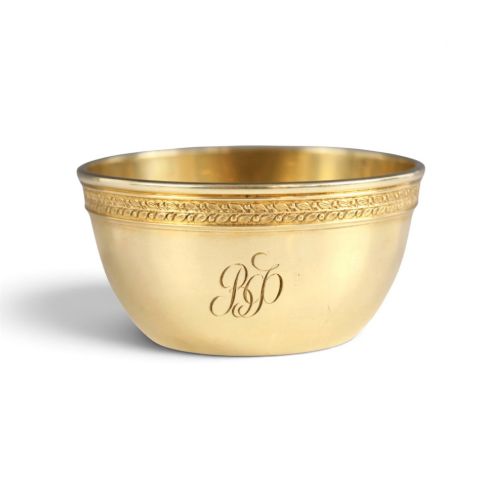
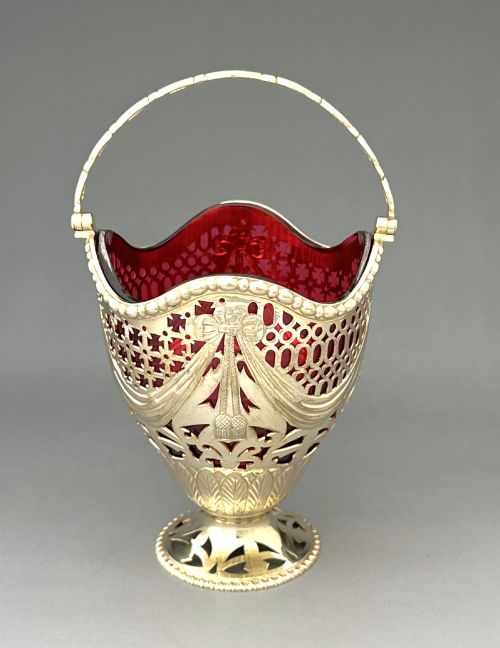
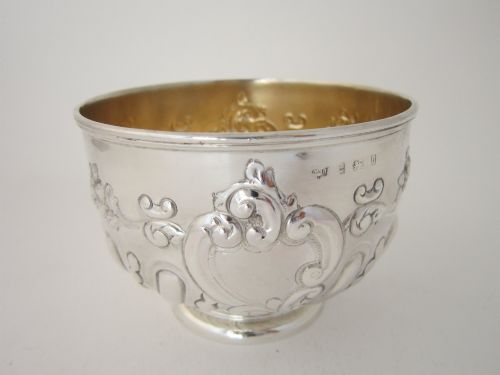
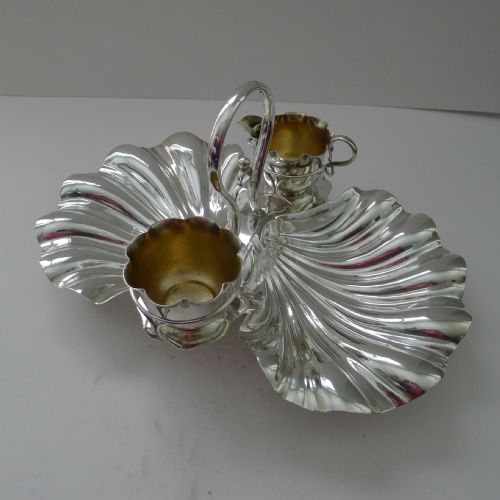
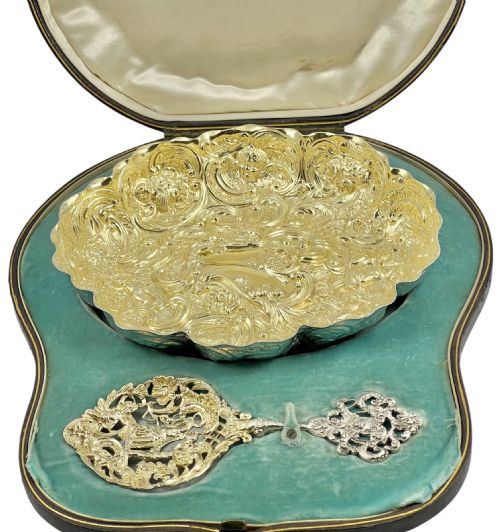
Silver gilt dishes encompass a broad range of forms from Georgian salt cellars and Victorian sugar baskets to large nineteenth-century chargers and presentation bowls. Buyers searching for silver gilt dishes encounter pieces fashioned with an underlying layer of sterling silver or silver plate, coated in a layer of gold wash or vermeil.
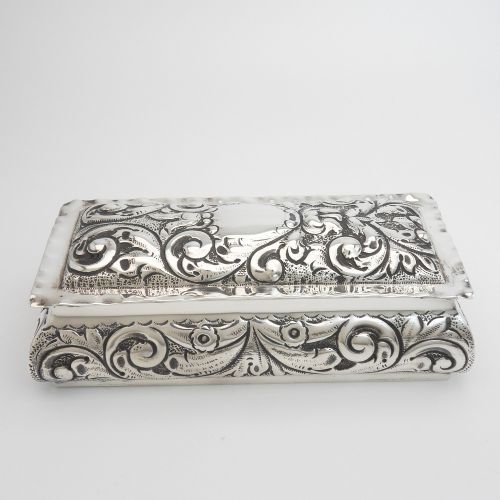
The selection on this page draws heavily from Georgian, Victorian, and Edwardian periods, alongside specific international works such as Imperial Russian pieces and Chinese Qing dynasty items. Salt cellars and small dishes dominate the forms, frequently featuring intricate ornamentation like naturalistic floral designs, rococo scrolls, and figural scenes.
Makers and silversmiths utilised diverse techniques to shape these vessels, sometimes integrating contrasting materials like cranberry glass liners or jade rims into the silver gilt framework. The resulting items function equally well as decorative vessels, cabinet pieces, and tactile accessories for the dining table.
Assessing quality
Quality rests significantly on the crispness of the chasing and the depth of the metalwork, distinguishing master silversmith output from standard commercial production. Heavy-gauge silver provides a substantial feel in the hand, ensuring structural integrity across delicate forms like open salts and sugar baskets.
The preservation of the original gold wash or vermeil across high-wear areas indicates both initial manufacturing standards and subsequent handling. Maker marks and clear hallmarks from assay offices provide definitive context regarding the origin and date of the piece.
Silver Gilt Dishes Retail Price Guide 2026
Typical asking prices for silver gilt dishes among the pieces listed under this phrase on Sellingantiques today, from the lower quarter to the upper quarter. They describe what is for sale here now, not the wider market.
Several Victorian salt cellars take the literal form of scalloped seashells, reminding us that nineteenth-century diners loved marine biology on the table.
Fabergé·Stephan Wekeva·Daniel Arter·A & J Zimmerman Ltd·William Bateman·Paul Storr·Edward Farrell·Thomas Smily·Garrard London·George Fox
The Silver Gilt Dishes Glossary
- Silver gilt
- Sterling silver or another silver base that has been coated with a thin layer of gold. This treatment protects the silver from tarnish while providing the visual warmth of solid gold.
- Vermeil
- High-quality silver gilt where the base metal is sterling silver covered in gold. French workshops frequently utilised this term for decorative bowls and covered vessels.
- Chasing
- A metalsmithing technique where the artisan hammers the metal from the front to sink the design and create low-relief patterns. It produces crisp surface detail on chargers and decorative dishes.
- Repoussé
- The complementary process to chasing, executed by hammering metal from the reverse side to push forms outward in high relief. This technique defines the floral and figural scenes on many antique dishes.
- Charger
- A large ornamental dish or plate placed on a sideboard or table. Examples often display elaborate figural battle scenes or heavy cast borders.
Silver Gilt Dishes: Frequently Asked Questions
What is the difference between silver gilt and silver plate?
Silver gilt uses a base of sterling silver covered with a layer of gold, combining precious metals throughout the object.
Silver plate relies on a base metal, such as copper or nickel silver, coated with a thin layer of silver rather than gold.
How were silver gilt salt cellars used?
Salt cellars held loose salt on formal dining tables during the Georgian and Victorian periods, allowing guests to serve themselves using small spoons.
The gold wash interior protected the silver from the corrosive nature of salt.
Can I use antique silver gilt dishes for food?
Most antique silver gilt dishes, particularly those with delicate glass liners or intricate enamel work, function best for display or serving dry items.
Acidic foods can react with older metal surfaces and compromise the remaining gold wash.
How do I clean a silver gilt dish?
Silver gilt requires gentle care using warm water, mild soap, and a soft cloth to preserve the fragile gold layer.
Standard silver dips and abrasive polishes strip away the gilt surface entirely.