



Silver Gilt Centrepiece
A silver gilt centrepiece anchors a grand table with the warm, rich glow of gold over silver.
Silver Gilt Centrepiece
When you search for a silver gilt centrepiece, you encounter grand table vessels and decorative bowls created to dominate the dining surface. The examples gathered here span from the eighteenth century through the Victorian and Edwardian eras, displaying varied forms such as pedestal dishes, sugar baskets, and presentation bowls.
The most frequent versions you meet on this page combine sterling silver or silver plate with a rich gilt interior or a contrasting cranberry glass liner. Makers applied these pieces to serve fruit, sweets, or presentation functions, drawing upon Georgian, Victorian, and Edwardian aesthetic traditions.
Regional origins and specific periods dictate the exact character of each object, ranging from Imperial Russian works to English town-hall trophies. Buyers find that these items carry the distinct weight and presence of formal dining history.
Materials and construction methods
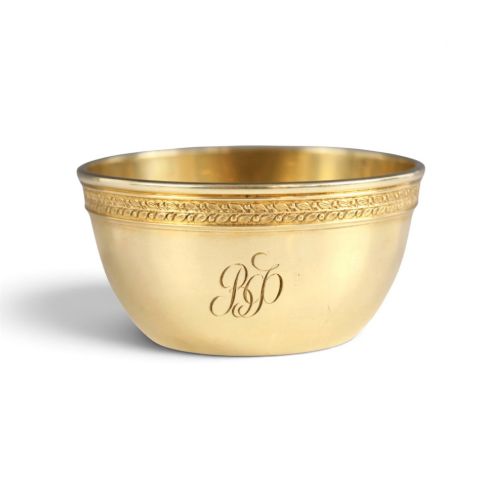
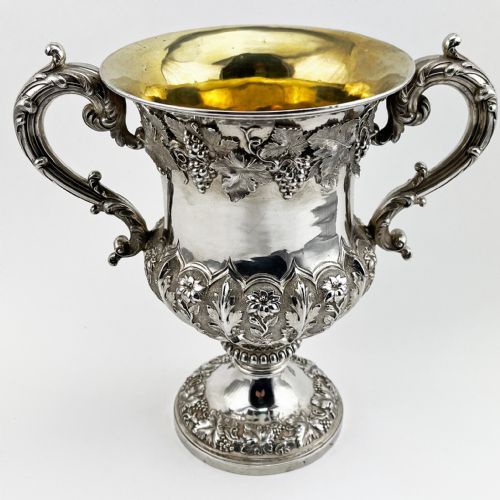
Makers formed these items using sterling silver, Old Sheffield plate, or silver plate as the foundational metal structure, often applying mercury gilding or electroplating to achieve the warm gold surface known as vermeil or silver-gilt. This technique bonded a thin layer of gold over the base metal, protecting the silver beneath and creating a striking two-tone effect.
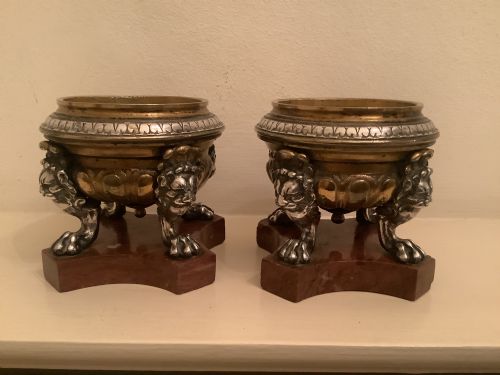
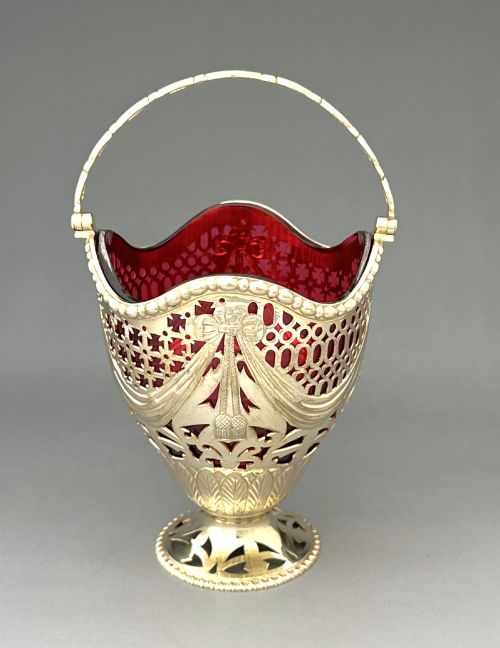
Several examples incorporate coloured glass, specifically cranberry glass liners, held within pierced or solid metal baskets that required skilled metal-cutting and soldering. Artisans also utilised cast bronze and gilt metal elements to construct complex tazzas and footed vessels.
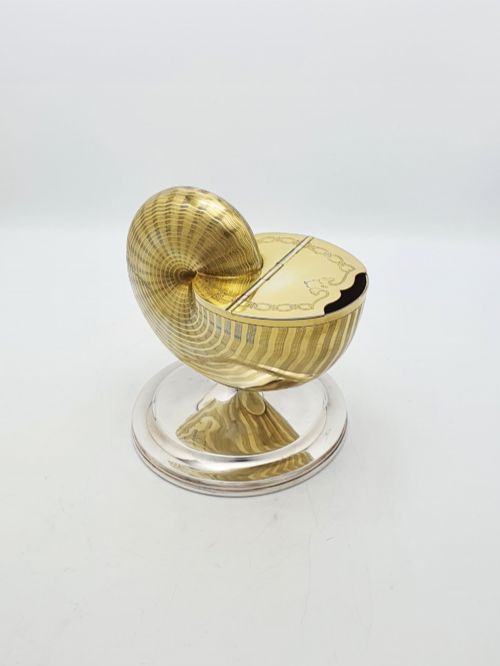
Victorians apparently needed a designated silver vessel just to keep their spoons warm before the pudding arrived.
Distinctions in craftsmanship and finish
The division between standard items and exceptional examples rests upon the depth of the gilding and the crispness of the chased or pierced ornamentation. Pieces featuring fully hand-wrought details display superior definition in their foliage and scrollwork compared to mass-produced castings.
The integration of secondary materials, such as heavy hand-blown cranberry glass liners or cast mounts, dictates the overall integrity of the piece. Master silversmiths ensured that handles, feet, and structural joints remained balanced and robust under the weight of the metal.
Stephan Wekeva·Elkington and Co·Doulton Burslem·George Fox·William Comyns
The Silver Gilt Centrepiece Glossary
- Silver-gilt
- Silver that has been coated with a thin layer of gold on its surface. This finish is also frequently referred to as vermeil.
- Pedestal dish
- A raised bowl or dish supported by a central stem and a stable foot. These elevate fruit or sweetmeats above the level of the table.
- Spoon warmer
- A Victorian table vessel designed to hold hot water and warm silver spoons before dessert service. They often take whimsical or naturalistic forms.
- Sweetmeat basket
- A small, portable container intended for holding confectioneries, nuts, or small sweet items. They frequently feature pierced metalwork and swing handles.
- Old Sheffield plate
- An early method of fusing a thin sheet of sterling silver to a thicker copper core by heat and pressure. This technique preceded modern electroplating.
Silver Gilt Centrepiece: Frequently Asked Questions
What is a silver gilt centrepiece?
A silver gilt centrepiece is a large decorative vessel or bowl placed in the middle of a dining table for display or serving. These pieces combine a silver or plated base with a gold surface layer.
They often incorporate glass liners or pedestal bases to create height and visual impact during formal meals.
How do I clean silver gilt items?
Cleaning silver gilt requires extreme care because harsh polishes will wear away the thin gold layer over time. Use only warm soapy water and a soft cloth to remove dust and oils.
Avoid abrasive dips and commercial silver creams that attack the underlying gilding.
What periods do these pieces date from?
The examples on this page date primarily from the eighteenth century through the Edwardian era. You will find styles spanning Georgian neoclassical designs, heavy Victorian presentations, and early twentieth-century work.
Each period imparts distinct weight, proportion, and decorative motifs to the metal.
Were these used for food?
Many of these vessels were designed to hold fruit, sweetmeats, or sugar during formal dining services. Others functioned as presentation pieces, trophies, or pure decorative ornaments for the sideboard.
Specialised items like spoon warmers served specific roles in nineteenth-century dining etiquette.