


Silver Engraved Card
These silver engraved card pieces, spanning Georgian salvers to Victorian calling card cases, offer tactile glimpses into historic social rituals.
Silver Engraved Card
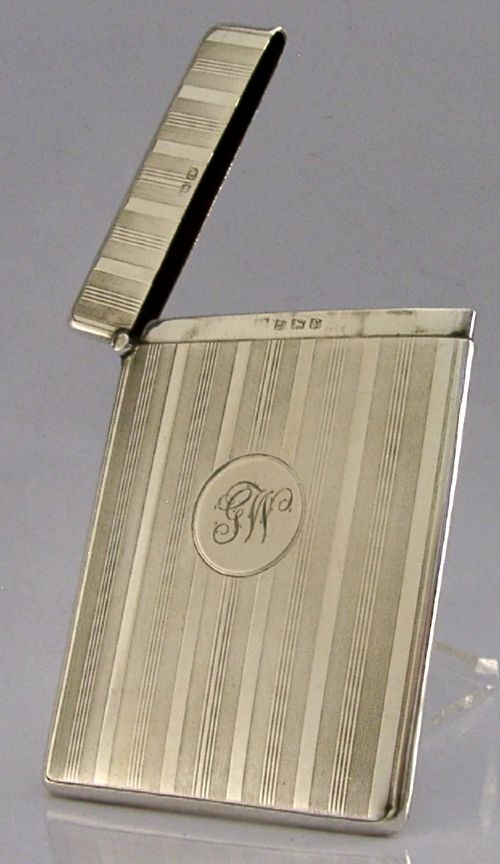
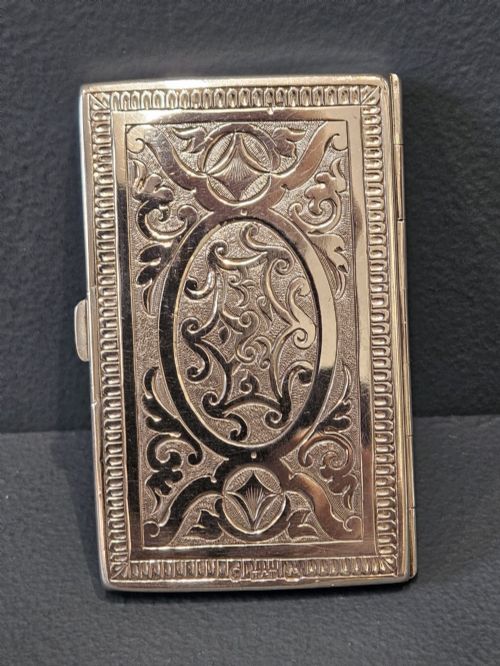
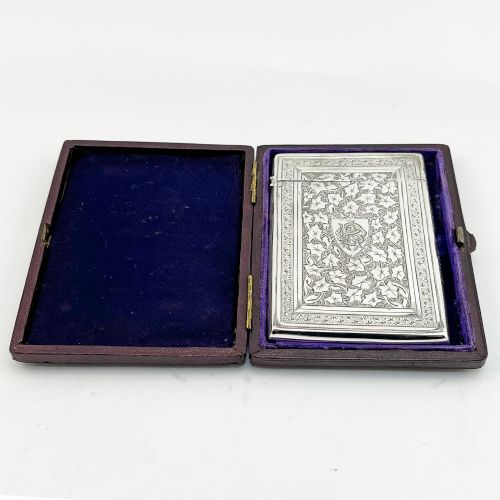
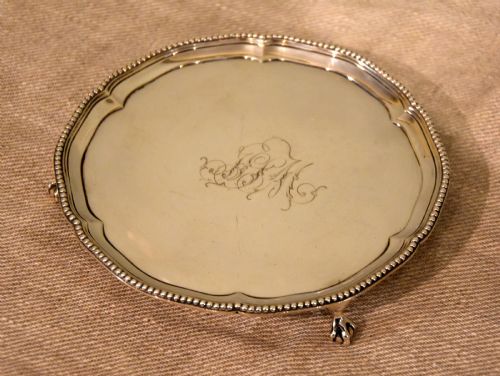
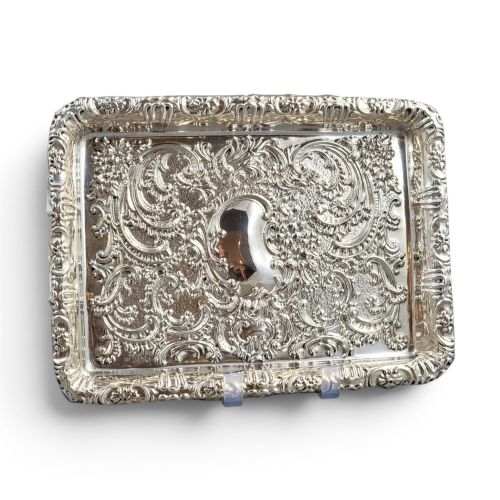
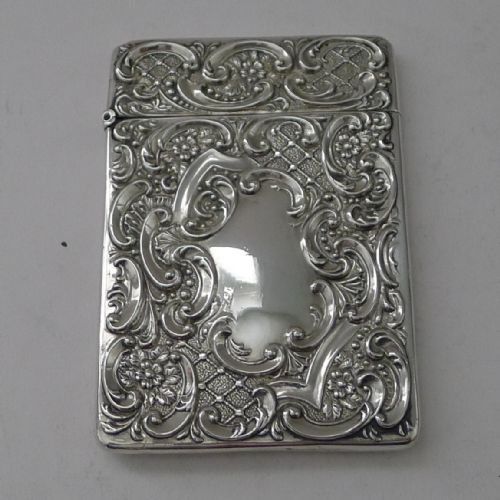
A silver engraved card search encompasses small portable containers like visiting card cases and aide memoires alongside larger display surfaces such as salvers and trays. The most common survivals on this page are Victorian sterling silver calling card cases and Georgian or Edwardian silver trays.
Originating largely from British workshops in London and Birmingham during the 18th and 19th centuries, these objects also include continental, Ottoman, Anglo-Indian and Siamese pieces in solid silver, silver gilt and Old Sheffield Plate.
The assortment moves between intimate pocket pieces designed for social introductions and substantial domestic servers meant for the tea table or sideboard.
Materials and Techniques
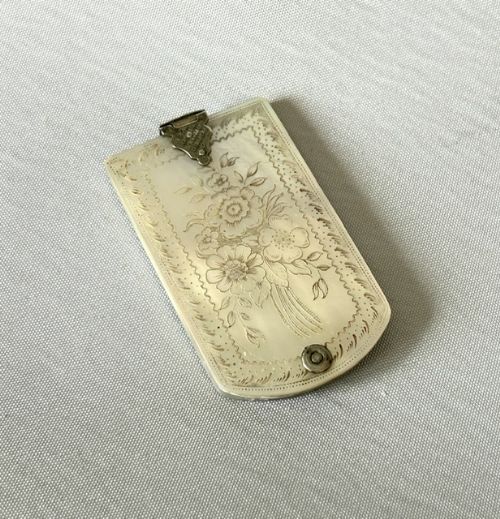
Makers utilised sterling silver, copper cores fused with silver in Old Sheffield Plate, and silver gilt, often combining them with mother-of-pearl, bone, leather, velvet, gemstone or Connemara marble.
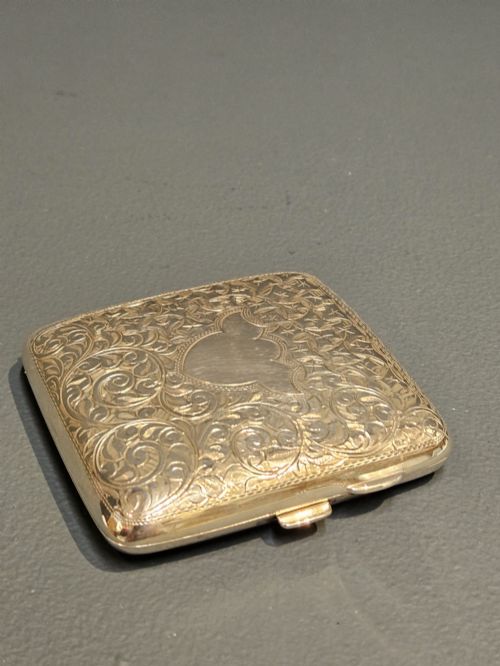
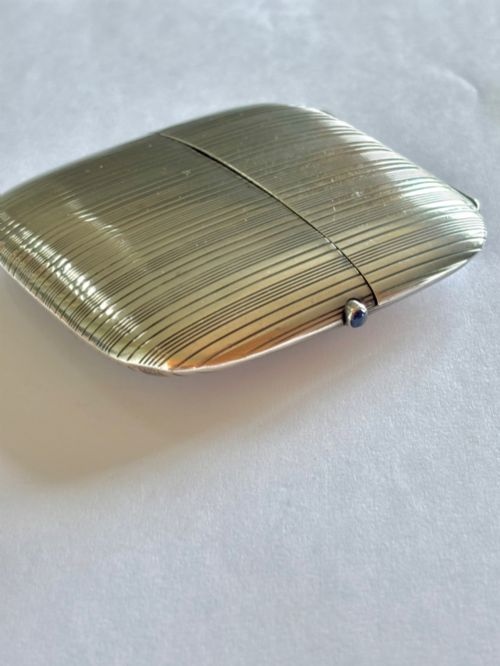
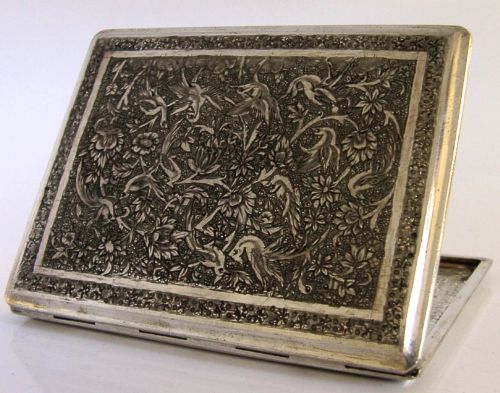
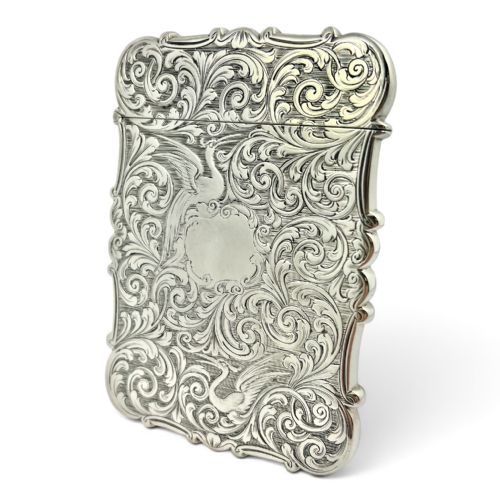
Surface ornamentation relies heavily on hand engraving, engine turning and niello work, where dark metallic alloys fill incised designs to create sharp contrasts against polished silver grounds.
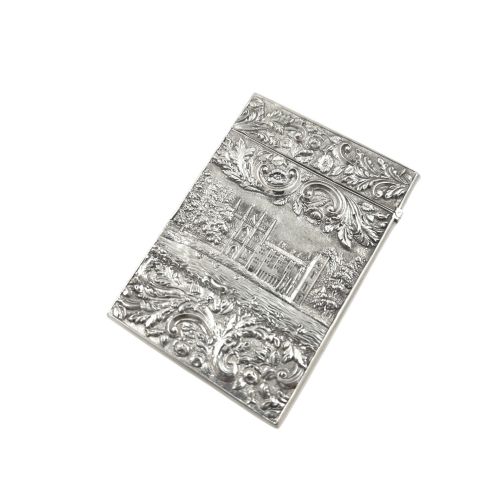
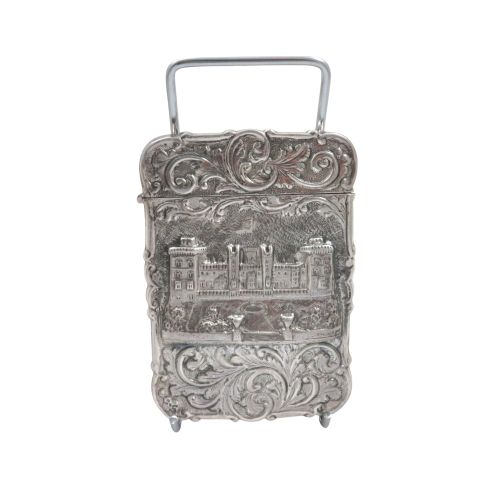
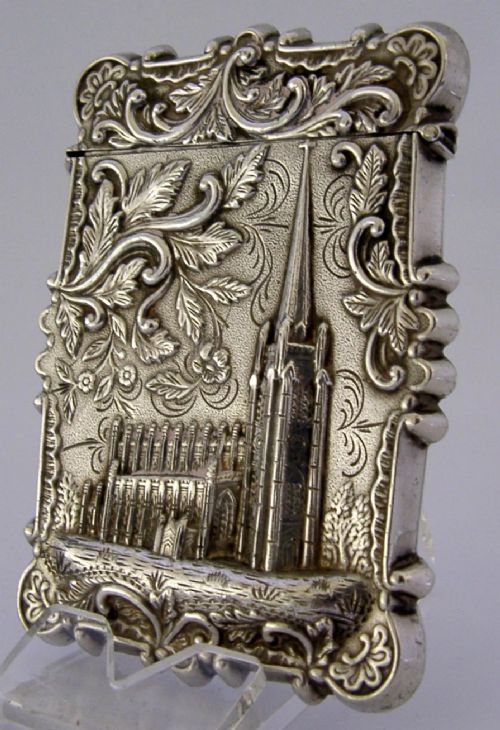
Cast elements appear on heavier trays and salvers, while intricate architectural motifs define castle top card cases produced by specialist silversmiths.
Silver Engraved Card Retail Price Guide 2026
Typical asking prices for silver engraved card among the pieces listed under this phrase on Sellingantiques today, from the lower quarter to the upper quarter. They describe what is for sale here now, not the wider market.
Materials range from solid sterling silver and silver gilt to copper, tortoiseshell substitutes and Connemara marble.
Distinctions in Execution
Quality rests upon the crispness and depth of the hand engraving, where sharper tool work yields lasting legibility in foliate scrolls or architectural scenes compared to shallow, worn scoring.
The integrity of the construction dictates standard, seen in the smooth operation of specialised hinges, internal spring mechanisms and tightly flush closures on cases and purses.
Heavier gauge silver and substantial weight signal superior material allocation, particularly in large trays and cast items where thin plates buckle under daily use.
John Schofield·Nathaniel Mills·Robert Abercromby·Robert Pringle And Sons·Wright And Davies·Edward Edwards
The Silver Engraved Card Glossary
- Castle top
- A style of card case featuring a high-relief architectural engraving of a famous landmark such as Windsor Castle or Trinity Church on one or both sides. These pictorial panels represent specialised work by mid-19th-century silversmiths.
- Salver
- A flat plate or tray with feet, used for serving drinks or presenting calling cards. Georgian examples frequently rest on three or four bracket or hoof feet.
- Aide memoire
- A small pocket notebook combined with a card case, often fitted with ivory or bone leaves and a detachable pencil. They served to record appointments and social engagements.
- Old Sheffield Plate
- A composite material formed by fusing a sheet of silver to a thicker copper base under heat and pressure. It was widely used for trays before the invention of electroplating.
- Niello
- A black metallic mixture of sulphur, silver, copper and lead used as an inlay on engraved metal surfaces. The contrasting dark fill highlights intricate geometric or figurative patterns.
Silver Engraved Card: Frequently Asked Questions
What is a silver calling card case?
A small pocket-sized container designed to hold engraved paper visiting cards during the 19th century. Victorian society utilised these cases to protect paper cards before leaving them at acquaintances' homes.
They typically feature hinged lids and detailed surface engraving, reflecting the owner's taste and social standing.
How do I care for antique silver trays?
Clean these surfaces gently with a soft cloth and proprietary silver polish only when tarnishing obscures the engraved details. Avoid abrasive compounds that wear down thin plating on Old Sheffield items.
Store them away from direct sunlight and high humidity to maintain the condition of underlying velvet or leather linings.
What does castle top mean on a card case?
Castle top refers to a specific Victorian manufacturing technique where a famous building is stamped or engraved in high relief onto the silver panel. Collectors prize these pieces for their topographical detail and historical association.
They were often produced in Birmingham by makers like Nathaniel Mills during the mid-19th century.
How are Georgian salvers different from Victorian ones?
Georgian salvers generally exhibit simpler, cleaner lines with restrained border decoration and sturdy cast feet. They focus heavily on the quality of the plain silver expanse and hand-engraved family crests.
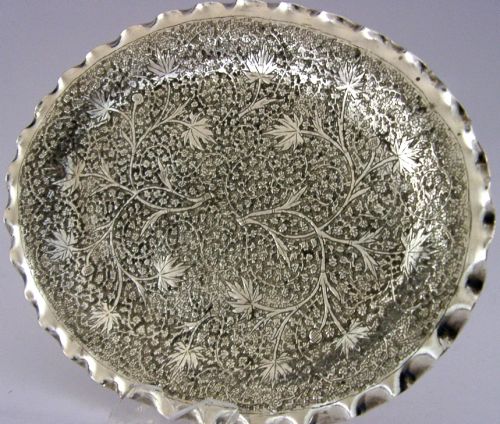
Victorian pieces often embrace heavier, busier floral or rococo revival ornamentation with deep chased borders and complex surface patterns.