
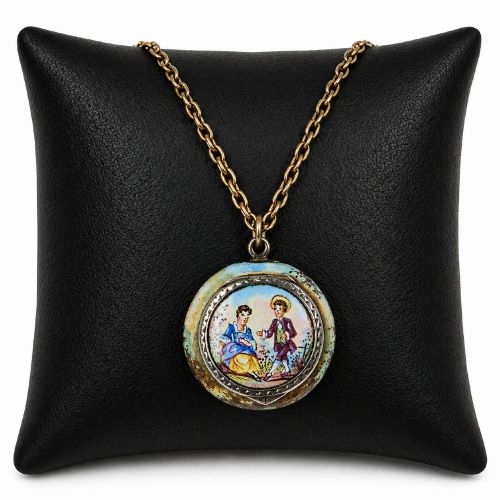


Silver Enamel Necklace
A silver enamel necklace brings together vitreous colour and precious metal, offering fluid linework and botanical motifs that define early twentieth-century design.
Silver Enamel Necklace
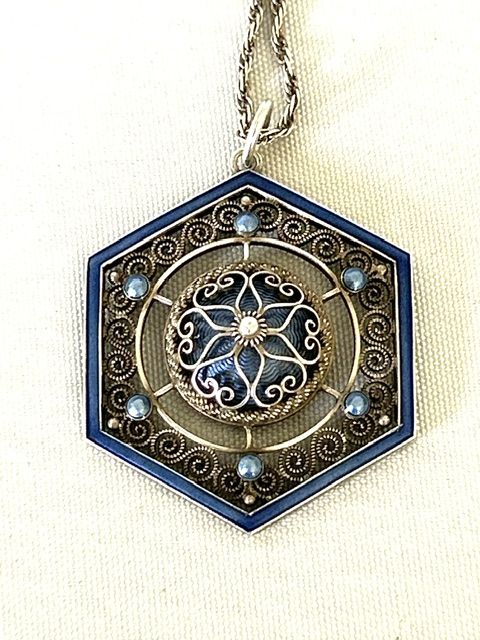
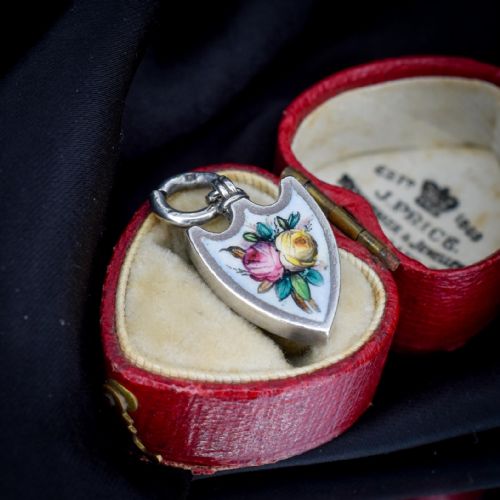
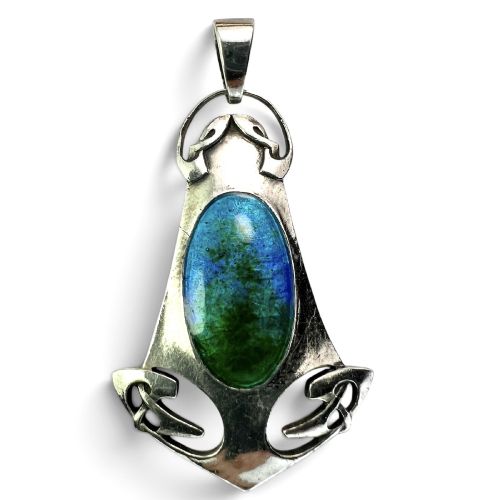
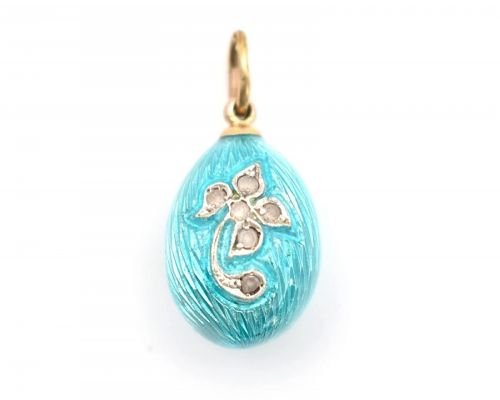
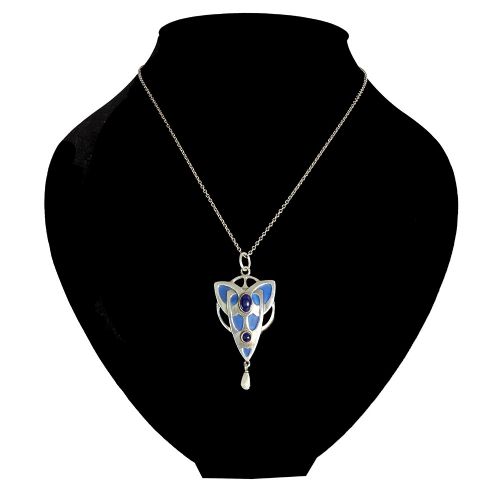
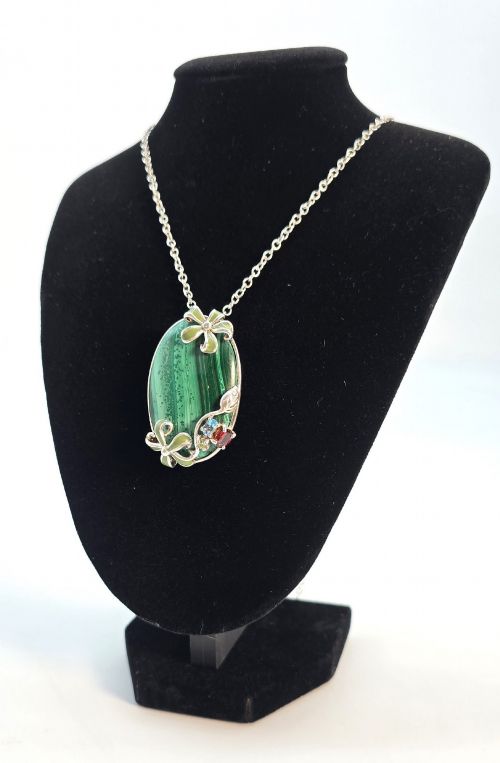
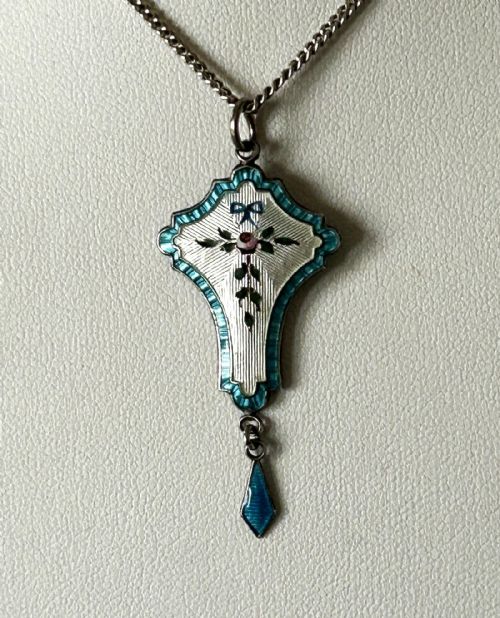
A silver enamel necklace combines polished silver links or pendants with fired glass surfaces, appearing most frequently in the organic styles of the early twentieth century. Buyers seeking this phrase encounter delicate floral pendants and festoon arrangements from the Art Nouveau and Arts & Crafts movements.
The archive shows that these pieces span from Edwardian interpretations to mid-century Scandinavian designs, yet the core aesthetic remains rooted in the 1900 period. Natural forms such as pansies, violets, and daisies recur alongside Celtic knotwork and geometric drops.
Makers integrated various gemstones alongside the enamel, including pearls, chalcedony, citrine, amethyst, and opal. This integration of coloured stones with translucent or opaque enamel creates a rich interplay of light across the collar and pendant drops.
Materials and construction
Silversmiths constructed the foundational chains, settings, and collarettes from sterling or continental silver, occasionally applying a gold wash known as silver gilt. Enamel was then fused to recessed metal cells or applied via translucent plique-à-jour techniques that mimic stained glass.
Craftspeople set pearls, chalcedony, citrine, and other stones directly into the silver mounts to accent the central enamel work. Hand-hammered links and delicate wirework completed the assembly of festoon necklaces and pendant drops.
Silver Enamel Necklace Retail Price Guide 2026
Typical asking prices for silver enamel necklace among the pieces listed under this phrase on Sellingantiques today, from the lower quarter to the upper quarter. They describe what is for sale here now, not the wider market.
Listings for silver enamel necklaces feature distinct aesthetic periods, predominantly centred on Arts & Crafts and Art Nouveau designs from around 1900.
Assessing quality and execution
The refinement of the enamel work separates standard production from superior examples, particularly where glass colours transition smoothly without pooling or cracking. Plique-à-jour pieces require exceptional technical mastery to suspend transparent enamel within open silver wire frames.
Design sophistication and maker attribution elevate certain pieces, especially those exhibiting complex botanical detailing or documented workshop origins. The integration of high-grade pearls and well-cut gemstones like citrine and amethyst further distinguishes the finer examples.
Liberty & Co·Archibald Knox·Murrle Bennett·Charles Horner·David Andersen·Volmer Bahner
The Silver Enamel Necklace Glossary
- Plique-à-jour
- An enamelling technique where the glass is fired in open cells without a backing, allowing light to shine through transparent colours much like miniature stained glass windows.
- Festoon necklace
- A decorative neck ornament featuring swags or chains of draped metal and drops that sit gracefully across the upper chest.
- Guilloche enamel
- A decorative technique where translucent enamel is layered over mechanically engraved metal to reveal repeating geometric patterns underneath.
- Chalcedony
- A microcrystalline variety of quartz often cut into smooth cabochons to contrast with opaque or translucent enamel work.
- Collarette
- A short necklace designed to sit close to the base of the neck, frequently constructed from articulated panels of silver and enamel.
Silver Enamel Necklace: Frequently Asked Questions
How do I clean my silver enamel necklace?
Clean the silver gently with a soft microfibre cloth while avoiding abrasive dips or harsh chemical cleaners that can damage the fragile glass surface of the enamel.
Store the necklace separately in a lined box to prevent scratching against other jewellery items.
Are these necklaces fragile to wear?
While the silver provides a sturdy structure, the glass enamel requires careful handling to prevent chipping or cracking from sharp impacts.
Wear the necklace with mindfulness during daily activities, putting it on last after applying perfumes or cosmetics.
How can I tell Art Nouveau from later styles?
Art Nouveau pieces from the early twentieth century feature asymmetrical whiplash lines, organic floral motifs, and hand-wrought silver settings.
Later mid-century designs often lean towards cleaner geometric patterns, uniform daisy motifs, or crisp guilloche enamel work.
What does a hallmark tell me?
Hallmarks stamped onto the silver components provide official confirmation of the metal standard and indicate the assay office where the piece was tested.
They can also narrow down the year of manufacture and occasionally point to specific maker marks.