


Silver Enamel Dressing Jar
A silver enamel dressing jar brings colour and polished metal to the dressing table, combining sterling silver lids with patterned glass.
Silver Enamel Dressing Jar
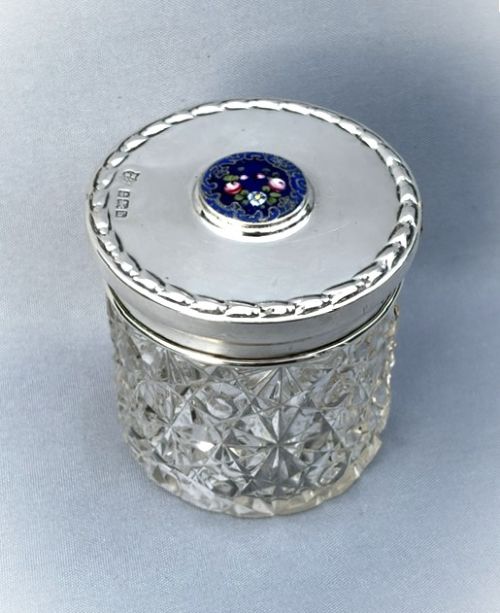
A silver enamel dressing jar is a vanity accessory designed to hold powders, creams, or pins upon a dressing table. When exploring this selection, buyers encounter various forms including cylindrical pots, scent bottles, and lidded bowls.
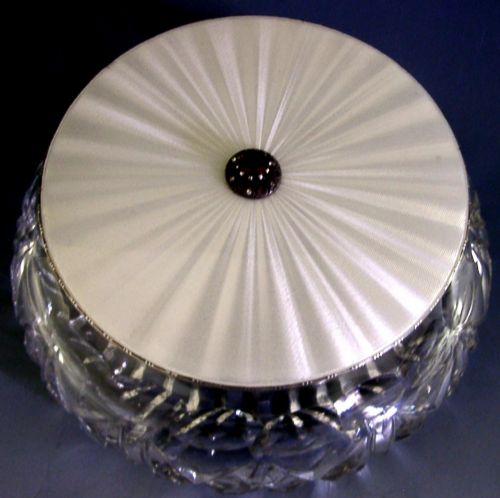
The objects frequently date from the early twentieth century through the mid-century period, with Art Deco examples showing geometric guilloche patterns. Edwardian pieces also appear, alongside occasional mid-century items from the 1960s.
Vessels are constructed from clear cut glass, etched glass, or coloured cranberry glass paired with hallmarked sterling silver mounts and enamel lids. Many survive as single jars, though matching pairs occasionally surface.
Materials and construction
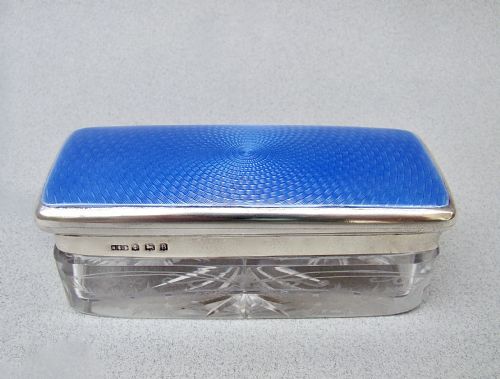
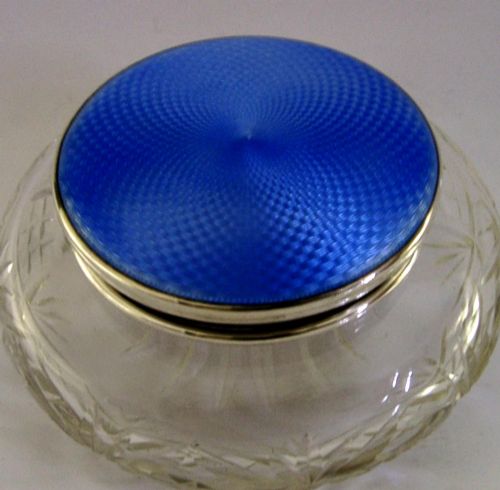
Makers combined sterling silver with glass and vitreous enamel, applying engine-turned guilloche engraving beneath translucent coloured coatings. Glass bodies were blown, moulded, or heavily cut to catch the light.
Silver collars and lids received hallmarks from assay offices such as Birmingham, London, and Chester, noting the metal standard and year of production.
Listings feature sterling silver, guilloche enamel, and cut glass across periods spanning the Edwardian era through the Art Deco years and into the 1960s.
Assessing quality and craftsmanship
Quality rests in the precision of the guilloche engraving beneath the enamel and the thickness of the sterling silver mount. Fine examples display crisp engine-turned patterns that show depth through clear translucent coloured enamel.
The weight of the glass body and the accuracy of the lid fitting also distinguish finer pieces. Maker marks from established silversmiths further elevate the standing of an individual jar.
Henry Clifford Davis·James Deakin And Sons·Henry Matthews·The Adie Brothers·Goldsmith And Silversmith Co·Mappin And Webb
The Silver Enamel Dressing Jar Glossary
- Guilloche Enamel
- A decorative technique where metal is engraved with a precise mechanical pattern before a translucent enamel layer is applied over the top.
- Sterling Silver
- An alloy of silver containing ninety-two point five percent pure silver and seven point five percent other metals, typically copper.
- Hallmark
- An official mark stamped onto silver items to indicate the standard of purity, the assay office, and the year of manufacture.
- Cranberry Glass
- A rich pinkish-red glass created by adding gold chloride to the molten glass mixture during production.
Silver Enamel Dressing Jar: Frequently Asked Questions
What were silver enamel dressing jars used for?
These vessels held cosmetics, pins, cotton wool, or perfumes on bedroom dressing tables during the early and mid-twentieth century. They kept personal items tidy while adding decorative colour to the room.
Today they serve similar display purposes, often holding small trinkets or rings on modern dressing surfaces.
How do I date a silver enamel dressing jar?
Dating relies primarily on the hallmarks stamped into the sterling silver mounts. These marks identify the assay office and include a specific date letter corresponding to the year the piece was tested.
Stylistic indicators also help, as geometric guilloche patterns point toward the 1920s and 1930s Art Deco era, while softer floral tones often align with Edwardian production.
Are these jars made of solid silver?
The lids and upper collars are made from solid sterling silver, stamped with standard hallmarks to verify the metal purity. The main body of the vessel is typically composed of cut glass, etched glass, or cranberry glass.
Only the metal mounts are silver, providing a sturdy frame for the decorated enamel top.
How should I clean my dressing jar?
Enamel surfaces require gentle cleaning with a soft damp cloth to avoid scratching the coloured vitreous coating. Sterling silver portions can be polished with a mild silver cloth, taking care not to let polish residue gather in the engraved guilloche grooves.
Harsh chemical dips must be avoided entirely because they can damage both the enamel and the glass bodies.