




Silver Dish Holder
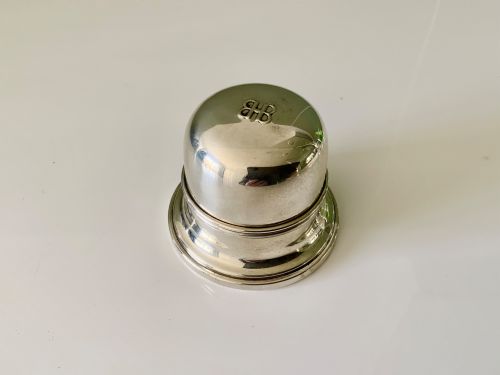
These silver dish holder items are functional serveware and decorative vessels crafted to display delicate glassware and tableware securely.
Silver Dish Holder
A silver dish holder brings together metalwork and glassware for table service and display. The selection spans periods from the Georgian era through to the Edwardian period and nineteen-hundreds.
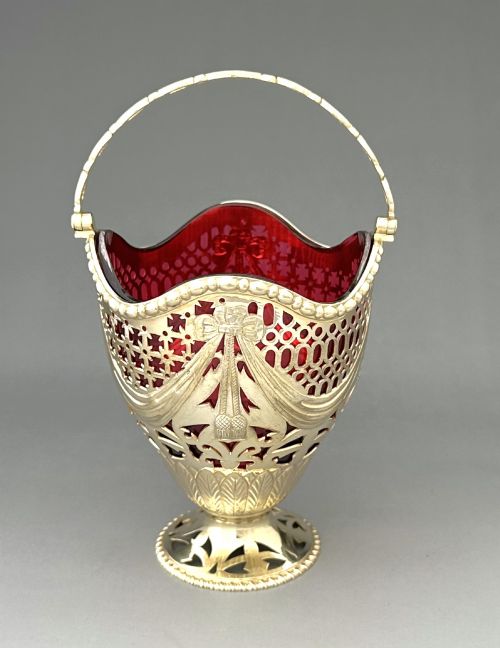
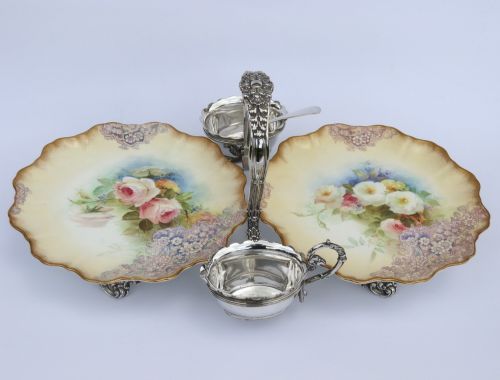
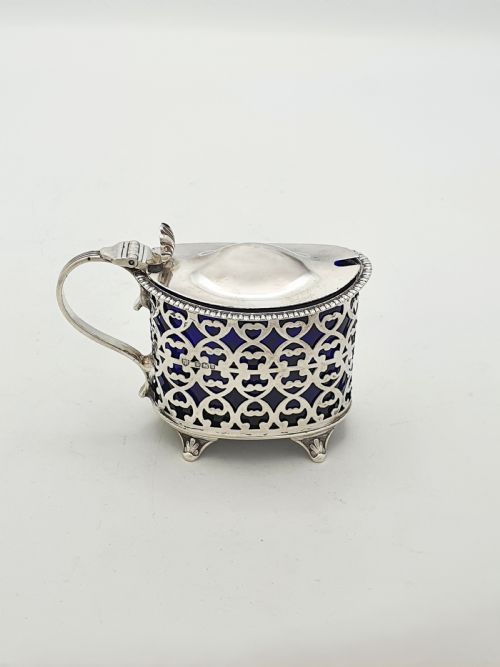
Forms on this page range from preserve dishes and sugar baskets to dessert sets and mustard pots. Many examples incorporate coloured glass liners within pierced or plated metal frames.
Materials and construction methods
Makers utilised sterling silver, silver plate, Old Sheffield plate, and silver-gilt alongside base metals like copper. Piercing and casting techniques formed the structural frames and stands.
Vessels frequently combine metal mounts with glass elements such as cranberry glass, ruby glass, cobalt glass, and cut crystal. Hand-painted ceramic components also appear within specific dessert sets.
Silver Dish Holder Retail Price Guide 2026
Typical asking prices for silver dish holder among the pieces listed under this phrase on Sellingantiques today, from the lower quarter to the upper quarter. They describe what is for sale here now, not the wider market.
Listings feature items spanning from the Georgian period through to Edwardian designs and the year nineteen-hundred.
Distinctions in quality
The standard of design depends upon the crispness of pierced metalwork and the integration between glass liners and metal frames. Hand-painted details and weighted bases elevate the construction.
Materials dictate distinct tiers of manufacture, separating solid sterling silver and silver-gilt from silver-plated and base metal alternatives.
Walker and Hall·Doulton Burslem·Creswick·WMF
The Silver Dish Holder Glossary
- Silver plate
- A layer of silver fused or electroplated onto a base metal such as copper or nickel silver. This technique provided the appearance of solid silver at a lower cost.
- Cranberry glass
- A rich pinkish-red glass produced by adding gold chloride to the molten batch. It frequently appears in Victorian and Edwardian tablewares.
- Old Sheffield plate
- An early method of fusing a thin sheet of sterling silver to a copper ingot before rolling and shaping. It is identified by subtle copper seams visible on edges.
- Silver-gilt
- Sterling silver or silver plate that has been coated with a thin layer of gold on the surface. This finish gives a rich yellow-gold appearance.
- EPNS
- Electroplated Nickel Silver. A common base metal alloy used underneath silver plating in many nineteenth and twentieth-century items.
Silver Dish Holder: Frequently Asked Questions
What is a silver dish holder?
A silver dish holder is a metal stand or basket designed to support glass bowls, dessert plates, or preserve dishes during dining and service.
These pieces combine decorative metalwork with functional glass liners to present food items on the table.
How do I clean silver plate?
Silver plate requires gentle cleaning with a specialised non-abrasive silver polish and a soft cloth to protect the underlying plating.
Harsh scrubbing should be avoided, particularly on electroplated items where excessive rubbing can wear away the silver layer.
What is cranberry glass?
Cranberry glass is a pink-red decorative glassware coloured with gold oxide, popular during the Victorian and Edwardian eras.
It is frequently paired with silver-plated stands and baskets to create contrasting table centrepieces and preserve sets.
How do I identify Old Sheffield plate?
Old Sheffield plate is identified by observing subtle lines where the fused copper shows through the worn silver layer on high points or edges.
This fusion technique predates modern electroplating methods and indicates an earlier date of manufacture.