



Silver Dining Hollowware
Silver dining hollowware brings heavy silver plate and solid sterling to the table for serving meat, sauce, and wine with historic weight.
Silver Dining Hollowware
Silver dining hollowware covers the large vessels and serving pieces placed on the dining table, ranging from substantial meat domes to delicate mustard pots and sauce boats. When searching for silver dining hollowware, collectors encounter forms designed for serious hospitality across the Georgian, Victorian, and Edwardian eras.
The pieces on this page lean heavily towards nineteenth-century British production alongside continental European and early twentieth-century examples. Sauce boats, serving dishes, and wine coolers form the core of what survives, reflecting the formal dining habits of past centuries.
Makers utilised these vessels to anchor the centre of the table, combining utility with sculptural presence. From George III sauce boats to Edwardian chafing dishes, the range demonstrates how dining customs shaped domestic metalwork.
How they were made
Silversmiths hammered solid sterling silver or cast it in sections before soldering and chasing the details by hand. Many larger pieces utilise Old Sheffield Plate or silver plate on copper, fusing thin sheets of silver to a base metal core.
Piercing, engraving, and naturalistic casting create surface decoration such as the acorn designs seen on Victorian sauce boats. Glass liners frequently accompany mustard pots and condiment containers to protect the metal from corrosive contents.
Acorns and naturalistic foliage sprout from Victorian sauce boats, ensuring your gravy pours with botanical authority.
What varies in quality
Weight and gauge set the foundation of quality, separating substantial cast vessels from thin pressed metal that distorts easily. Crispness in chased ornament and maker marks indicate the skill of the original workshop.
The integrity of silver plating on copper pieces dictates value, revealing whether the base metal shows through heavy wear. Original components, such as matching liners and correct covers, elevate a piece above assembled sets.
Roberts Cadman·William Grundy·Martin Hall·Charles Stuart Harris·Mappin and Webb
The Silver Dining Hollowware Glossary
- Hollowware
- Tableware vessels such as pots, tureens, and domes that possess interior volume, as opposed to flatware like knives and forks. These items required skilled raising and spinning techniques from the smith.
- Old Sheffield Plate
- An early fusing method where a sheet of silver is melted onto a copper ingot and rolled together into thin plates. This technique precedes electroplating and leaves characteristic copper edges.
- EPNS
- Electroplated Nickel Silver, a common base metal composition introduced in the nineteenth century for durable table service. It provides the appearance of solid silver at a lower production cost.
- Sauce Tureen
- A small covered vessel designed specifically for holding and pouring hot gravies or sauces at the dining table. They frequently stand upon an integral pedestal base or matching tray.
- Meat Dome
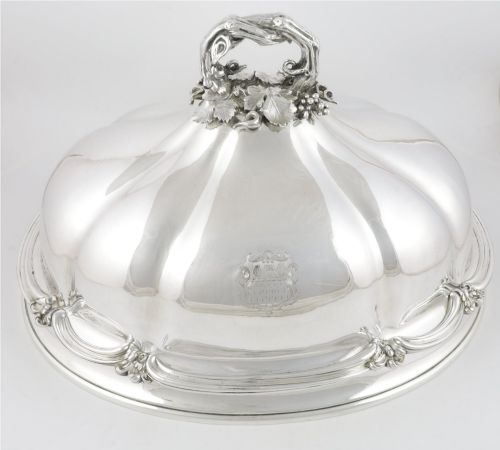
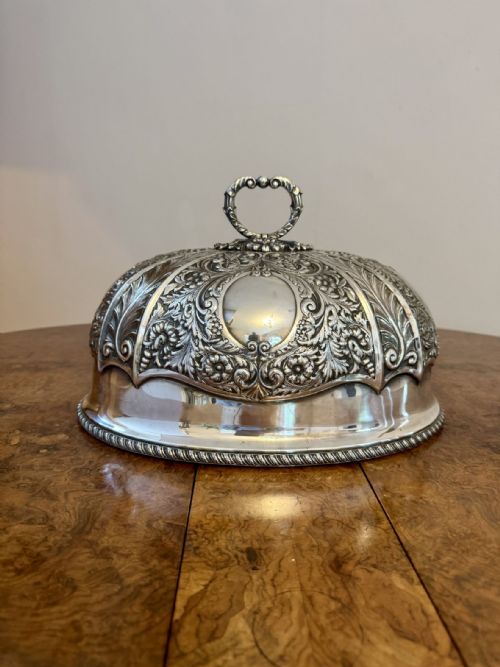
- A large domed cover used to keep joints of meat warm during carving and service on the dining table. These pieces often feature substantial cast handles for lifting.
Silver Dining Hollowware: Frequently Asked Questions
How do I clean antique silver hollowware?
Use a soft cloth and a reputable silver cream designed for antiques, avoiding abrasive dips that strip away desirable patination. Wash pieces by hand in warm soapy water immediately after use to prevent food acids from pitting the metal.
Take particular care around engraved crests and thin plated edges where excessive rubbing can expose the base metal underneath. Store items in flannel rolls or tarnish-resistant bags when not on display.
What is the difference between sterling and silver plate?
Sterling silver contains a guaranteed minimum proportion of pure silver alloyed with other metals throughout its entire mass. Silver plate applies a thin layer of silver over a base metal such as copper or nickel brass.
Many historic serving pieces use Old Sheffield Plate or later electroplating to achieve a grand scale affordably. Hallmarks usually indicate solid sterling, whereas maker ciphers often denote plated wares.
How can I tell a Georgian piece from a Victorian one?
Georgian hollowware often displays restrained neoclassical lines or robust early rococo revival forms with hand-punched hallmarks including duty marks. Victorian examples tend towards heavier, more ornate naturalistic decoration with elaborate casting.
Examining the construction seams and engraving styles helps clarify the manufacturing period when hallmarks are rubbed or missing. Maker archives provide further confirmation of active dates.
Can I still use these pieces for dining today?
Most solid silver and high-quality plated hollowware remains entirely functional for serving food and drinks at modern tables. Glass-lined mustard pots and condiment containers protect the metal from direct contact with acidic contents.
Avoid putting antique silver into modern dishwashers or leaving salty and acidic foods on the surfaces for extended periods. Gentle hand washing preserves both the finish and the structural integrity.