


Silver Desk Lamp Base
A silver desk lamp base brings period weight and steady illumination to a working surface through substantial metalwork.

Silver Desk Lamp Base
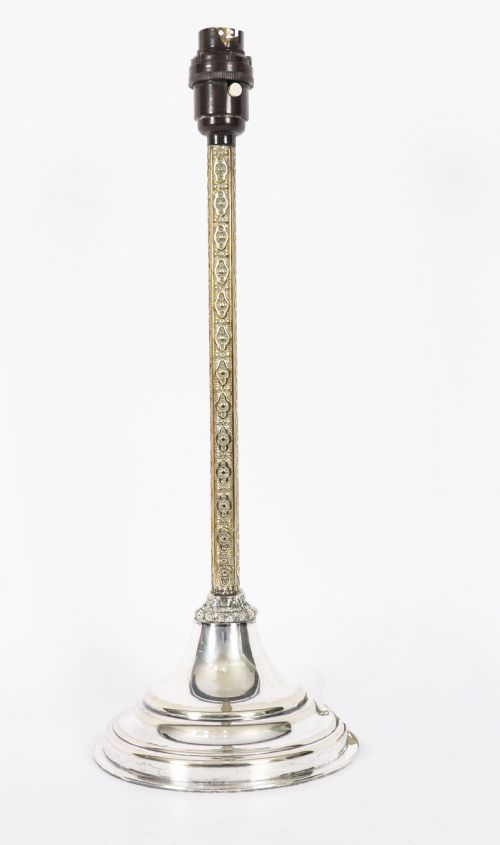
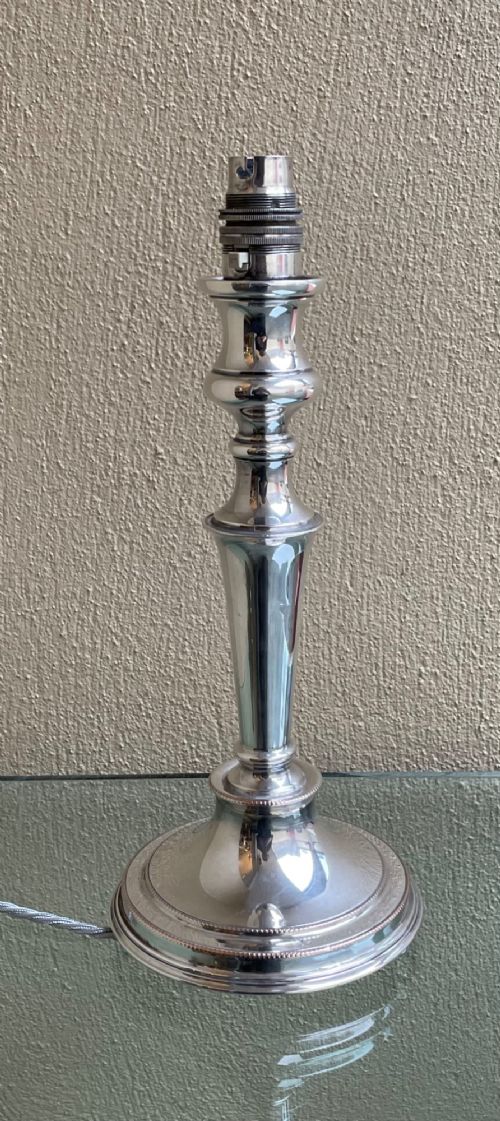
A silver desk lamp base provides the structural support and wiring conduit for a table lamp used in a study or office setting. When searching for a silver desk lamp base, you encounter pieces that range from substantial classical columns to streamlined twentieth-century designs. The selections span the Victorian, Edwardian, and Art Deco periods, capturing shifts in domestic lighting over a century.
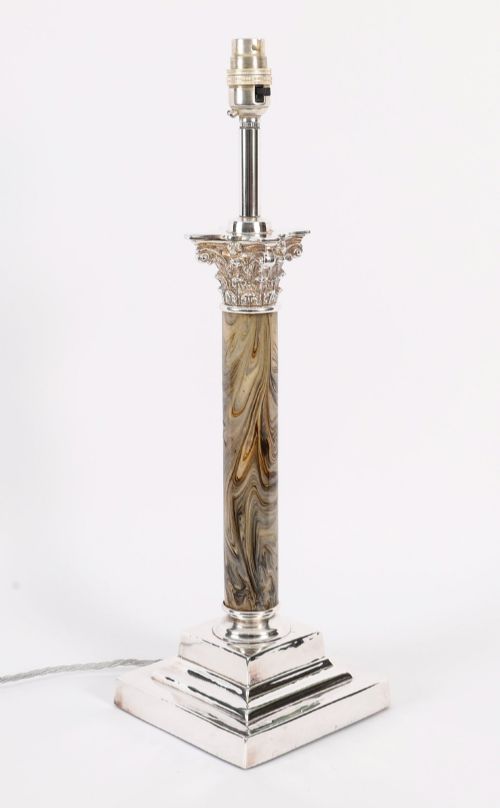
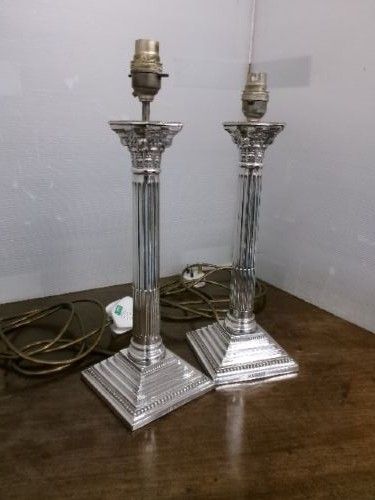
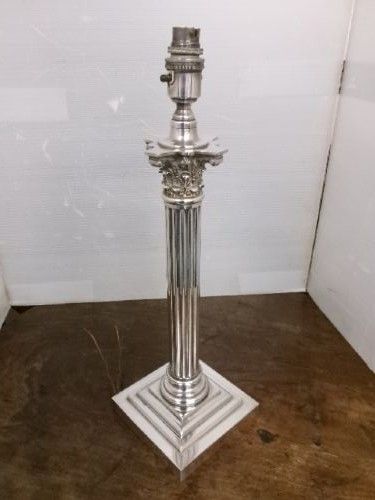
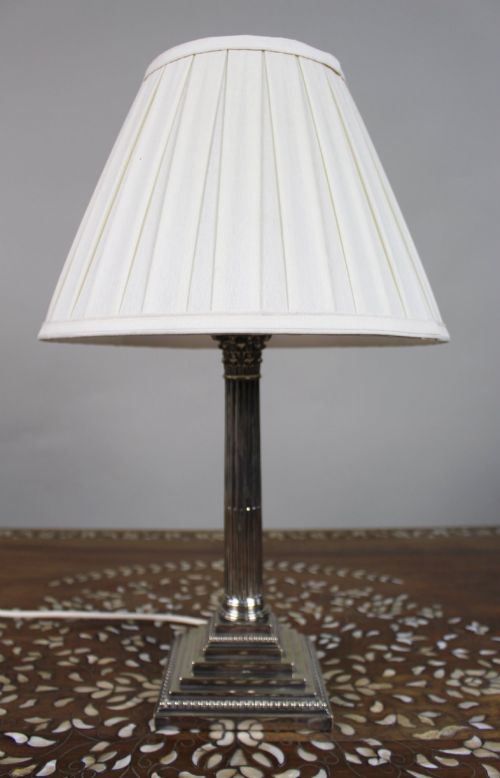
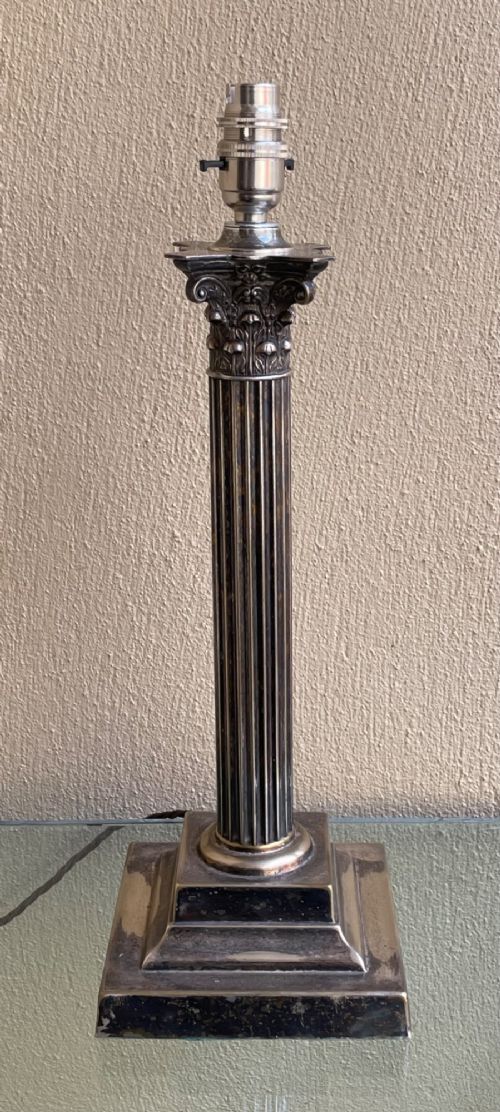
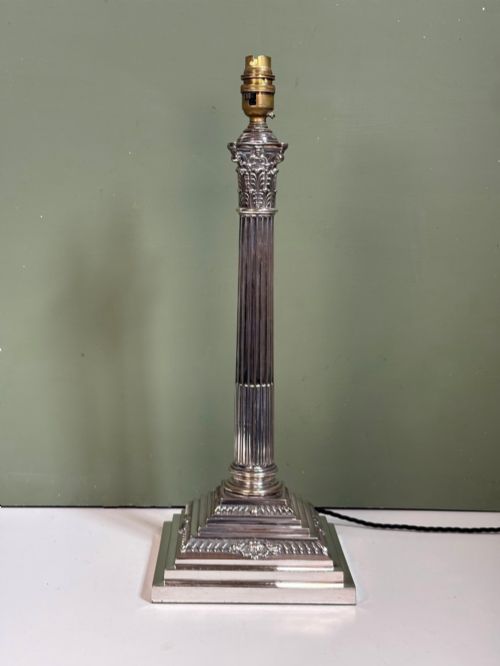
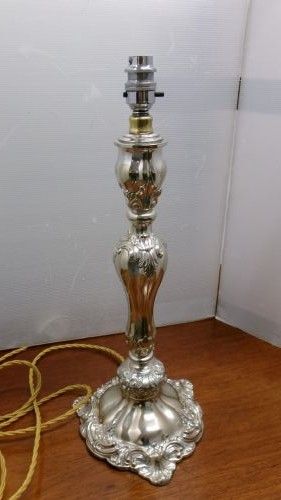
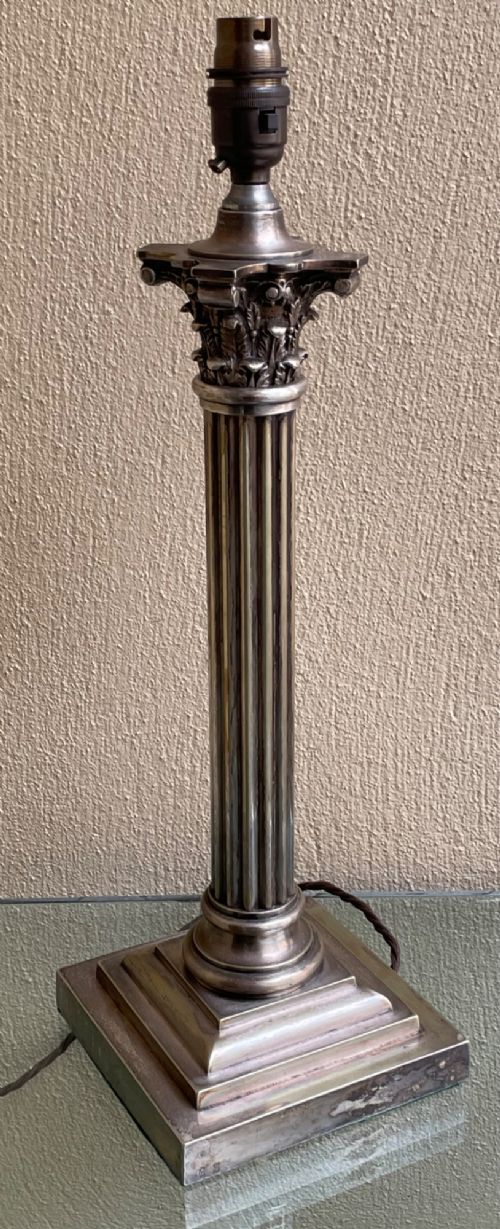
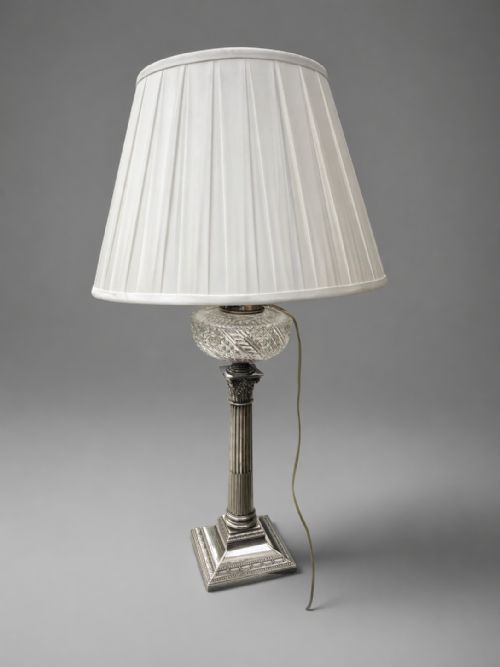
The most common form on this page is the Corinthian column, rendered in silver plate or sterling silver with stepped square plinths. These architectural designs reflect nineteenth-century classical revival tastes, often incorporating fluted shafts and decorative capitals. Alongside columns, you find round bases, twist stems, and occasional ecclesiastical or French variations.
Dating ranges from the late nineteenth century through to the 1920s and 1930s, encompassing Victorian, Edwardian, George V, and Art Deco styles. Materials extend beyond solid silver to include silver plate, EPNS, chrome, nickel, and brass, sometimes paired with cut glass or fabric elements. These pieces originate from British workshops and continental makers alike.
Materials and construction methods
Makers utilised silver plating over base metals, electroplated nickel silver, and solid sterling silver to construct these sturdy bases. Sterling silver pieces bear hallmarks identifying the assay office and year, whilst plated examples rely on thick coatings applied to copper or brass cores.
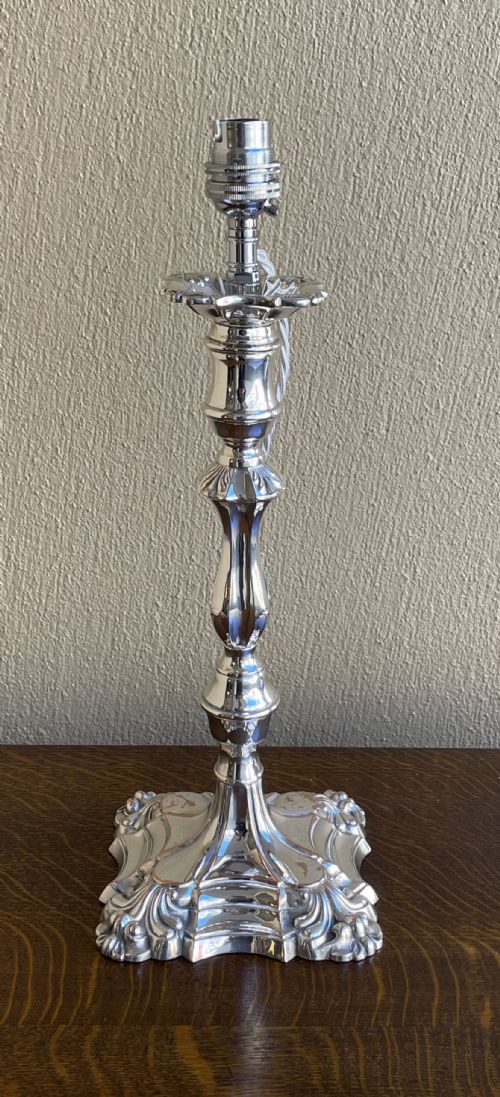
Architectural components like Corinthian capitals and stepped bases were cast separately and soldered or weighted to ensure stability on a desk. Intricate metalwork, parcel gilding, and lion's paw feet required specialist chasing and assembly by skilled silversmiths.
Listings feature silver plate, sterling silver, and chrome across Victorian, Edwardian, and Art Deco styles.
Assessing quality in period lighting
Quality rests in the crispness of the casting and the depth of the metal plating. Superior pieces display sharply defined acanthus leaves on column capitals and heavy, balanced weight distributions that prevent tipping.
Maker marks and sterling hallmarks elevate a piece, distinguishing mass-produced commercial items from work by recognised silversmiths. Original components, such as weighted bases and authentic switch fittings, preserve the integrity of the object.
Mappin & Webb's·Harrison Brothers & Howson·Walter Latham & Son·Goldsmiths·Palmer & Co·Muller Bros
The Silver Desk Lamp Base Glossary
- EPNS
- Electroplated Nickel Silver. A common base metal process where a layer of silver is deposited onto a nickel brass alloy.
- Corinthian column
- An architectural order featuring fluted shafts and ornate capitals decorated with acanthus leaves. This classic form dominates nineteenth-century lighting designs.
- Parcel gilt
- Partially gilded with gold. This technique highlights specific details like capitals or base embellishments on silver metalwork.
- Hallmark
- An official stamp indicating purity, maker, and assay office. Sterling silver pieces carry these marks to confirm metal standards.
- Plinth
- The heavy lower block supporting the column or stem. It provides necessary stability for desk illumination.
Silver Desk Lamp Base: Frequently Asked Questions
How do I date a silver lamp base?
Examine any stamped hallmarks or maker marks for assay office symbols and date letters that indicate the exact year of manufacture. Stylistic clues, such as classical revival proportions or Art Deco geometric lines, further narrow the period.
Construction techniques also help determine age, as nineteenth-century casting methods differ from twentieth-century manufacturing processes. Comparing the weight, base loading, and switch mechanisms provides additional context for the timeline.
What is a Corinthian column lamp?
A Corinthian column lamp mimics ancient Greek architecture by using a fluted cylindrical shaft topped by an ornate capital of carved acanthus leaves. These architectural forms became immensely popular in British interiors during the Victorian and Edwardian eras.
Sitting atop a stepped square plinth, these metal bases brought formal elegance to studies, libraries, and writing desks. Their substantial weight ensured they remained stable when supporting traditional fabric shades.
Are these lamps safe to use?
Many period lamps require professional rewiring to meet modern electrical safety standards before daily use in a home or office. Qualified electricians can update internal wiring whilst preserving the original metal base and exterior switch.
Checking the internal cord grip and insulating components ensures the antique metalwork operates safely. It is standard practice to have older desk lighting tested by a professional.
What is the difference between silver plate and sterling?
Sterling silver consists of solid precious metal meeting a specific purity standard, usually marked with a lion passant in British pieces. Silver plate involves a thin layer of pure silver bonded to a base metal like copper or brass.
Both materials were widely used for desk lamps, with silver plate offering a heavier and more robust core for daily use. Hallmarks identify solid silver, whilst plates often display maker marks indicating the plating house.