




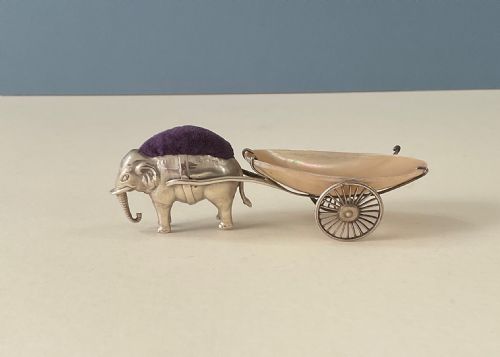
Silver Collectible Pincushion
A silver collectible pincushion brings miniature artistry to dressing tables, taking the form of animals, shoes and everyday objects.
Silver Collectible Pincushion
A silver collectible pincushion combines functional sewing equipment with small-scale sculptural design. The pieces on this page span Edwardian, Victorian and Georgian periods, alongside later twentieth-century examples.
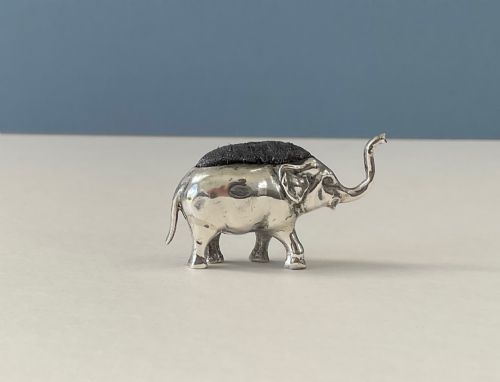
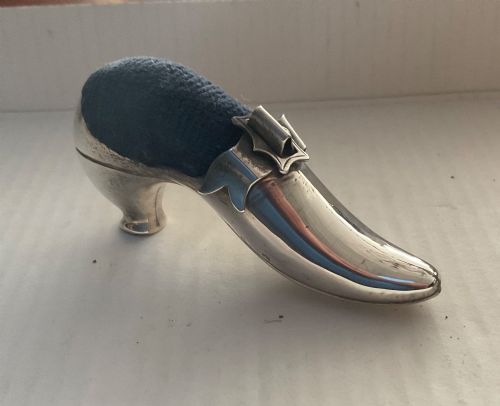
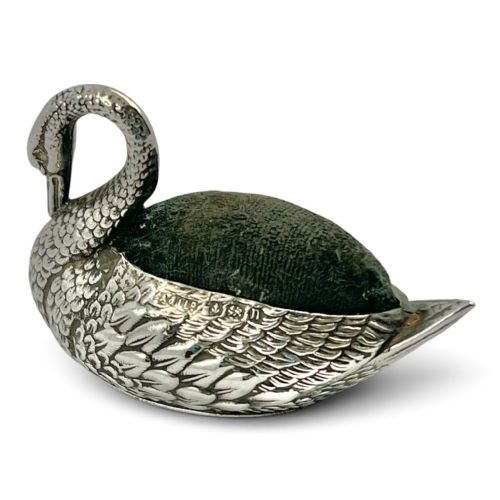
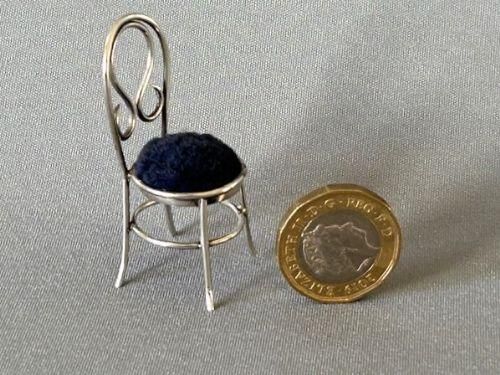
Novelty shapes dominate the selection, ranging from domestic animals and wildlife to vehicles, footwear and household items. Swan forms appear frequently, alongside pigs, dogs, shoes and miniature chairs.
Origins trace largely to Birmingham makers working in sterling silver, paired with traditional velvet, fabric or felt inserts to hold pins safely.
Materials and construction methods
The central cushion requires textile components such as velvet, felt, fabric, or mother of pearl elements fitted securely into the silver mount to receive pins.
Factors influencing quality and appeal
The condition and survival of the original textile insert matter significantly, as intact velvet or felt pads retain the intended pairing of materials against the polished metal casing.
Adie & Lovekin·Sampson Mordan & Co.
The Silver Collectible Pincushion Glossary
- Novelty
- An object made in an amusing or unusual shape rather than a standard geometric form. These miniature items depict animals, vehicles and accessories.
- Sterling silver
- A silver alloy containing proportions of silver and other metals to ensure durability for small decorative objects. It serves as the primary metal for these items.
- Hallmark
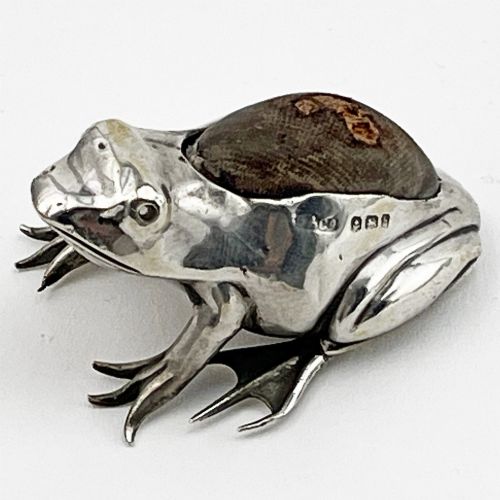
- A set of official marks stamped onto precious metals to show standard of purity, place of origin and year of manufacture. Birmingham examples frequently appear.
- Chasing
- A metalworking technique where the smith pushes the surface of the silver from the outside to form raised decorative patterns. This creates texture on animal figures.
Silver Collectible Pincushion: Frequently Asked Questions
What animals appear as pincushions?
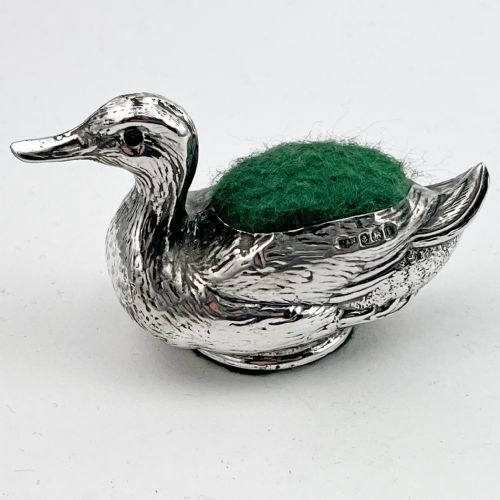
Makers shaped silver into swans, pigs, bears, dogs, frogs, kangaroos, ducks, foxes, bulls, camels, bulldogs, pugs, goats, stags and goldfish. These figures often capture characteristic postures.
Birds such as hatching chicks also feature prominently among the recorded miniature forms.
How do I date a silver pincushion?
Dating relies on reading the hallmarks stamped into the silver, which record the assay office, standard mark and date letter for the specific year of creation. Edwardian and Victorian examples form the majority of surviving pieces.
Stylistic details like clothing, vehicle designs or furniture shapes also offer clues to the era of manufacture.
What fabrics are used inside?
Makers fitted velvet, felt, fabric, and occasionally mother of pearl or shell components into the metal frames. These materials hold the pins firmly in place during daily dressing routines.
The textiles sit snugly within hollow silver bodies shaped as shoes, chairs, baskets or animal figures.
What objects were replicated in silver?
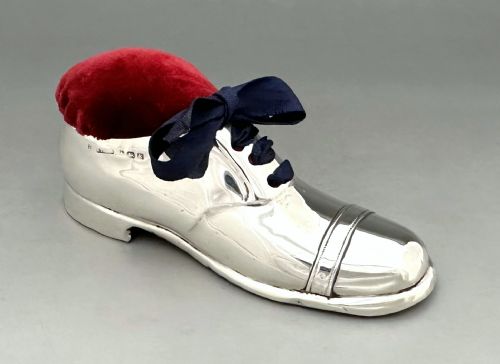
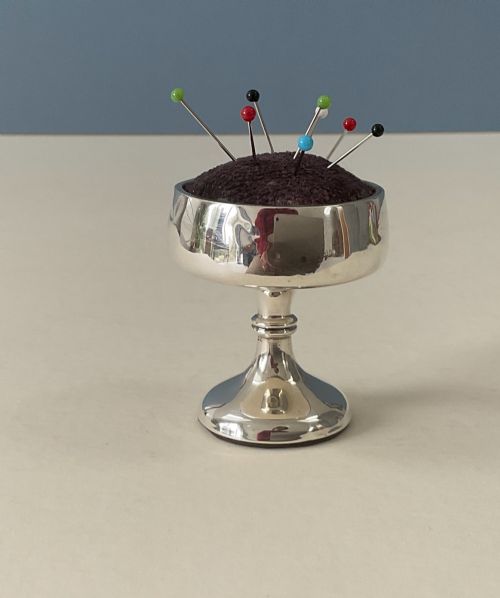
Miniature replicas include shoes, roller skates, wheelbarrows, canoes, railway lamps, goblets, bellows, jockey caps and salon chairs. These items translate mundane domestic equipment into decorative novelties.
Some pieces record specific historical moments, such as World War One Red Cross emblems.