


Silver Collared Sword Stick
A silver collared sword stick conceals a hidden blade beneath an everyday walking cane, offering both gentlemanly support and discretion.
Silver Collared Sword Stick
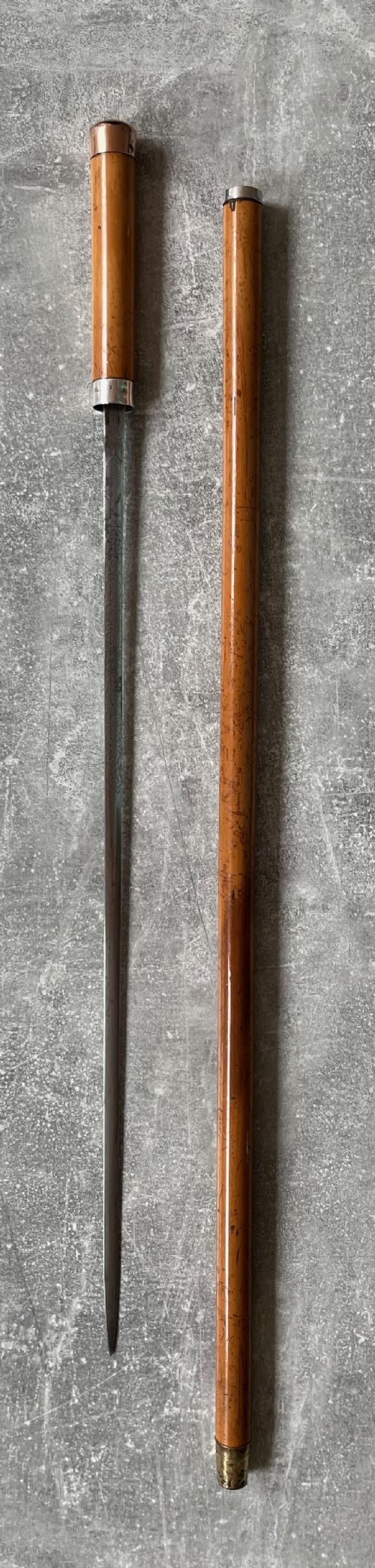
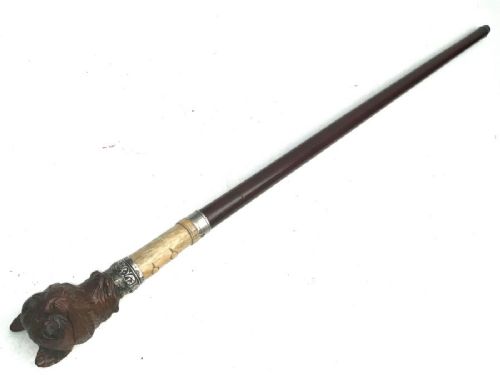
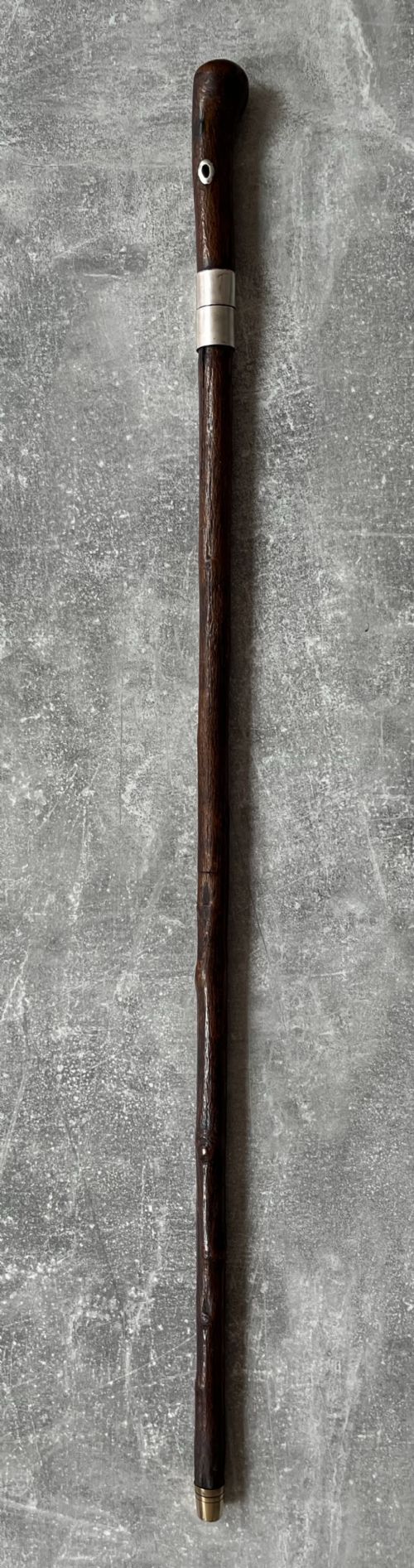
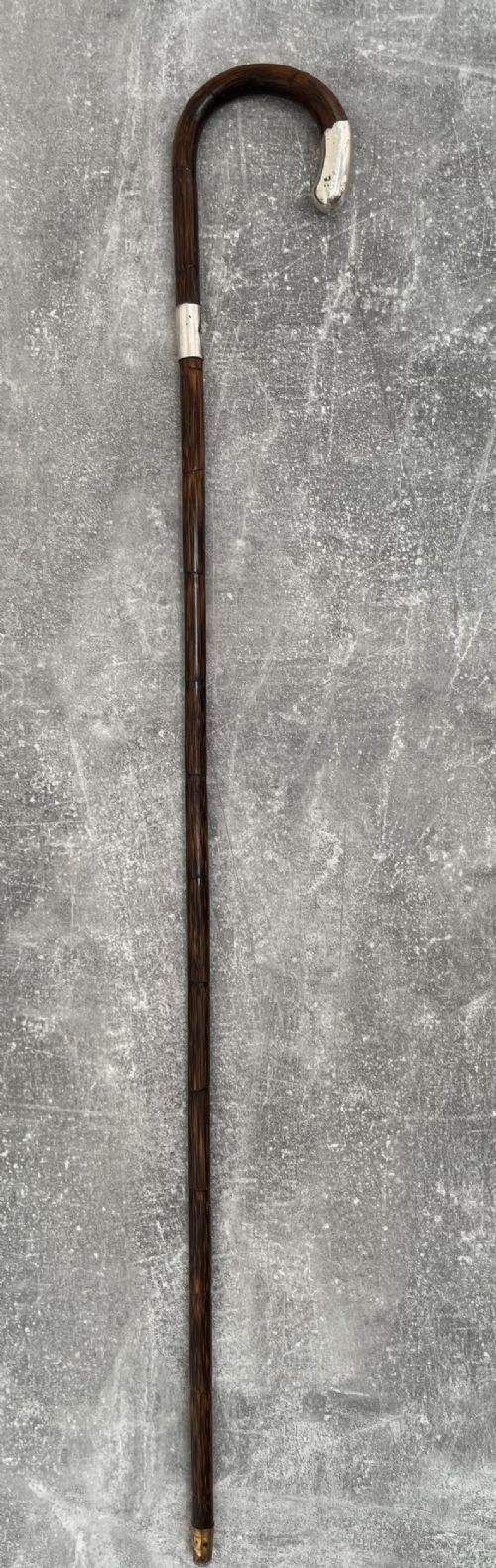
A silver collared sword stick is a functional walking cane equipped with a concealed steel blade, designed for personal protection and gentlemanly fashion during the nineteenth and early twentieth centuries. These pieces combine everyday utility with covert armament, housed in shafts of malacca cane, hazel wood, rosewood, and chestnut. Collectors encounter various handle configurations, including horn, bone, antler, root ball, and novel designs.
The versions most commonly found on this page date from the Victorian and Edwardian eras, spanning from the late nineteenth century into the 1930s. Makers fitted these sticks with precious metal collars, often hallmarked in London, which frequently sit below distinct handles ranging from simple crooks to carved grips. Alongside standard gentlemanly walking sticks, specialised examples incorporate Masonic symbols or maker-marked blades from renowned firms like Wilkinson and Toledo.
Materials and construction
The construction of a silver collared sword stick relies on pairing resilient natural woods and canes with tempered steel blades. Craftsmen utilised malacca, hazel, rosewood, chestnut, and hardwood for the outer shafts to ensure durability and balance during daily use. Silver collars serve both to reinforce the junction beneath the handle and to provide a polished decorative accent.
Internal mechanisms require precision fitting to secure the concealed blade firmly within the wooden scabbard until released. Handles fashioned from horn, bone, antler, and brass are attached securely above the silver mount, completing the transition from handle to shaft. Specialised blades bear signatures from prominent sword makers, indicating superior metalworking standards.
Some Victorian gentlemen hid secret Masonic lodges inside their daily strolls, wielding walking sticks that doubled as guarded fraternal tokens.
Markers of distinction
The distinction between standard walking aids and superior examples rests upon the quality of the blade and the choice of materials. Sticks fitted with named maker blades, such as those from Wilkinson or Toledo, represent a higher tier of craftsmanship than unmarked alternatives. Furthermore, the integration of precious metal mounts and well-executed hallmarking elevates an ordinary cane to a piece of fine gentleman's kit.
Aesthetics and handle selection also dictate the standing of a piece within the range. Superior items utilise dense hardwoods like malacca or rosewood paired with intricately carved horn, bone, or antler grips. The precision of the fit between the blade, collar, and scabbard determines the overall integrity of the piece.
Wilkinson Blade·Toledo Blade
The Silver Collared Sword Stick Glossary
- Malacca cane
- A resilient botanical stem imported from Southeast Asia, prized for its mottled brown finish and flexibility in walking stick production. It forms the shaft for many traditional sword sticks.
- Silver collar
- A decorative and structural metal band fitted immediately below the handle of a cane. This band often bears hallmarks indicating the assay office, year, and maker.
- Wilkinson blade
- A steel blade produced by the renowned sword-making firm, recognised for its tempering and historical military association. Such blades denote high manufacturing provenance.
- Knop
- A rounded knob or ornamental handle at the top of a walking stick. These components vary from simple wooden domes to carved bone and horn grips.
- Root ball handle
- A natural growth formation at the root end of a branch utilised as a rustic handle. This style provides a distinctive tactile grip on historical walking canes.
Silver Collared Sword Stick: Frequently Asked Questions
How do you release the concealed blade?
Most sword sticks utilise a simple screw mechanism or a spring catch hidden beneath the silver collar to release the blade from the wooden scabbard.
Owners twist or pull the handle firmly to separate the two sections, revealing the steel weapon housed safely inside.
Were these sticks used for self-defence?
Gentlemen carried these items during the Victorian and Edwardian periods as a fashionable precaution against urban hazards and highwaymen.
The concealed blade provided a practical means of personal protection that remained discreet during daily promenades.
How should I care for the metal blade?
Keep the steel blade lightly oiled to prevent oxidation and ensure it slides smoothly into the wooden scabbard without sticking.
Avoid storing the cane in damp environments to protect both the internal metal components and the outer wooden shaft.
What do the silver collars indicate?
Silver collars often feature British hallmarks that reveal the year of manufacture and the assay office where the metal was tested.
These stamps help historians and collectors date the walking stick accurately alongside stylistic clues from the handle and wood.