



Silver Coffee Service Jug
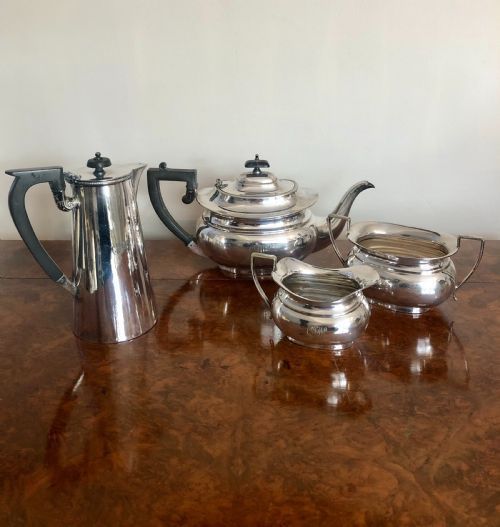
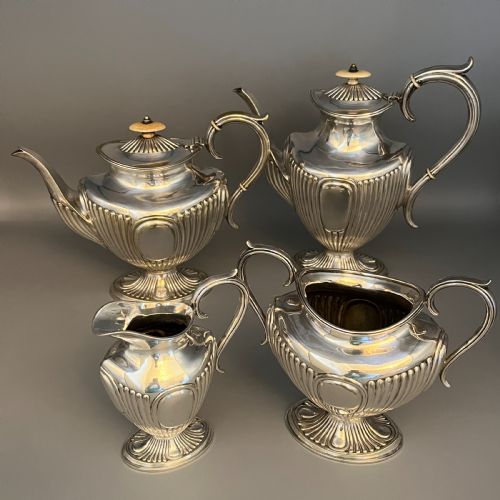
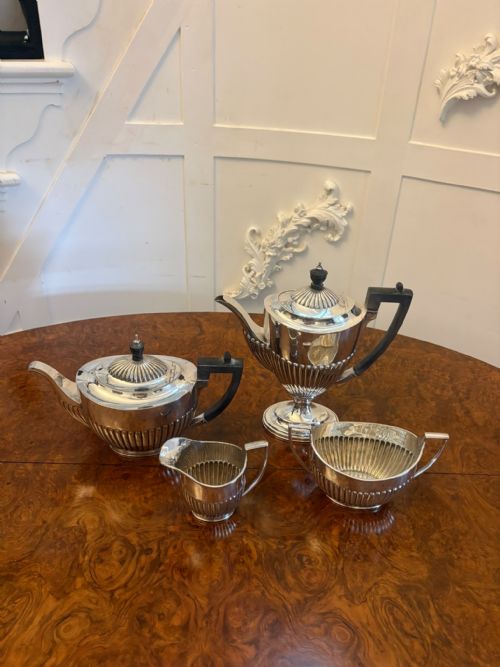
These silver coffee service jug pieces are formal vessels and multi-piece sets crafted to pour hot coffee in traditional settings.
Silver Coffee Service Jug
A silver coffee service jug search brings up single pots alongside multi-piece tea and coffee services, cafe au lait pots, and hot water vessels. The listings span periods from the Victorian and William IV eras through Edwardian times and the Art Deco period up to the mid twentieth century.
Buyers will most frequently encounter Edwardian silver plated sets and individual pots, alongside Victorian and later sterling silver pieces. These range from simple three-piece settings to large four and five-piece services complete with milk jugs and sugar bowls.
Materials and construction
The objects are produced in solid sterling silver and silver plate, including electroplated nickel silver. Manufacturers combined these metal bodies with contrasting fittings, such as wood, ebony, bone, and ebonised wood handles and insulators.
Silversmiths employed techniques like casting, hammering, and detailed surface chasing to achieve ornate grapevine motifs, neoclassical lines, and geometric Art Deco forms.
Silver Coffee Service Jug Retail Price Guide 2026
Typical asking prices for silver coffee service jug among the pieces listed under this phrase on Sellingantiques today, from the lower quarter to the upper quarter. They describe what is for sale here now, not the wider market.
Several coffee sets include original fitted wooden cases lined with velvet, ready to travel across the empire.
Separating top tier pieces from standard items
Quality rests upon the weight of the metal and the crispness of decorative chasing, distinguishing heavy sterling services from lighter plated variants. Fully matched sets produced by recorded makers command greater attention than assembled groupings.
The integration of original fitted boxes and intact insulating handles made from bone or ebony elevates a service above standard utilitarian examples.
Walker and Hall·Joseph Craddock·Harrison Brothers and Howson·Birmingham Silversmiths Company·Harry Atkin
The Silver Coffee Service Jug Glossary
- Silver plate
- A layer of silver fused to a base metal core such as copper or nickel silver. It provides the appearance of solid silver at a different weight and price point.
- Sterling silver
- An alloy consisting of pure silver and other metals, usually copper, standardised at a specific purity level. It forms the solid body of higher grade hollowware.
- Electroplated nickel silver
- A base metal alloy of copper, nickel, and zinc coated with a layer of silver via an electrolytic process. It served as a durable foundation for late nineteenth and twentieth century tableware.
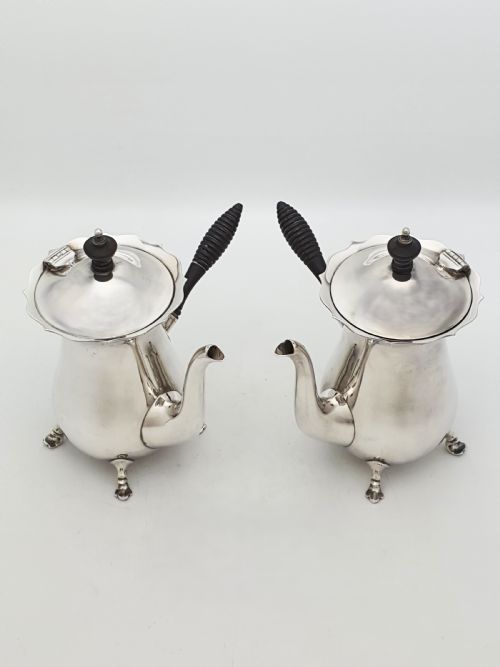
- Cafe au lait pots
- Matching pairs of pots designed to be poured simultaneously into a cup. One vessel holds hot coffee and the other holds hot milk.
- Hollowware
- Tableware items such as kettles, jugs, and teapots formed by shaping sheet metal rather than casting solid blocks. These pieces often feature insulated handles to protect the user from heat.
Silver Coffee Service Jug: Frequently Asked Questions
How do I clean tarnished silver?
Use a soft cloth and a specialised silver polish designed to remove tarnish without abrading the metal surface. Avoid harsh chemical dips that strip away desirable patination.
For pieces with wooden or bone insulators, keep moisture away from the handle joints during cleaning to prevent loosening or cracking.
Can I use these pots daily?
Solid silver and plated pots can handle regular use if handled with care, though modern users often reserve them for occasional serving. Ensure hot water is added gradually to older pots to prevent thermal shock.
Hand wash only after each use and dry thoroughly with a soft cloth to maintain the finish.
What is the difference between sterling and plate?
Sterling silver contains a high fixed proportion of pure silver throughout its entire structure and bears official assay office hallmarks. Silver plate consists of a thin coating of silver applied over a base metal.
Over decades of heavy polishing, plated items may show the base metal underneath, whereas sterling remains consistent right through.
How do I identify the date of a piece?
Look for hallmarks stamped into the metal on sterling silver items, which typically include maker marks, standard marks, and date letters corresponding to specific assay office records. Silver plated items rely on maker symbols, style indicators, and registration numbers rather than official date hallmarks.
Stylistic cues such as Edwardian rococo revival curves or geometric Art Deco lines also point toward specific decades of manufacture.