





Silver Cherub Trinket
These silver cherub trinket pieces bring together chased putti and precious metal from the Georgian, Victorian, and Edwardian eras, offering small desktop storage with distinct character.
Silver Cherub Trinket
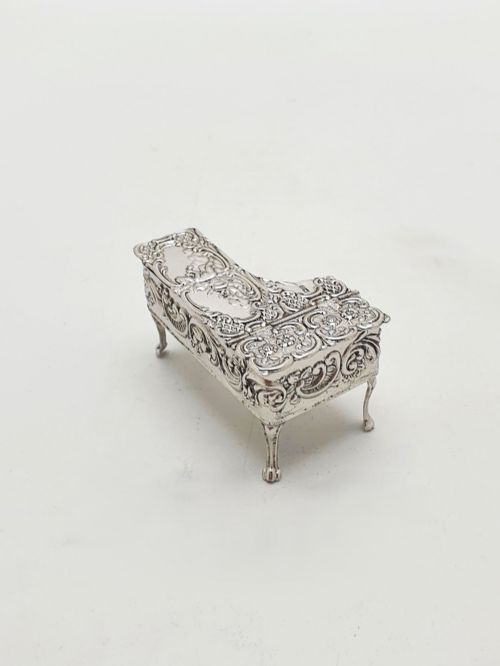
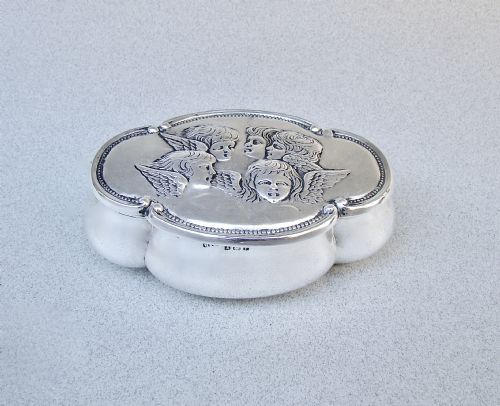
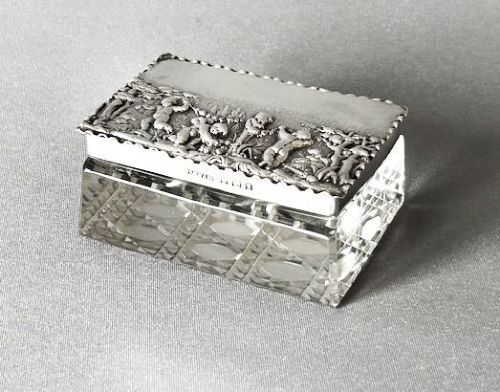
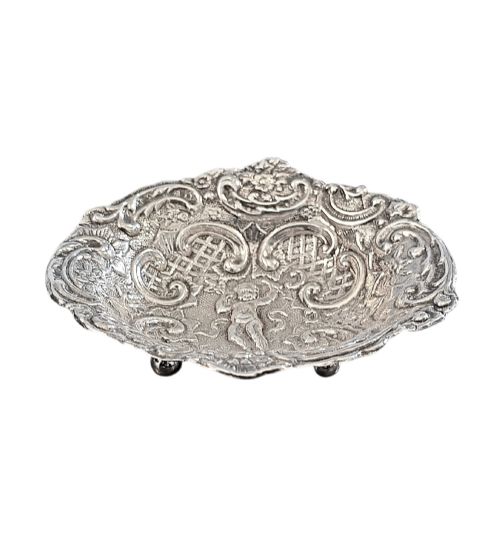
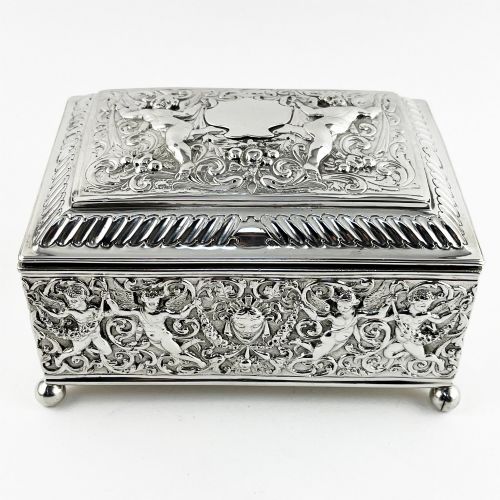
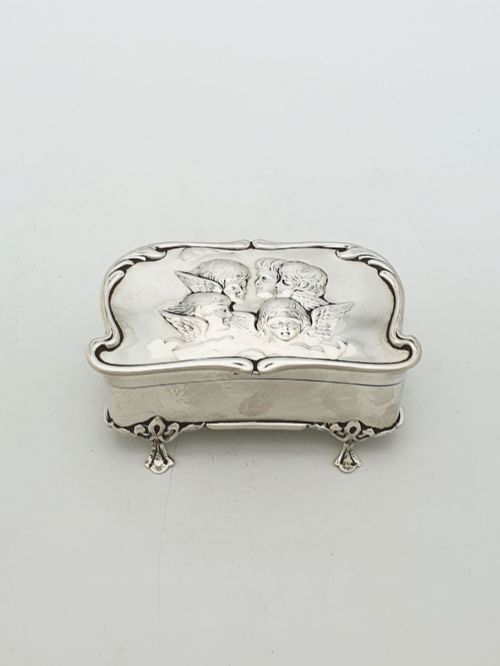
A silver cherub trinket typically takes the form of a small hinged box, a dressing table tray, or a bonbon dish featuring embossed or chased figural cherub motifs. Buyers seeking this style will encounter pieces primarily originating from the Victorian and Edwardian periods, alongside earlier Georgian examples and continental imports.
The design vocabulary ranges from Rococo Revival curves to Art Nouveau lines, with Birmingham and Chester assay marks appearing frequently among English pieces. Makers such as William Aitken, William Comyns and Sons, H. Matthews, and Paul Storr represent the standard of workmanship found across these eras.
Materials and construction
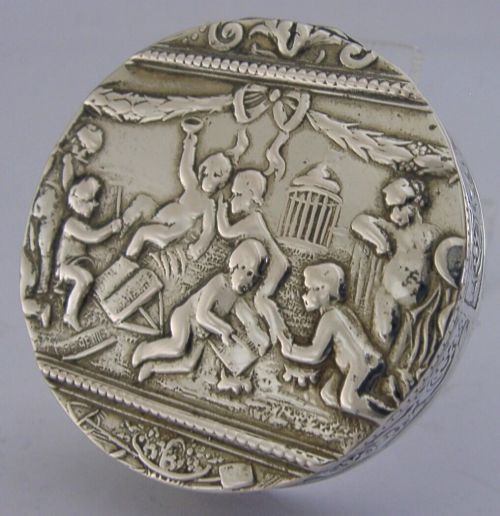
These items are constructed from solid sterling silver or continental silver, frequently worked in relief to create the characteristic cherub and angel scenes. Techniques involve stamping, chasing, and embossing the metal sheet to achieve high-relief figures against textured or plain backgrounds.
Many of the boxes incorporate interior linings of velvet to protect delicate jewellery and snuff. Gilt interiors, where a thin layer of gold is applied to the silver surface, appear in several pieces to prevent tarnishing from cosmetics and powders.
Silver Cherub Trinket Retail Price Guide 2026
Typical asking prices for silver cherub trinket among the pieces listed under this phrase on Sellingantiques today, from the lower quarter to the upper quarter. They describe what is for sale here now, not the wider market.
Listings span the Georgian, Victorian, and Edwardian periods, utilising sterling silver, silver gilt, and velvet materials.
Factors that separate the range
Quality in a silver cherub trinket rests on the crispness of the chasing and the depth of the metal relief. Pieces where the cherub faces and wings remain sharp and well-defined demonstrate superior hand-workmanship compared to softer, worn stampings.
The weight of the solid silver and the integrity of the hinges and closures also set items apart. Substantial gauge metal, secure clasps, and clear hallmarks from recognised makers indicate higher production standards.
William Aitken·Paul Storr·William Comyns and Sons·H. Matthews
The Silver Cherub Trinket Glossary
- Sterling silver
- A silver alloy containing 92.5 percent pure silver and 7.5 percent other metals, usually copper. This standard alloy provides durability for small decorative items.
- Chasing
- A metalworking technique where the silversmith punches and hammers the metal from the front to sink the background and raise the design. It creates the detailed relief seen on figural boxes.
- Silver gilt
- Sterling silver that has been coated with a thin layer of gold on the surface. This finish adds warmth and protects the interior metal from discoloration.
- Hallmark
- A series of official marks stamped onto silver items indicating the assay office, metal purity, and date of manufacture. These stamps help verify the age and origin of each piece.
- Rococo Revival
- A design style popular during the nineteenth century characterised by asymmetric scrolls, floral motifs, and shellwork. It forms the backdrop for many Victorian cherub ornaments.
Silver Cherub Trinket: Frequently Asked Questions
What were silver trinket boxes used for?
These small boxes served a practical role on dressing tables and writing desks. They held rings, pins, and personal keepsakes.
Wealthier households used specialised boxes for snuff or cosmetics, keeping small luxuries close at hand in domestic rooms.
How do I date an antique silver box?
Dating relies primarily on the stamped hallmarks found on the silver body. Assay office marks and date letters point to specific years of manufacture.
Stylistic cues such as Art Nouveau curves or Victorian Rococo revival motifs also indicate the general period of production.
How should I clean my silver trinket box?
Careful dusting with a soft cloth removes everyday surface grime without disturbing the chased detail. Avoid harsh abrasive dips that strip the character from recessed areas.
If polishing is necessary, use a mild cream formulated specifically for silver and apply it gently around the raised cherub figures.