



Silver Cellars and Spoons
Silver cellars and spoons bring dining history to the table, pairing open salt dishes with diminutive spoons for formal meals.
Silver Cellars and Spoons
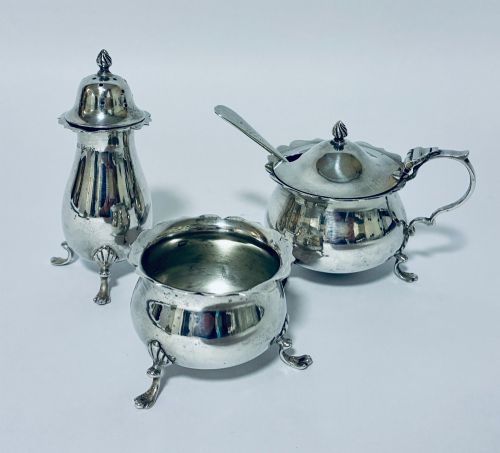
Silver cellars and spoons encompass open table salt dishes, mustard pots, and cruet sets designed to hold condiments for dining. Buyers searching this phrase encounter matched pairs, cased sets, and individual salt tubs alongside spoons.
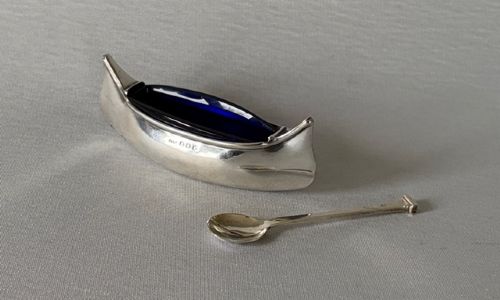
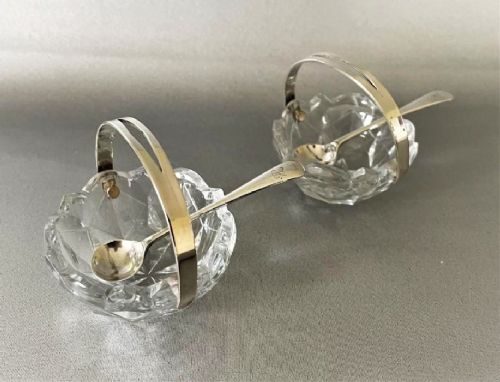
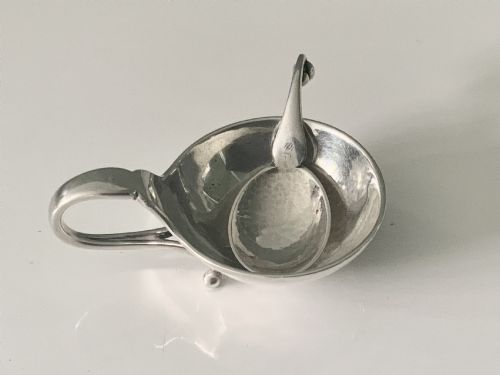
The pieces on this page originate predominantly from Victorian, Edwardian, and later twentieth-century periods, spanning styles from Georgian and Art Nouveau to Mid-Century Modern. Open salt cellars often appear in circular, boat, shell, or cauldron forms alongside matching spoons.
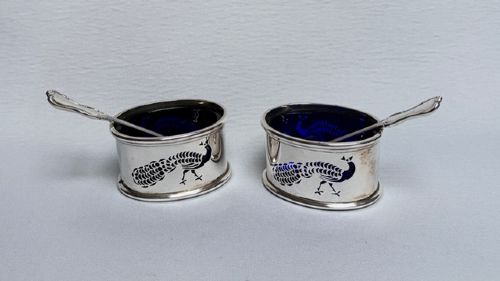
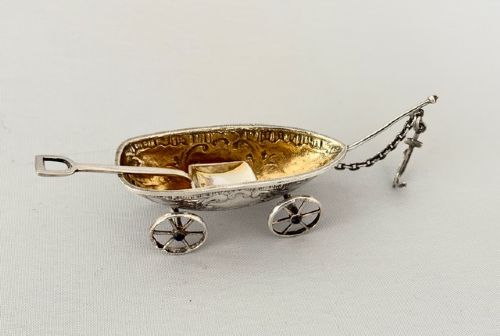
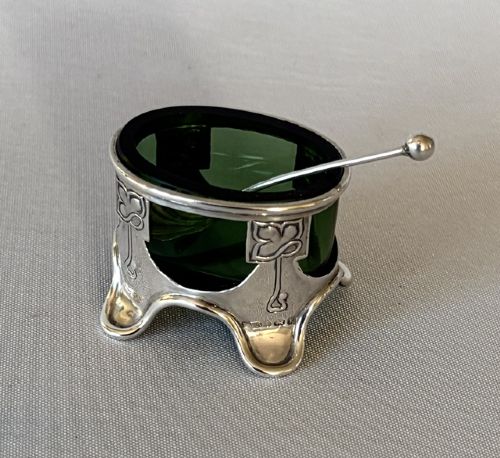
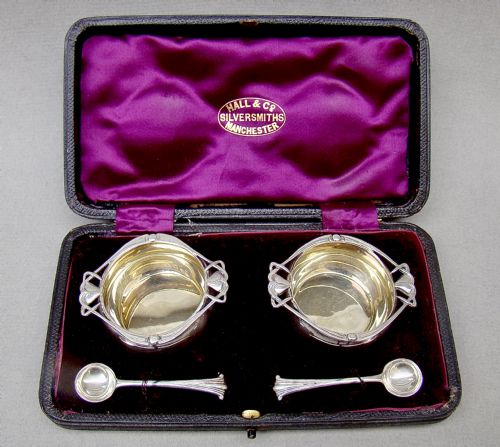
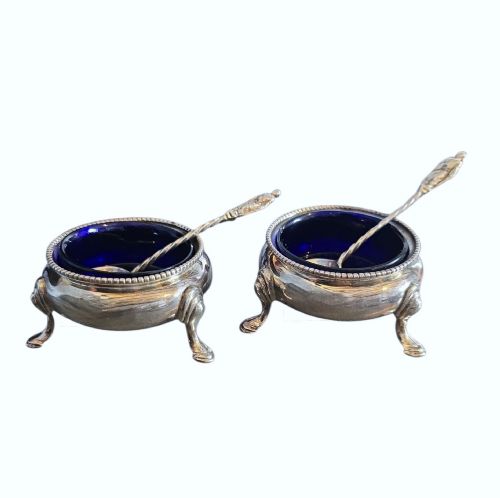
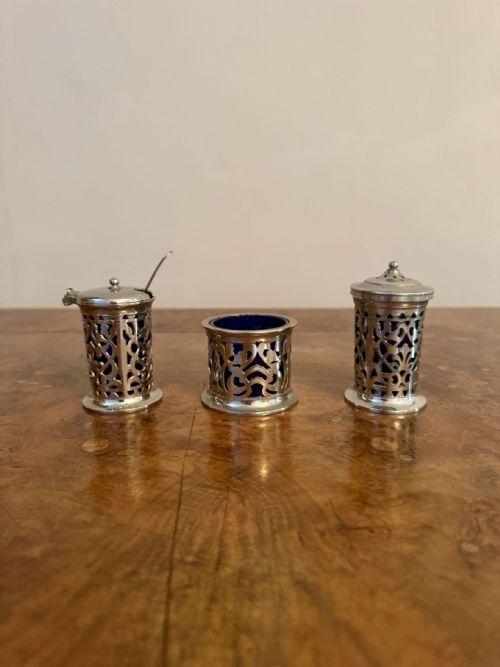
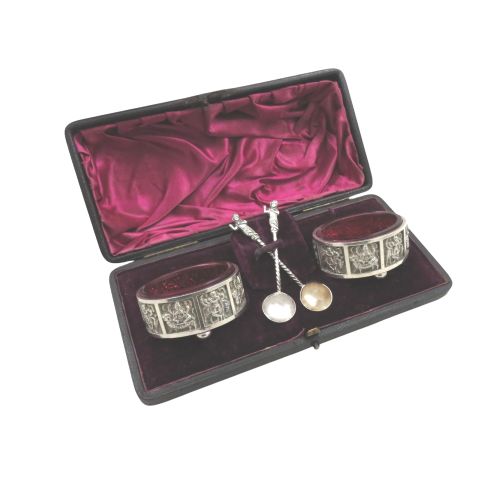
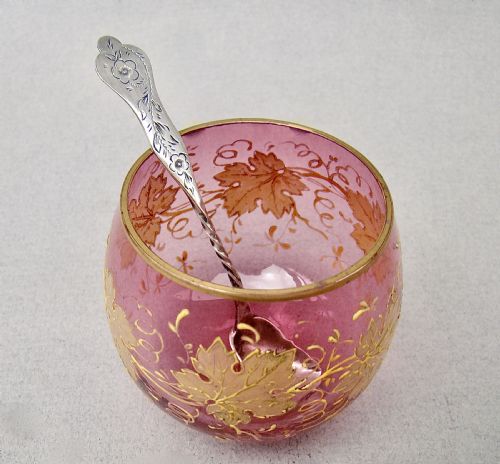
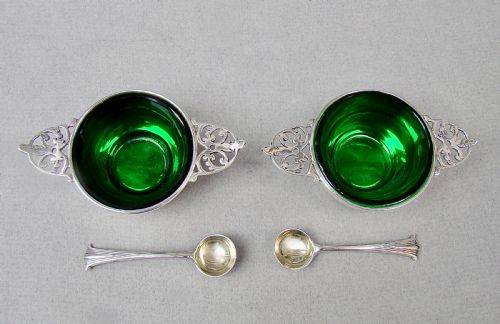
Many open salt cellars on this page incorporate coloured glass liners, including cobalt, ruby, cranberry, and green glass, which sit inside pierced or solid silver bodies. Fitted boxes and presentation cases frequently accompany pairs and sets of four.
How they were made
Makers utilised sterling silver and silver plate for the frames, bowls, and condiment spoons, often applying silver gilt to the interior surfaces of salt cellars. Piercing, casting, and repoussé techniques shaped the silver into animal forms, bird motifs, and classical patterns.
Glass liners were blown and shaped to fit specific salt cellars, using cobalt, cranberry, or ruby glass to contrast with the polished silver. Fitted presentation cases lined with silk and velvet protected these delicate tableware combinations.
Silver Cellars and Spoons Retail Price Guide 2026
Typical asking prices for silver cellars and spoons among the pieces listed under this phrase on Sellingantiques today, from the lower quarter to the upper quarter. They describe what is for sale here now, not the wider market.
Salt cellars shaped like swans, birds, and Hindu deities remind us that dining tables once featured miniature menageries.
What varies in quality
The standard of silver cellars and spoons is defined by the weight of the silver, the crispness of the chased or pierced decoration, and the presence of original components. Heavier cast silver forms with detailed modelling, such as bird or swan shapes, represent the upper tier of execution.
Completeness dictates worth within sets, particularly the survival of matching spoons and undamaged coloured glass liners that fit the silver mounts precisely. Maker marks and clear hallmarking provide definitive evidence of origin and standard.
Josiah Williams And Co·Beare Falcke·Moser·John Edmonstone·Bricks And Sons·William Neale And Son·Wilmot Manufacturing Co·Vale Brothers And Sermon
The Silver Cellars and Spoons Glossary
- Salt Cellar
- An open bowl or dish used to hold loose salt at the dining table before the invention of the shaker. They frequently rest on three feet or a pedestal base.
- Cruet Set
- A matched collection of bottles, jars, or cellars mounted in a stand to hold various condiments. They often include mustard pots, pepperettes, and salt cellars.
- Silver Gilt
- Silver that has been coated with a thin layer of gold on its surface. This technique protected the metal from the corrosive effects of salt.
- Glass Liner
- A removable insert made of coloured glass that protected the silver body of a salt cellar from corrosion by salt. Cobalt and cranberry are common hues.
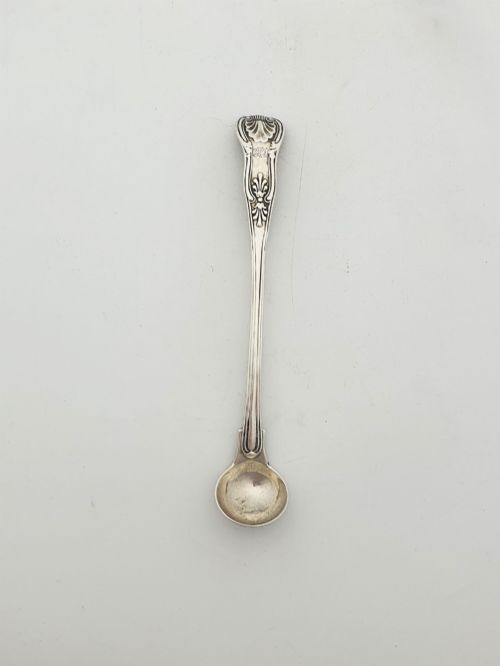
- Kings Pattern
- A traditional decorative cutlery pattern featuring an ornate shell and scroll motif at the terminal. It frequently appears on nineteenth-century spoons.
Silver Cellars and Spoons: Frequently Asked Questions
What are open salt cellars?
Open salt cellars are small bowls placed on the dining table to hold salt before modern shakers existed. Diners used a small spoon or their fingers to take salt from the dish.
They frequently feature glass liners to protect the silver from corrosion. Sets often include matching spoons designed specifically for the bowls.
How do I clean silver salt cellars?
Silver salt cellars require gentle cleaning with a specialist silver cloth to preserve the patina and hallmarks. Harsh dips should be avoided, especially on pieces with silver gilt interiors.
Glass liners must be removed and washed separately in warm soapy water. Velvet and silk lined presentation cases should be kept dry and away from direct sunlight.
What is a cruet set?
A cruet set is a collection of condiment containers held together in a metal frame or stand. They typically hold salt, pepper, mustard, and sometimes oil and vinegar.
These sets were centrepieces on dining tables during the Victorian and Edwardian periods. They range from simple silver-plated frames to elaborate cased sets with cut glass bottles.
How do I identify Victorian silver?
Victorian silver can be identified by hallmarks stamped into the metal, which include a date letter, a town mark, and the lion passant indicating sterling standard. Style cues also help, such as heavy ornamentation, naturalistic motifs, and Gothic revival details.
Makers' marks provide the specific workshop or silversmith responsible for the piece. Comparing these marks with reference registers dates the item precisely.