




Silver Capped Scent Flask
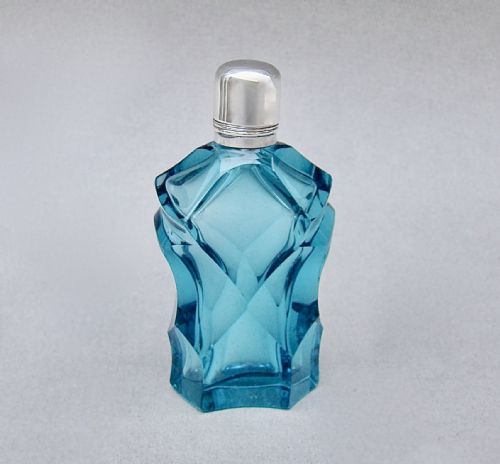
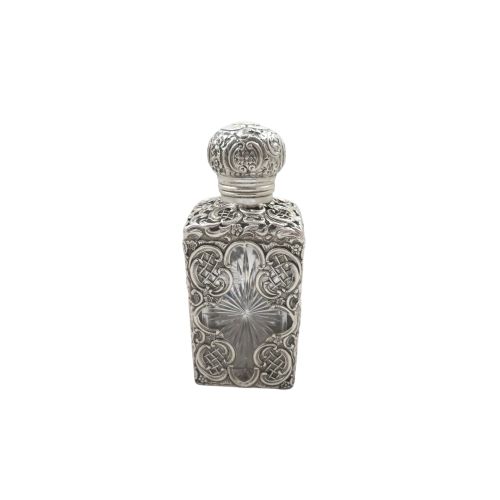
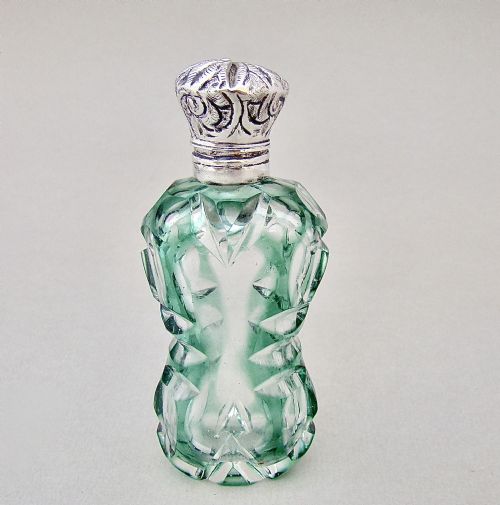
These silver capped scent flask examples combine precious metal work with colourful glass bodies.
Silver Capped Scent Flask
A silver capped scent flask represents a portable container designed for personal fragrance, featuring metal mountings that secure a stopper above a glass reservoir. Most pieces found on this page date from the Victorian and Edwardian periods, running through the latter half of the nineteenth century and into the early twentieth.
The glass bodies take various forms including icicle shapes, miniature champagne bottles, and figural models such as owls alongside traditional flask silhouettes. Collectors frequently encounter rich cranberry, amethyst, opaline, and mercury glass alongside standard cut crystal variants.
Materials and construction methods
The primary bodies utilise blown and moulded glass, often enhanced through heavy wheel-cutting, sliced facets, or layered coloured overlays. Artisans shaped these vessels into distinct silhouettes before applying metal components.
Sterling silver provides the protective caps and mounts, frequently decorated with repoussé work, chased patterns, or smooth polished finishes to secure the inner stopper and prevent leakage.
Materials recorded across the selection include sterling silver paired with cranberry, amethyst, mercury, and opaline glass.
Distinguishing quality across examples
Quality rests upon the crispness of the glass cutting and the depth of colour within the material, where vibrant cranberry or layered overlay glass demonstrates superior artistry. The complexity of the glass form itself, such as detailed animal figures or slender icicle profiles, elevates the piece above standard flask shapes.
The weight and ornamentation of the sterling silver mountings also dictate the standard, with substantial caps featuring intricate chased decoration marking out finer production.
The Silver Capped Scent Flask Glossary
- Sterling silver
- A silver alloy containing 92.5 percent pure silver by mass, standard for the protective caps and mounts on these bottles.
- Cranberry glass
- A rich red glass created by adding gold chloride to the molten batch, widely utilised for Victorian scent containers.
- Mercury glass
- A double-walled blown glass coated on the interior with a silvered liquid substance, producing a reflective mirror finish.
- Opaline glass
- An opaque or translucent pale glass, often white, popular during the nineteenth century for decorative personal items.
- Sliced-cut
- A glass-cutting technique involving broad, flat facets that catch the light and reveal the depth of the coloured material underneath.
Silver Capped Scent Flask: Frequently Asked Questions
What is a silver capped scent flask?
A silver capped scent flask is a small personal container used for carrying liquid perfume, secured with a metal lid to prevent evaporation.
These items date predominantly to the Victorian and Edwardian eras, combining functional utility with decorative glass and silver craftsmanship.
How do I date a silver capped scent flask?
Dating relies upon the stylistic characteristics of the glass body and hallmarks stamped into the sterling silver mountings where present.
Victorian and Edwardian examples show distinct changes in glass colours, such as cranberry and opaline hues, alongside shifts in cutting styles.
Were these flasks used daily?
Owners carried them inside pockets or handbags during the nineteenth century to refresh personal fragrance throughout the day.
The secure silver caps ensured the volatile oils remained contained during travel.
What colours of glass are common?
The selection includes clear cut glass alongside deeply saturated hues like cranberry, amethyst, and green overlay.
Specialist variants such as mercury glass and white opaline also appear frequently within these nineteenth-century designs.