

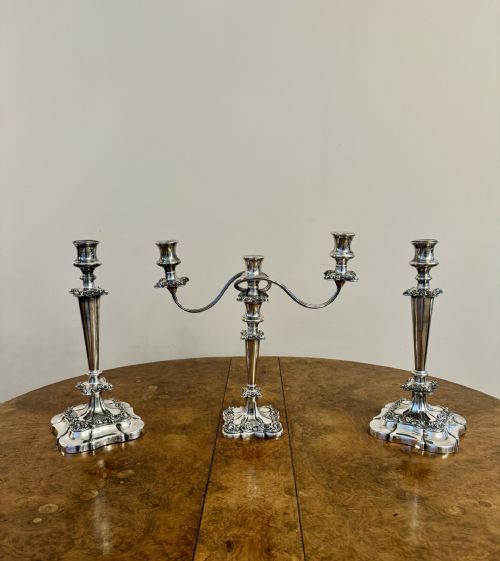


Silver Candle Holder Set
A silver candle holder set brings matched illumination to a room, offering coordinated pieces that range from single chamber sticks to grand multi-light suites.
Silver Candle Holder Set
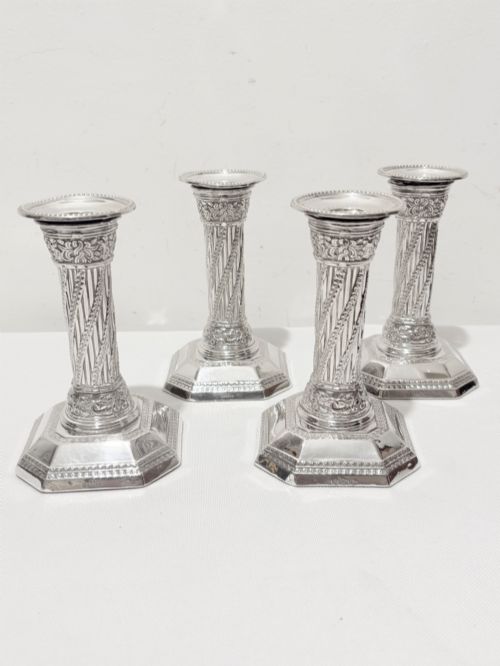
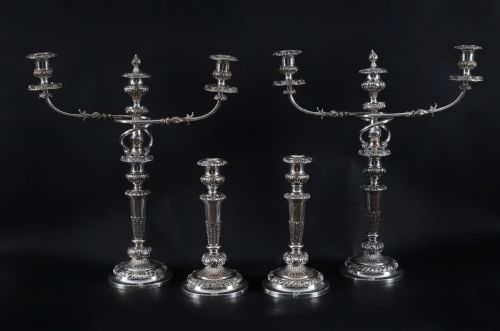
When you search for a silver candle holder set, you encounter matched groups designed for formal dining tables, mantelpieces, and chambers. These sets encompass pairs, suites of four, and larger configurations intended to provide balanced light before the advent of electricity.
The versions most commonly met on this page include silver plated candlesticks and candelabras originating from the eighteenth, nineteenth, and early twentieth centuries. Georgian and Victorian examples dominate the selection, spanning styles from austere classical columns to ornate rococo revival designs.
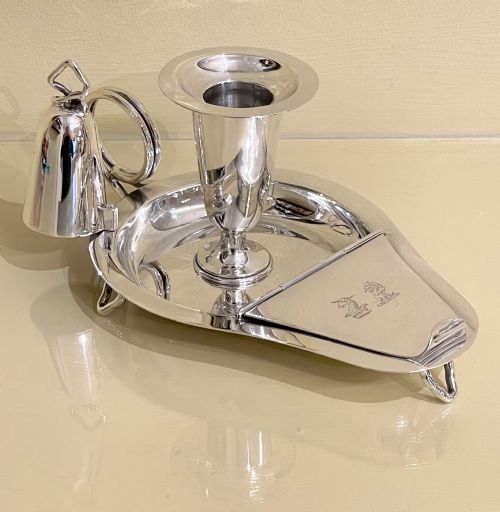
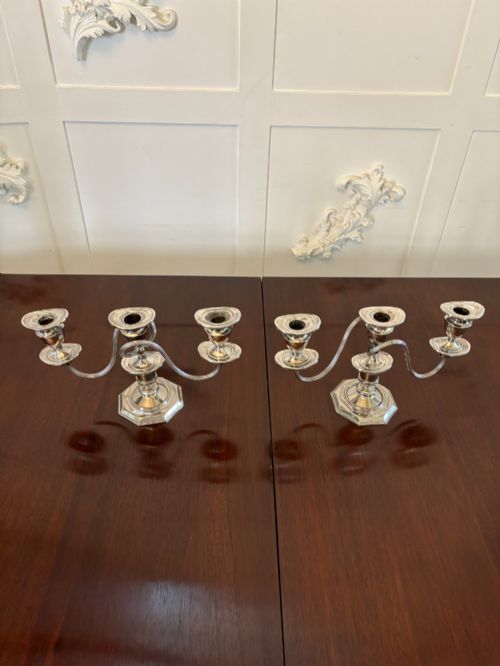
Beyond standard candlesticks, the category extends to chambersticks fitted with extinguishers and multi-arm suites suitable for grand interiors. These groupings reflect period dining and domestic rituals, where symmetry on the table was essential.
What varies in quality
The distinction between ordinary and superior pieces rests upon the crispness of the chased or cast ornament and the integrity of the underlying metal. Heavy gauge silver plate or substantial sterling construction maintains structural firmness, whereas thin plating wears away through generations of cleaning.
Makers' marks and crisp cast detail elevate specific examples, showing deliberate artistic intent rather than mass production. Complete matching sets where every component shares identical hallmarks or weight represent a higher echelon than assembled groups.
Silver Candle Holder Set Retail Price Guide 2026
Typical asking prices for silver candle holder set among the pieces listed under this phrase on Sellingantiques today, from the lower quarter to the upper quarter. They describe what is for sale here now, not the wider market.
Many chambersticks retain their tiny original conical snuffers, which miraculously survived centuries of late-night bedroom use without rolling off into the shadows.
John Cafe·Smith & Sissons & Co
The Silver Candle Holder Set Glossary
- Old Sheffield Plate
- A composite material made by fusing a thin sheet of silver onto a copper ingot before rolling, typical of eighteenth and early nineteenth-century manufacture.
- Candelabra
- A branched candlestick holding multiple lights from a single base, often designed as a matching pair or suite for a dining table centrepiece.
- Chamberstick
- A low, portable candle holder featuring a saucer-like base and a handle, frequently accompanied by a small conical snuffer.
- Electroplated Nickel Silver
- A base metal alloy of copper, nickel, and zinc coated with a layer of pure silver using electrical current, common from the mid-nineteenth century onwards.
- Quatrefoil
- A decorative shape resembling a four-leaf clover, sometimes seen in the base design of wall sconces and candle holders.
Silver Candle Holder Set: Frequently Asked Questions
How do I clean antique silver plate?
Cleaning requires a soft cloth and a gentle silver polish specifically formulated for plated items to avoid wearing through the thin silver layer to the base metal beneath. Harsh abrasive dips strip away the historic patina and damage the surface.
Regular dusting and minimal polishing preserve both the finish and the subtle signs of age that collectors value.
How can I tell Old Sheffield Plate from later silver plate?
Old Sheffield Plate reveals a faint reddish copper tint along exposed edges and seams where the outer silver layer has worn thin through centuries of handling. Later electroplated wares display a uniform greyish base metal underneath losses.
Examining the underside and edges under good light usually reveals this distinct manufacturing difference.
Were candle holder sets always sold in matching groups?
Many sets of four or more were produced together as unified suites for large dining tables, sharing identical weight, height, and decorative motifs. Other groupings are assembled matches gathered over time because finding surviving sets from the eighteenth century is uncommon.
Matching hallmarks or consistent casting details help distinguish original suites from later gathered sets.